



A large-scale exhibition of works by students of the Ashgabat Byashim Nurali Art School was held in the exhibition hall of the Union of Artists of Turkmenistan. This event can rightfully be called a showcase of the future of national art. The exhibition occupied the entire hall, presenting the audience with an impressive culmination of the academic year.
The productivity of the young artists exceeded even the wildest expectations: the quantity and, more importantly, the quality of the works demonstrated the serious and meticulous work carried out within the school, demanding the students' complete dedication.
The exhibition was structured to showcase the full diversity of genres and techniques mastered by the future masters. Landscapes capturing the subtle nuances of Turkmen nature were juxtaposed with profound portraits and meticulously crafted still lives. The wide range of techniques—from transparent, airy watercolors and vibrant gouache to rigorous graphic work in charcoal, ink, and pencil—testified to the art school's strong academic background. The guests were particularly drawn to the oil paintings, which exuded bold brushstrokes and a serious approach to color.
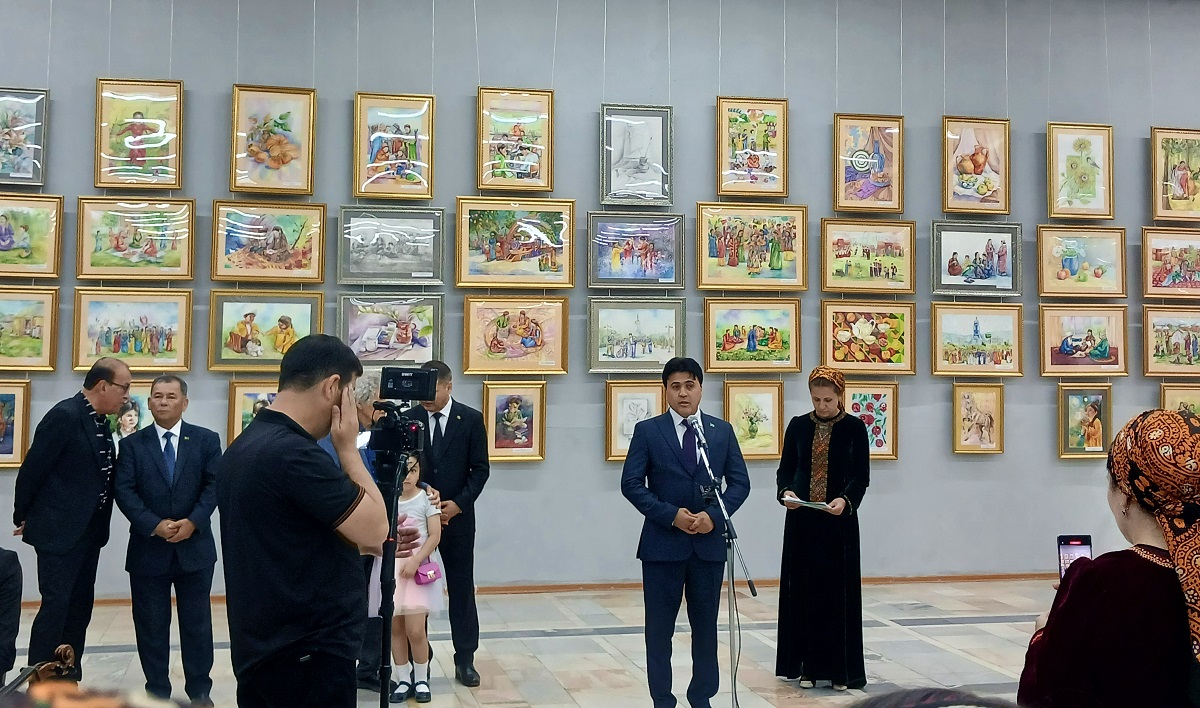
Welcoming the guests, Ovezgeldy Yagmyrov, Director of the Byashim Nurali Children's Art School, noted that this year's exhibition was a kind of maturity test for the children. He explained that each work represents not only hours of practice at the easel, but also the search for a unique creative style. The school's teaching staff strives not only to impart technical skills but also to teach children to see poetry in everyday life and routine, while preserving national traditions and sincerity of perception.
Visitors to the exhibition studied the exhibits with great interest, lingering at each stand for a long time. To examine all the works in detail, guests had to walk around several times. There were so many works that their eyes were dazzled. Needless to say, the 2025-2026 academic year has been fruitful for creative work.
The applied arts section particularly delighted the guests. The tapestries presented by the students were striking in their intricate weaving and harmonious patterns. This painstaking art requires immense patience, which the young artisans demonstrated in full measure. The jewelry section also generated no less excitement. The delicate metalwork, traditional techniques, and engraving emphasized the intergenerational continuity of Turkmen jewelry.
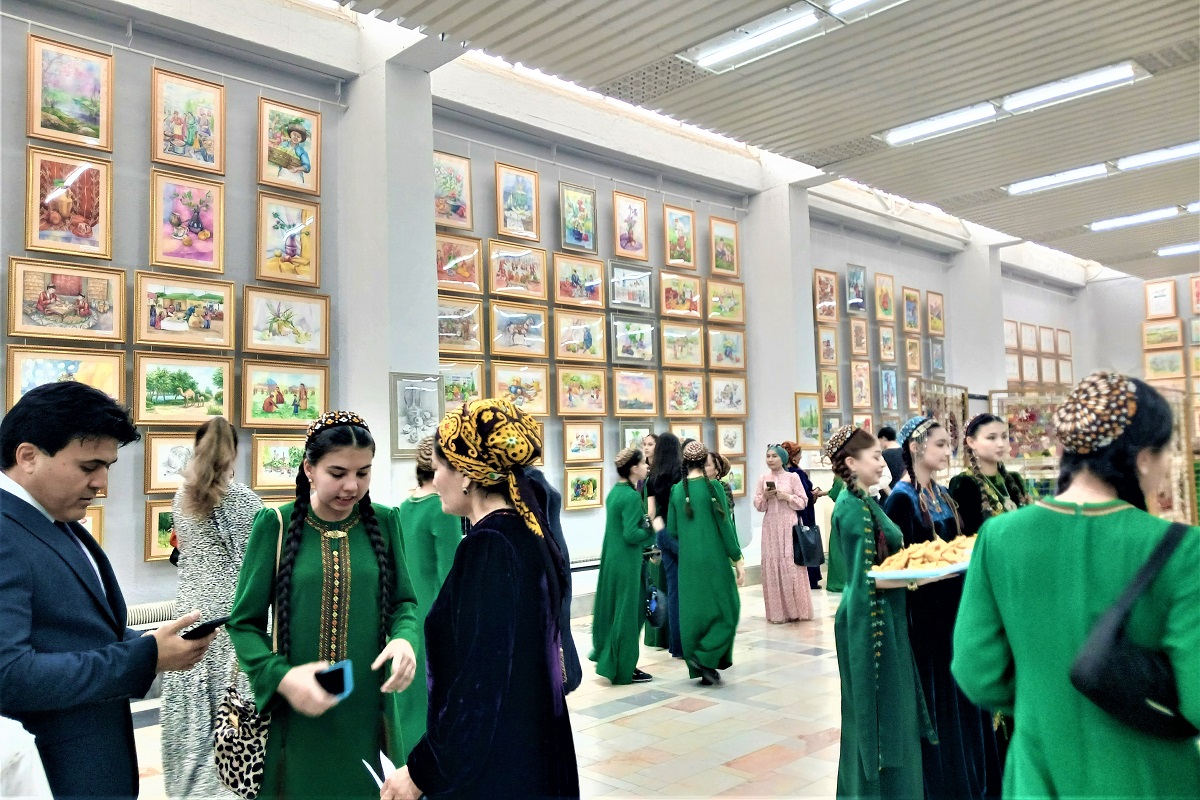
The solemnity of the exhibition opening was enhanced by the evening's musical accompaniment, organized with the support of the "Crossroads of Arts" project. A string quartet conducted by Elman Nasyrov resounded beneath the vaulted ceiling, creating a harmonious backdrop for contemplating the paintings. A performance by singer Begench Moshiyev added a special emotional touch to the event. Aina Shirova, the founder of the "Crossroads of Arts" project—a composer, journalist, and musicologist—in her approach to organizing the exhibition's musical accompaniment once again confirmed the importance of synthesizing various art forms. Music and painting complemented each other that evening, creating a unified aesthetic space.
The opening was attended by prominent cultural figures whose names embody the glory of contemporary art in Turkmenistan. National artists were also prominent among the guests. Their presence was a significant sign of support for these emerging artists. These accomplished artists carefully examined the works, noting the beginnings of great talent and professional courage. Also present at the exhibition were writers, composers, actors, directors, musicians, and teachers from the country's art universities.
The event attracted widespread media attention. Journalists from national publications and television crews were active in the hall, capturing expert opinions and audience first impressions. Interviews with the young artists, who, despite their nervousness, enthusiastically discussed their works, will serve as the basis for future reports on the younger generation of Turkmen artists. The abundance of cameras and flashes underscored the significance of the event in the capital's cultural life.
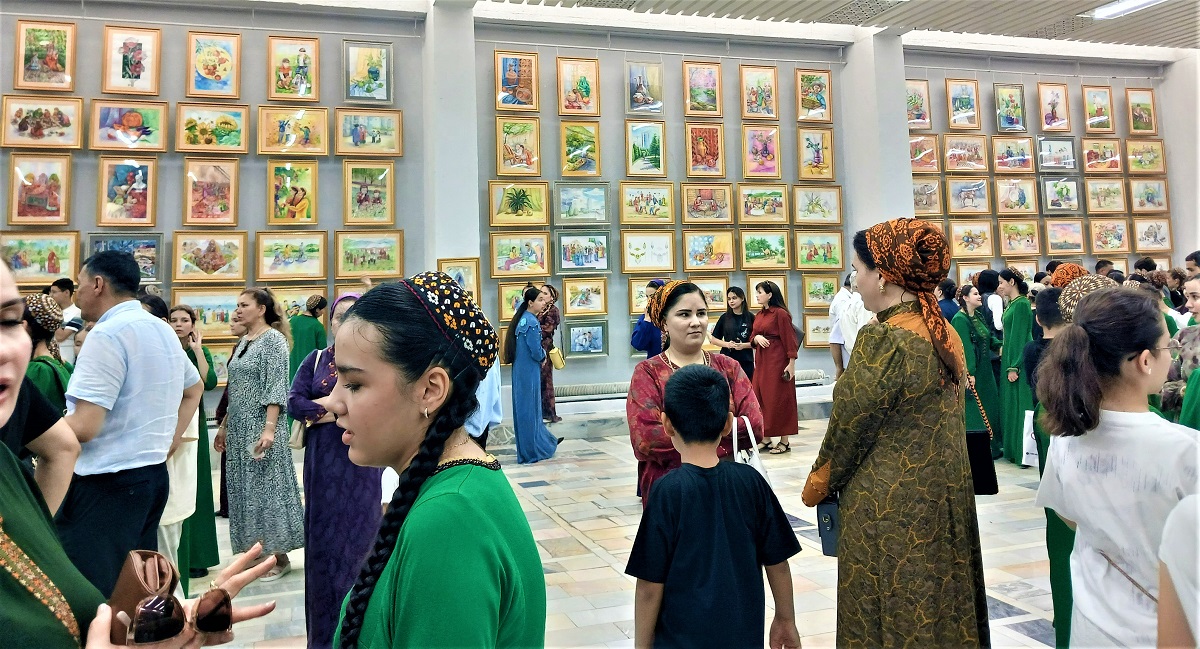
Throughout the event, particularly outstanding young artists, as well as their mentors, were presented with diplomas, certificates of honor, and gifts. Guests took the microphone and delivered congratulatory speeches to the organizers of this large-scale exhibition.
They say a good frame completes a painting. But at the exhibition of works by students from the Byashim Nurali School, viewers saw something different: although the drawings were confined within strict frames, the creative imagination of the young "Nurali students" transcended all boundaries and conventional canons.
The exhibition received numerous positive reviews. Visitors and the professional community unanimously noted the high level of craftsmanship, thematic diversity, and freshness of ideas. The students from the Byashim Nurali School once again proved that they don't simply depict reality, but strive to understand it, using a rich arsenal of artistic tools. This exhibition was not only the culmination of much work but also an important step in the professional development of each of its participants.
Aina Yolbarsova
