



World | ORIENT. Humanity is returning to the Moon, not in a movie, but in reality. A key stage of preparation for the Artemis II mission—the launch day dress rehearsal—has been completed at the Kennedy Space Center in Florida. Four astronauts completed the five-hour launch protocol, stopping the clock just 30 seconds before the imaginary "liftoff" from Earth.
50 Years of Waiting: The Crew is Ready
For the first time since the legendary Apollo program in December 1972, humans are once again preparing to leave Earth's orbit. The Artemis II crew is a symbol of a new era: Reed Wiseman (commander) is an experienced NASA astronaut leading the mission, Victor Glover (pilot) is the first black astronaut on a lunar mission, Christina Koch (specialist) is the first woman to go to the Moon, Jeremy Hansen (specialist) is a representative of the Canadian Space Agency (CSA).
How did the rehearsal go?
This wasn't just a dry run, but a highly realistic immersion. The astronauts donned bright orange Orion Crew Survival System spacesuits, said goodbye to their "families" (played by the center's staff), and headed toward the 100-meter-tall SLS rocket.
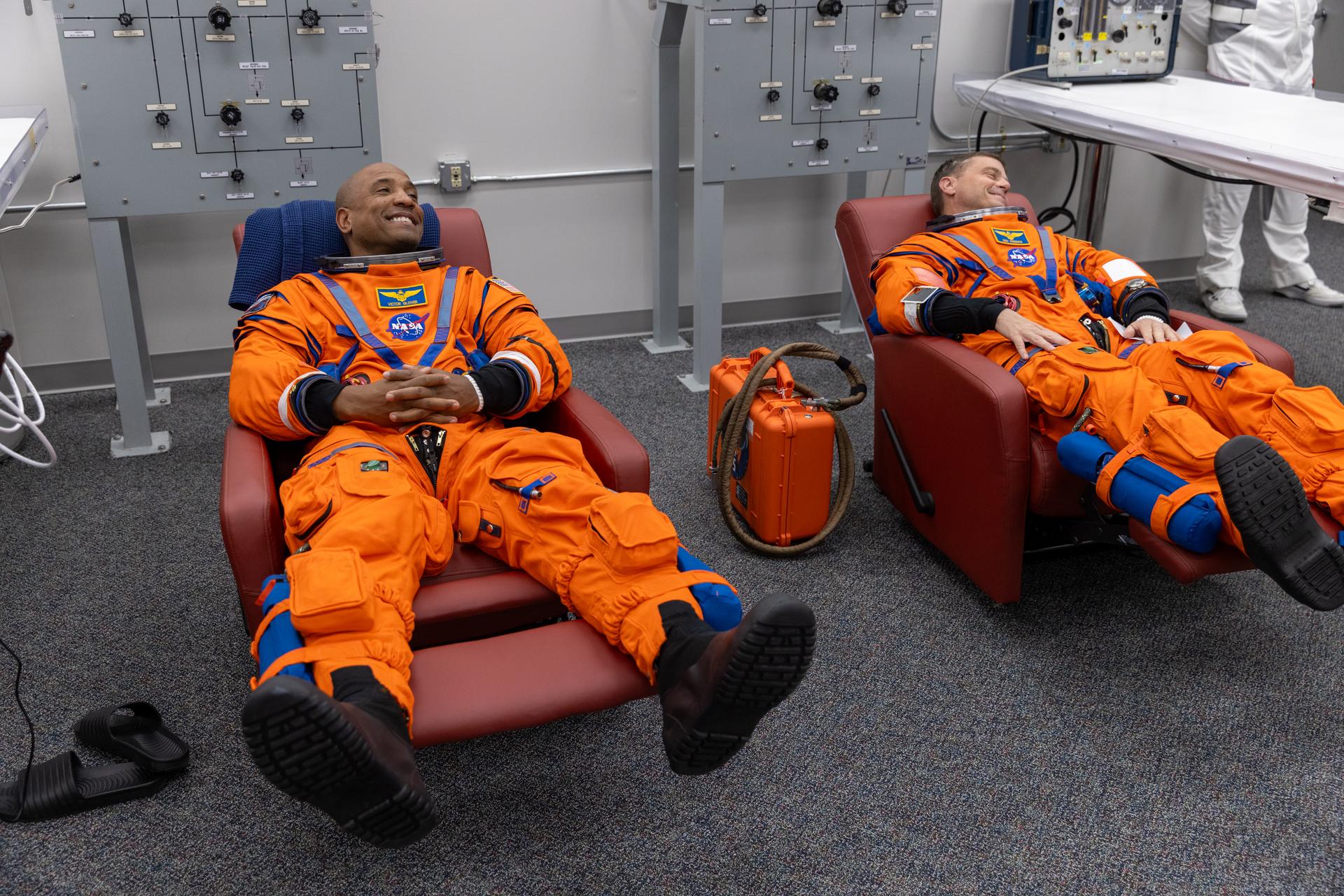
The crew took their seats in the capsule, named "Integrity," and tested all communications and life support systems. The test lasted 5.5 hours. Mission control teams practiced every step—from sealing the hatches to final safety checks. Minor communications issues occurred during the test, which NASA called "a valuable learning experience" that allowed them to practice emergency situations.
When is the launch?
Following the rehearsal, NASA confirmed that all systems had been successfully integrated. The official launch window opens on February 5, 2026. The mission will last 10 days. The Orion spacecraft will orbit the Moon on a free-return trajectory and splash down in the Pacific Ocean. This will be a decisive step before landing humans on the lunar surface.

Meanwhile, President Donald Trump's recent executive order "Ensuring U.S. Superiority in Space," signed on December 18, 2025, set new priorities. The document formally established the goal of returning American astronauts to the lunar surface in 2028 and establishing a permanent lunar outpost by 2030.