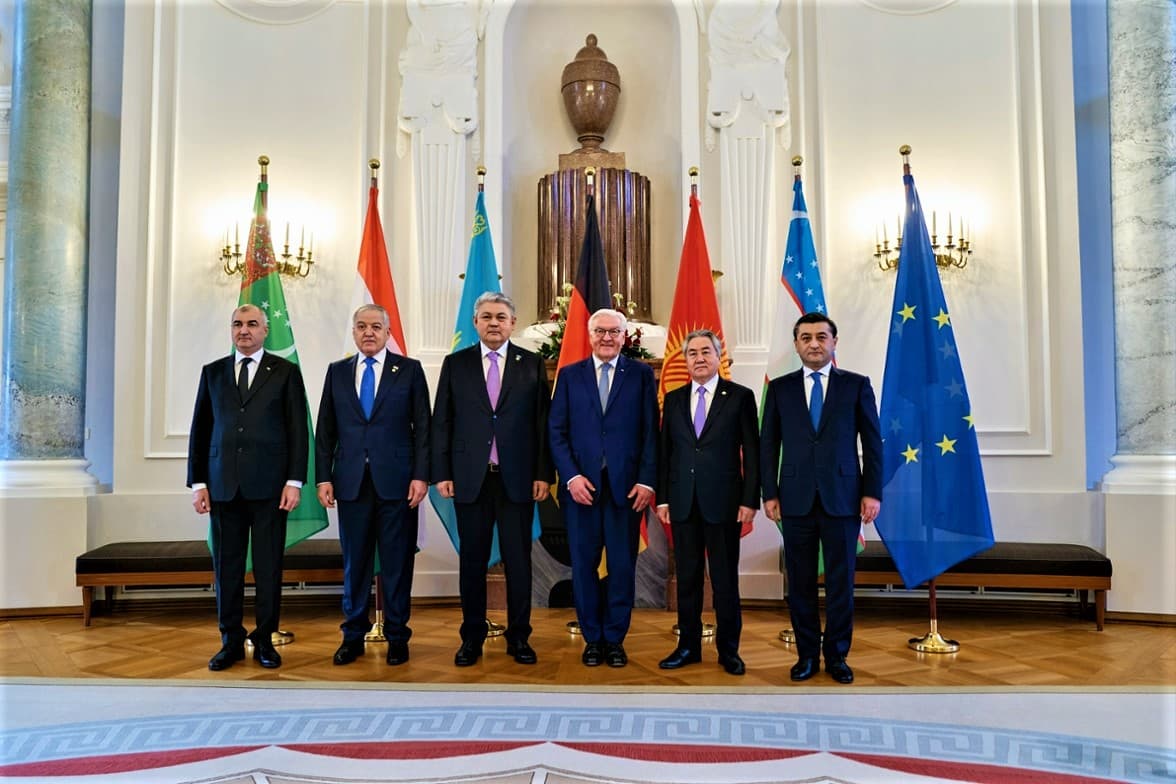



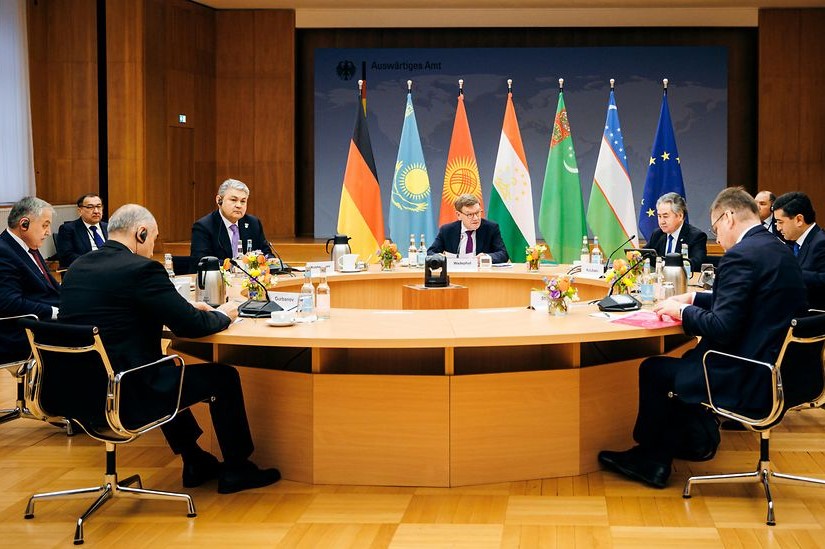
Berlin, February 11 | ORIENT. Berlin became the epicenter of major interregional diplomacy on Wednesday, hosting the first ministerial meeting in the C5+1 format, or Z5+1 (Zentralasien + 1) in German. Schloss Bellevue and the seat of the German Foreign Ministry hosted delegations from five Central Asian countries to discuss the region's future as a key partner for Europe.
The talks were attended by Minister of Foreign Affairs of the Republic of Kazakhstan Yermek Kosherbayev, Minister of Foreign Affairs of the Kyrgyz Republic Jeenbek Kulubayev, Minister of Foreign Affairs of the Republic of Tajikistan Sirojiddin Mukhriddin, Minister of Foreign Affairs of the Republic of Uzbekistan Bakhtiyor Saidov and Deputy Minister of Foreign Affairs of Turkmenistan Akhmet Gurbanov.
The presence of EU Special Representative for Central Asia Eduard Stiprais at the ministerial meeting underlines Germany's approach to working with Central Asia within the framework of the Team Europe Programme.
Bellevue Castle: Personal Reception with the President
German President Frank-Walter Steinmeier personally received the heads of the Central Asian Foreign Ministry delegations. Topics ranged from energy security and critical raw material supplies to the situation in Afghanistan and water resource management. Berlin sees Ashgabat as a reliable partner capable of ensuring stability in the heart of Eurasia, according to the German presidential press service.
The meeting also served as preparation for the next summit of heads of state and government in this format.
The Berlin Declaration: What did the Foreign Ministry agree on?
The meeting at the Foreign Ministry resulted in a Declaration that effectively cements Central Asia's role as Germany's "preferred partner."
Key points for Turkmenistan:
Trans-Caspian Corridor Germany has allocated €2.7 million for the operation of the coordination platform for this route. Berlin-based logistics giants are ready to invest in Turkmen ports and railways to speed up the flow of cargo from Asia to Europe.
Green Energy and Hydrogen As part of the Green Initiative, with a portfolio of €250 million, Germany will support decarbonization and renewable energy projects in the region.
Science and Education A memorandum of cooperation in innovation and space will be signed in Halle in February 2026. The network of PASCH schools, where young people from Central Asian countries study German, is also expanding.
Border Security Turkmenistan and Germany will continue close cooperation through the OSCE, for which Germany has already allocated over €13 million to the region since 2022.
Economic Maneuver
A business forum attended by 30 of Germany's largest companies was held on the sidelines of the meeting. The message is clear: Germany is ready to provide state guarantees for investments in Turkmenistan, particularly in the chemicals, agriculture, and personnel training sectors.