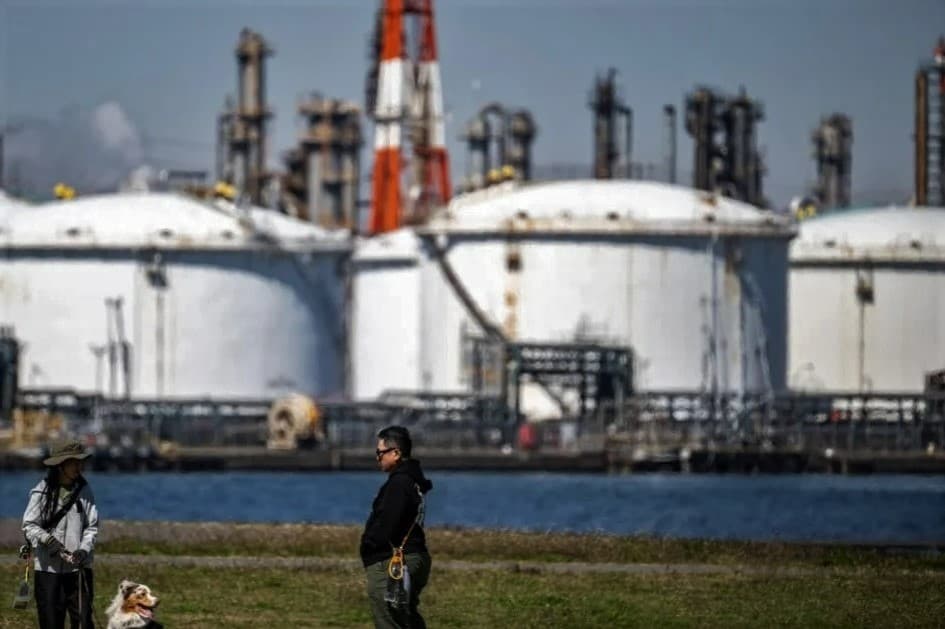



ORIENT / ANALYTICS. The global economy entered this week with cautious optimism. The most important event of Monday, March 16, was the release of Japan's oil reserves. Tokyo took the unprecedented step of releasing 80 million barrels from its strategic reserves – both public and private.
This colossal volume of oil, equivalent to 45 days of the entire country's consumption, was part of a joint effort by 32 International Energy Agency countries. This move helped maintain Brent crude prices within the $101–$103 range, striking a balance between security, affordability, and supply reliability. As oil prices surpassed $100, Japan sacrificed its oil reserves from the past to save the present.
However, oil's "little brother" – natural gas – remains under high pressure in the critical $1,150–$1,200 range. However, there's an important nuance here: today, those who initially relied on pipeline systems rather than LNG tanker deliveries have emerged colossally advantaged.
In long-term pipeline projects, the price is usually protected by a contractual corridor – a maximum and minimum price. And no matter how high exchange prices soar, the gas in the pipeline remains faithful to its obligations, thereby ensuring predictability. Laying a pipeline is certainly expensive, but during periods of market frenzy, gas pipelines become a model of stability.
Watching the emergency measures taken by global powers, one can't help but recall the path of our region. And here, Turkmenistan's gas history is a chronicle of how patient persistence overcomes crises. And those lessons have greatly helped the country strengthen its energy and economic independence.
The lesson of 2008. While the world was reeling from the global financial collapse, Turkmenistan stubbornly laid the foundations for its energy security.
It was followed by the lesson of 2014. As global stock exchange prices plummeted, Turkmenistan continued to purposefully plan and build major gas pipelines, striving to become a reliable hub for Eurasian energy routes.
Today's stability is the result of the crisis immunity it has acquired over the years. While other countries are calculating how many days their reserves will last, our region relies on the reliability of its own resource base.
But let's be objective. The global economy is a network of interconnected vessels. To understand the scale of the pressure on the average person's wallet, just look at the gas stations in the world's capitals this Monday.
For example, in London, a liter of gasoline has approached the $2.50 mark. The British, finding themselves outside the EU single market, are feeling the blow particularly acutely – logistics costs are literally rising before our eyes.
In New York, a gallon of gas soared to a historic high of $5.10 (or $1.35 per liter). This is a historic high for the "city that never sleeps." The weekly increase was more than 15%.
In Berlin, the price crossed the psychological threshold of €2.25 per liter. Malicious tongues in Germany have already dubbed this the "fuel tax on life."
And in Tokyo, despite the release of 80 million barrels of storage, the price at the pump rose to 175 yen per liter, marking a 10% increase in just three days! Without government subsidies, the price of oil would have skyrocketed. And there's no guarantee it would have reached near space.
Expensive gasoline is like an "invisible passenger," hidden in every food truck at the market, but for whom you have to pay. In such cases, so-called "imported inflation" occurs. What does this mean?
Imagine a farmer feeding his cows grass from his field. His personal milk costs haven't increased, but the things he buys with the proceeds rise in price under pressure from the global market. In this case, the farmer is forced to raise the price of milk to maintain the balance. However, Turkmenistan's domestic energy resources allow it to withstand the notorious process of "imported inflation" much more easily.
A few words about OPEC+'s strategic pause. The standoff between the giants continues even amid the energy crisis. Japan's global "energy landing operation" has not gone unnoticed by OPEC+. Understanding that a massive release of reserves could collapse the market, the alliance, led by Saudi Arabia and Russia, has adopted the position of "outside but interested" observer.
At recent consultations, the agreement's participants confirmed that they do not intend to increase production in response to the International Energy Agency's actions. And while the IEA is dumping strategic reserves onto the market, OPEC+ is in no hurry to significantly increase production. For in this struggle, the winner is the one with long-term resources, not temporary reserves.
Hence: knowledge of all the hidden and overt mechanisms is also a real resource. The world seeks salvation in reserves, while the wise seek it in reliable connections and conscious calm.
That's all for now. But only until tomorrow...