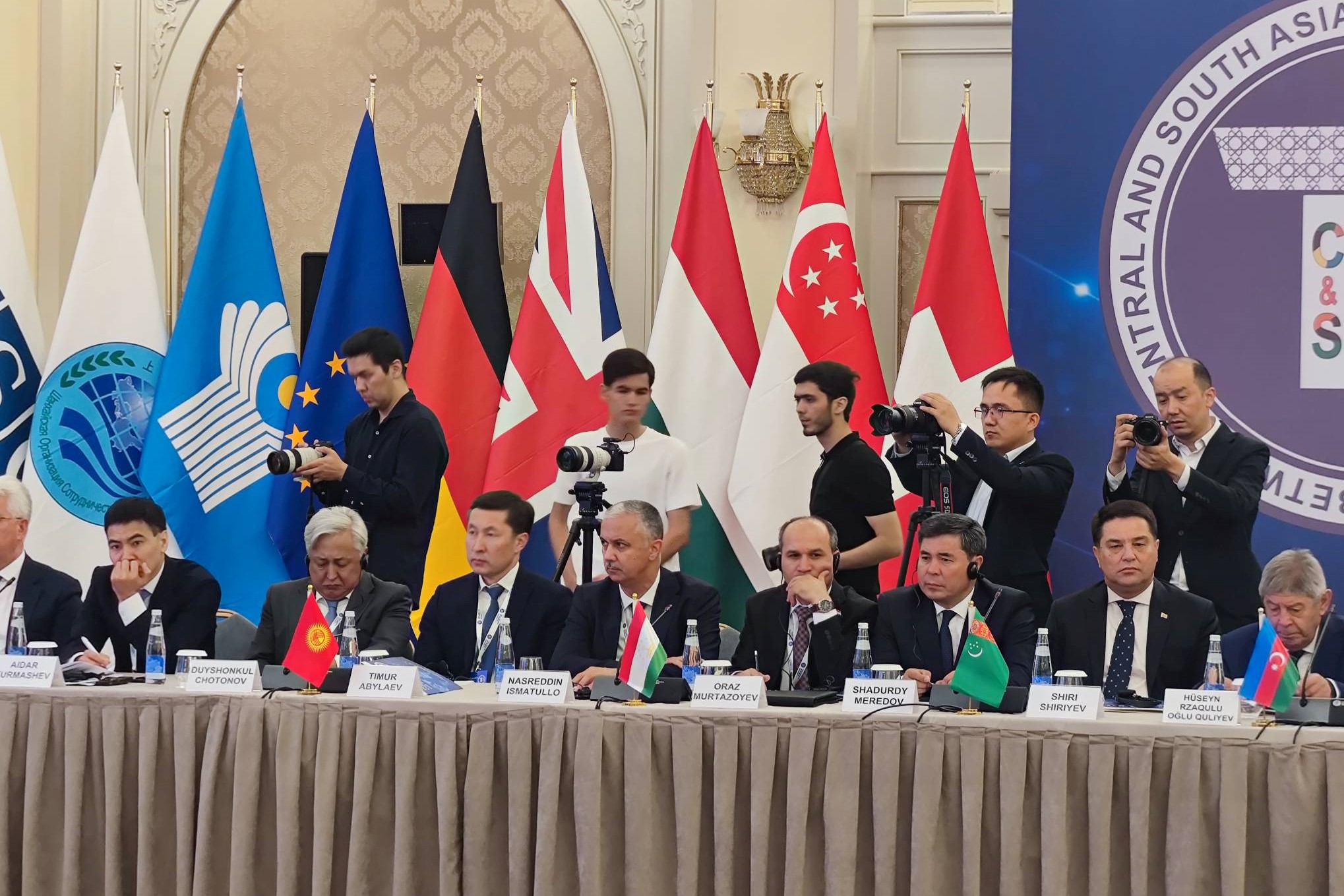
Tashkent, June 4 | ORIENT. The high-level discussions at the plenary session of the Termez Dialogue in Tashkent clearly demonstrated that modern transregional integration can no longer rely solely on political statements and appeals. With the global economy undergoing a large-scale structural transformation and supply chains fragmenting under geopolitical pressure, pure pragmatism is taking center stage.
This was the spirit of the speech by Deputy Minister of Finance and Economy of Turkmenistan Perkhat Yagshiyev, whose keynotes effectively reflected Ashgabat's economic position within the Conference on Interaction and Confidence-Building Measures in Asia. Neutral Turkmenistan proposes a fundamentally different strategy: monetizing its stable political status into tangible infrastructural and financial dividends for the entire Central and South Asian macro-region.
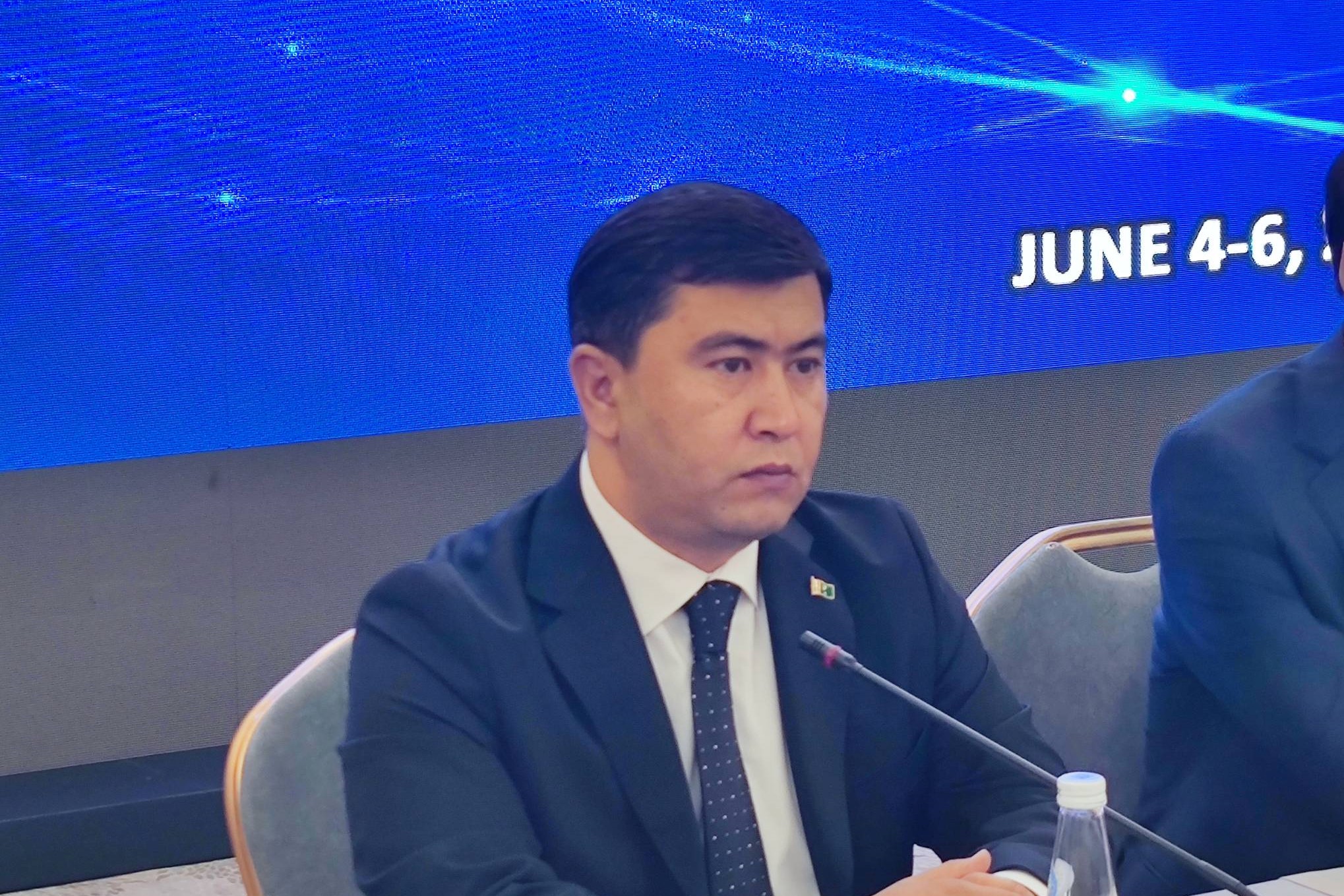
The foundation of this process is a large-scale reboot of the continent's transport and transit map. Ashgabat clearly understands that geographic location only becomes an advantage when it is supported by flawless logistics. Turkmenistan's connectivity strategy is built on aligning the potential of the Turkmenbashi International Seaport with the extensive rail network of Central Asia and the Caspian Basin. This is not simply about transit, but about creating end-to-end multimodal corridors that will seamlessly integrate into global North-South and East-West routes.
At the same time, Ashgabat is shifting the transport discussion from rail-laying to digital: the key priority has been declared to be the introduction of paperless trade and the complete digitalization of transport documents, which could eliminate the notorious administrative and customs deadlocks faster than any intergovernmental agreement.
A logical continuation of the transport breakthrough should be the formation of fundamentally new, more capacious regional markets. The growth of mutual trade between Central and South Asia is currently hampered by artificial barriers that can only be overcome through the simultaneous reduction of tariffs and the simplification of regulatory procedures. Turkmenistan's economic strategy aims to transform cross-border and transregional flows into a unified ecosystem where businesses and investment institutions can operate without regard for political circumstances. Reducing transaction costs will allow countries in the region to more effectively utilize their combined consumer and resource potential, creating sustainable internal immunity to external economic shocks.
As part of the Termez Dialogue, Ashgabat's energy vector has also received a new, deeply industrial rethink. Possessing colossal hydrocarbon reserves, Turkmenistan is moving away from its role as a purely raw materials supplier, emphasizing industrial cooperation and diversification. The priority remains not just gas supplies, but joint projects in the oil and gas chemical industries, the production of mineral fertilizers and modern building materials.
The TAPI (Turkmenistan-Afghanistan-Pakistan-India) gas pipeline project symbolizes this integration. At the Tashkent meeting, the Turkmen side once again emphasized that TAPI is not simply an energy pipeline, but a powerful social and economic catalyst capable of generating thousands of jobs and building new value chains in those parts of Asia that most need stabilization.
Digital transformation is becoming a fundamental element of Turkmenistan's modernization agenda. Digitalization in public administration, the financial and banking sector, and industry, which Ashgabat has been consistently pursuing domestically, is now being offered as a platform for regional integration. Technology exchange, joint cybersecurity projects, and the training of a qualified next-generation workforce are areas that can enhance the global competitiveness of Asian economies. Digital integration based on principles of equality and trust allows for the creation of a transparent and predictable business environment attractive to major international investors.
Ultimately, the speech by the representative of the Turkmen financial department in Tashkent highlighted the main trend: the success of further cooperation in Asia directly depends on the willingness of states to pursue strictly depoliticized, pragmatic approaches. Turkmenistan's active neutrality has once again proven its effectiveness as a reliable diplomatic shield, allowing for the unimpeded advancement of large-scale economic projects.
By proposing concrete solutions in the areas of transport, energy, and digitalization, Ashgabat is assuming the role of a locomotive that not only connects the two macro-regions but also lays a solid foundation for their long-term and shared prosperity.
Bekdurdy AMANSARYEV,
Expert, Center for Strategic Studies, Institute of International Relations, Ministry of Foreign Affairs of Turkmenistan