We are guided by what unites people




News
Articles
Media
Announcement
 Chinese New Year
Technology
About Us
Contacts
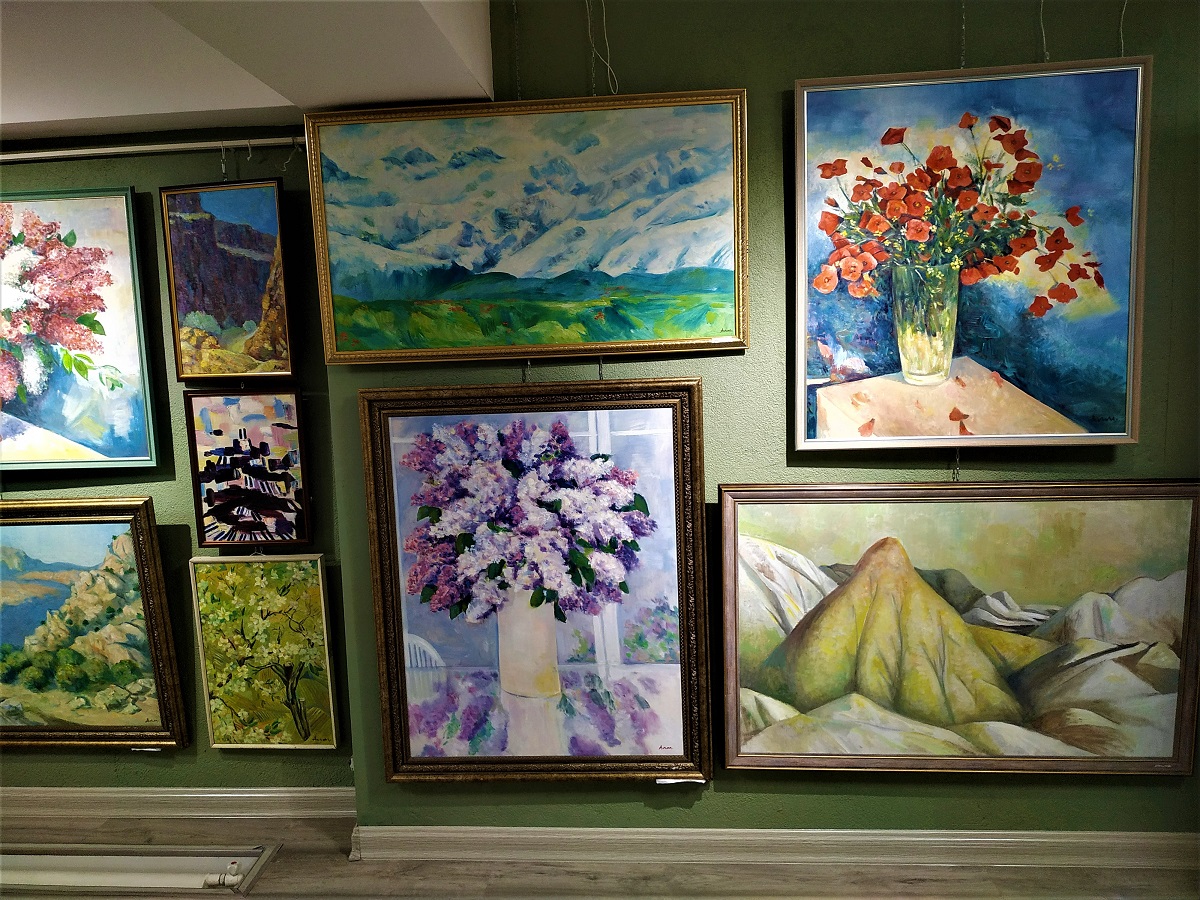
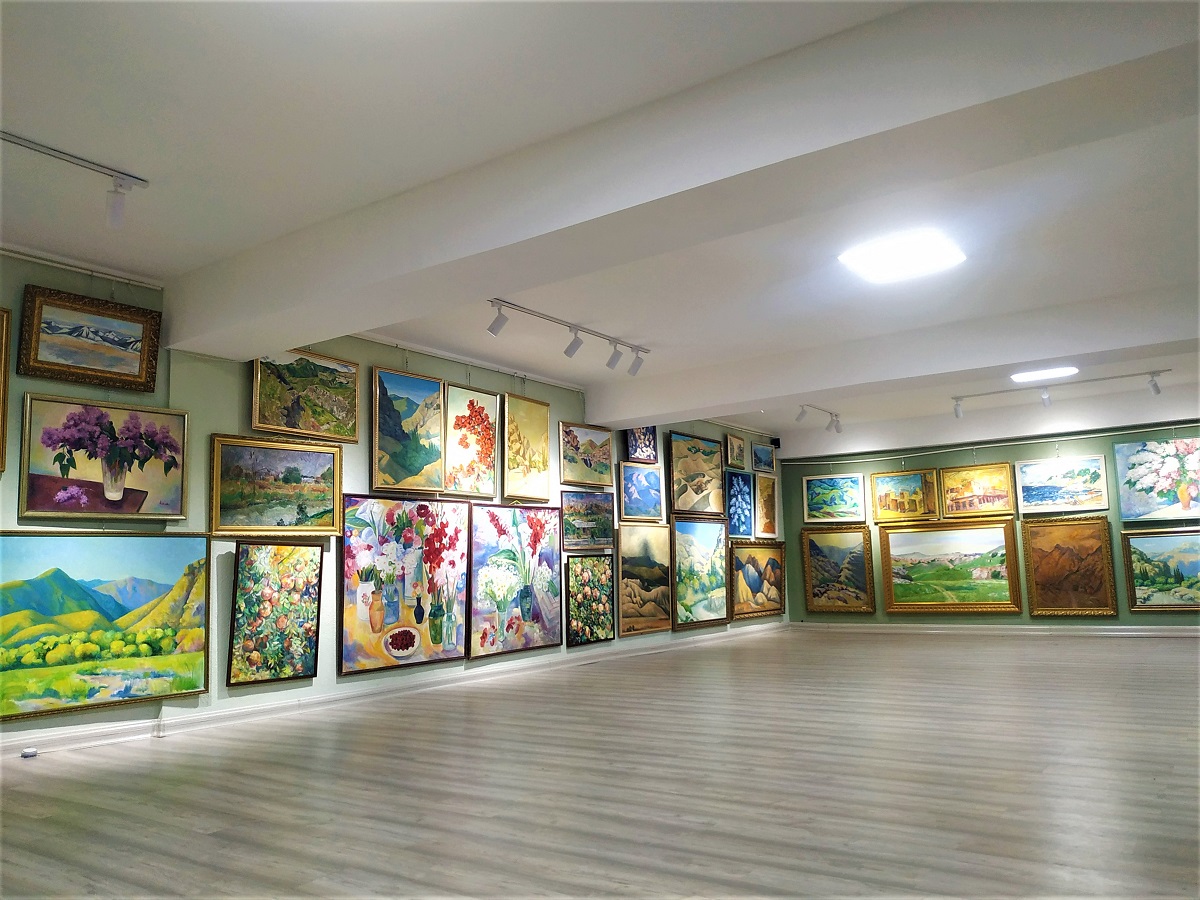
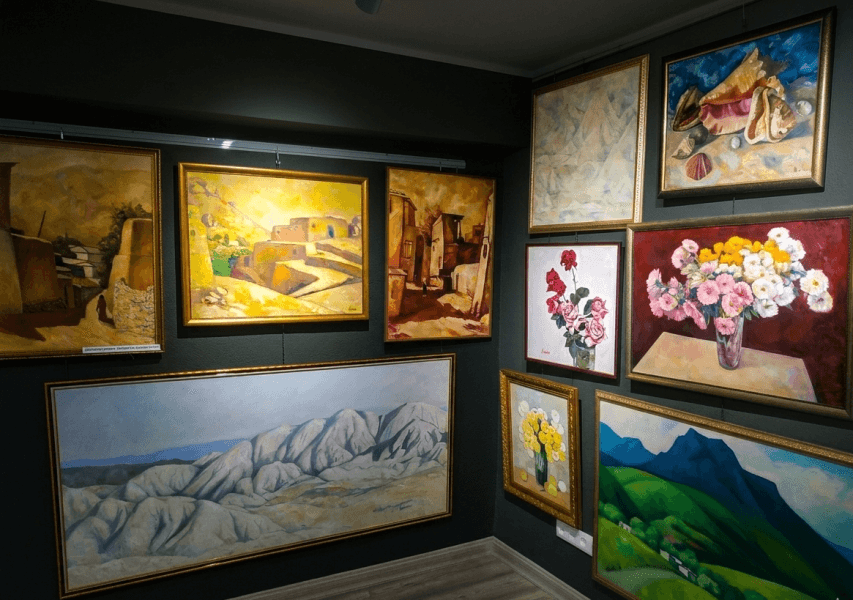
Chinese New YearOn the first day of spring, the art gallery on Aga Berdyev Street was filled with a special light that contrasted with the gloomy day outside. A new exhibition opened here, bringing together two masters whose visions of the world create a remarkable balance: the patriarch of Turkmen painting, Annadurdy Almammedov, and his distinctive colleague Berdy Charyev.
The space of the hall is schematically divided into two parts, yet this division only emphasizes the internal unity of the exhibition. Like the two halves of the ancient symbol of Yin and Yang, the artists echo and reflect one another.
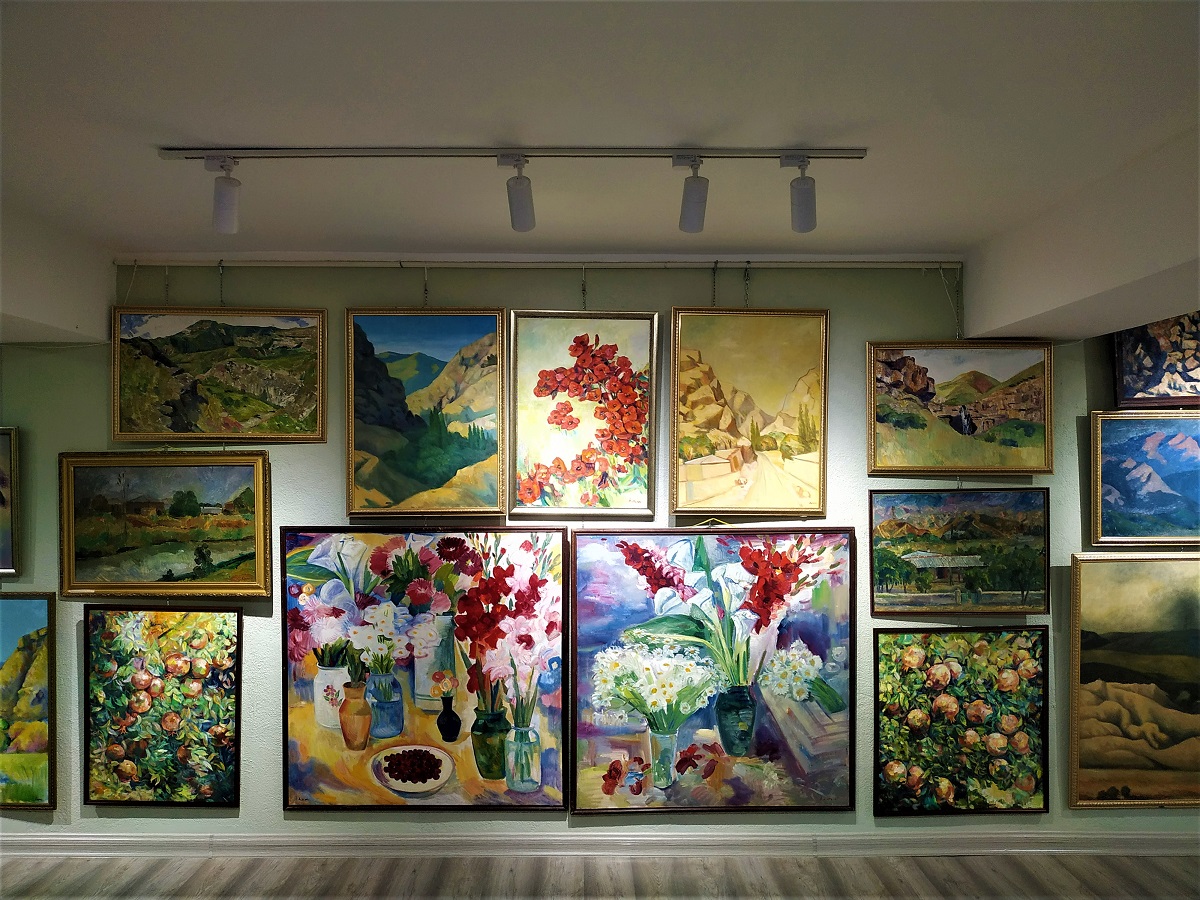
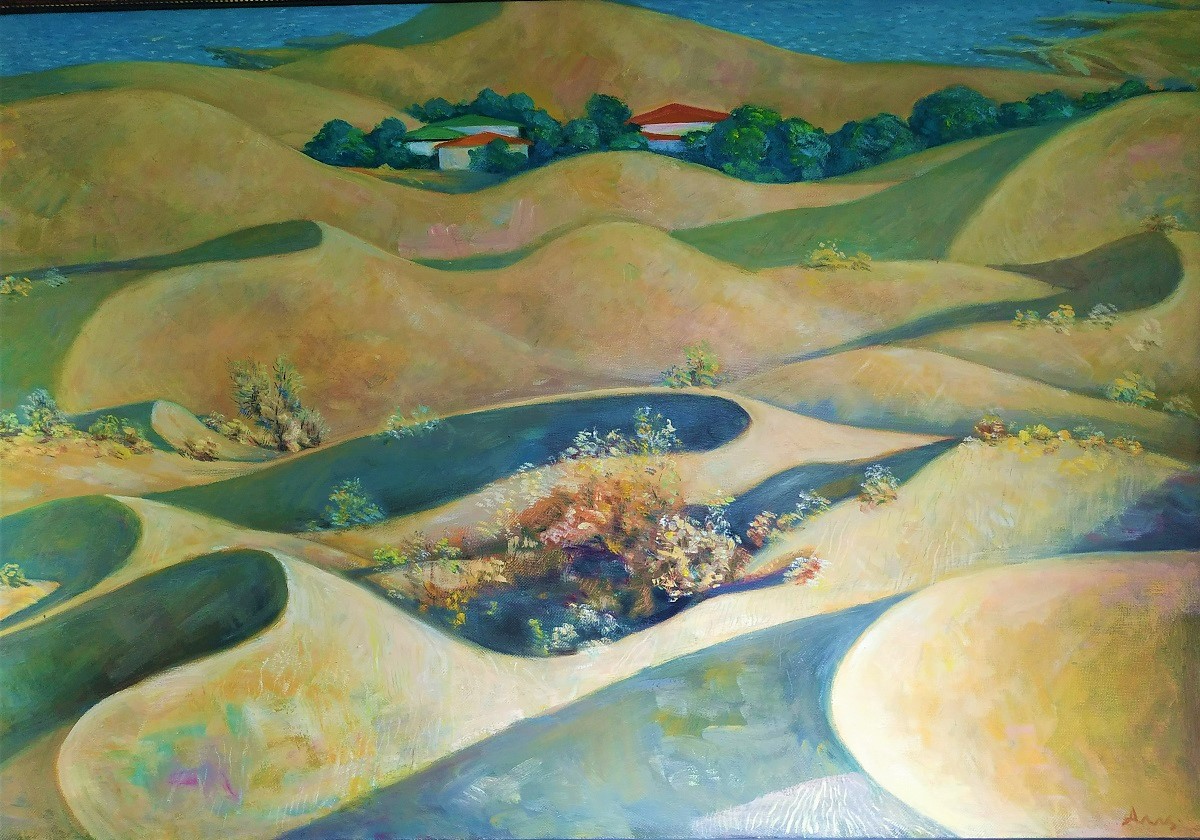
For Almammedov, nature is a majestic and inspiring teacher. The master contemplates it with the reverence of a student, discovering poetry in every petal. In Charyev’s works, however, the perspective shifts: here nature itself seems to observe humanity, seeing in people its loyal allies—workers woven into the endless rhythm of existence.
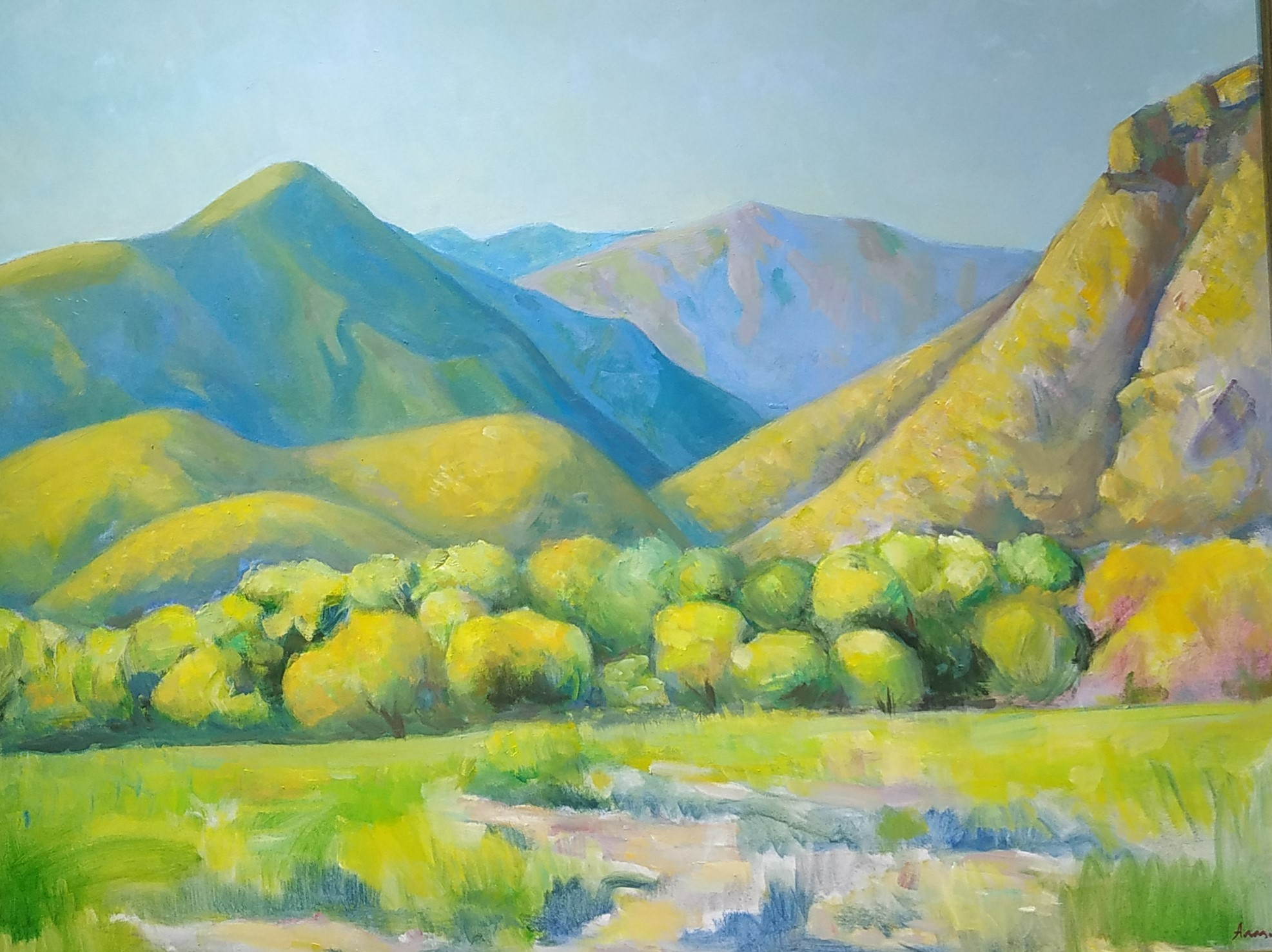
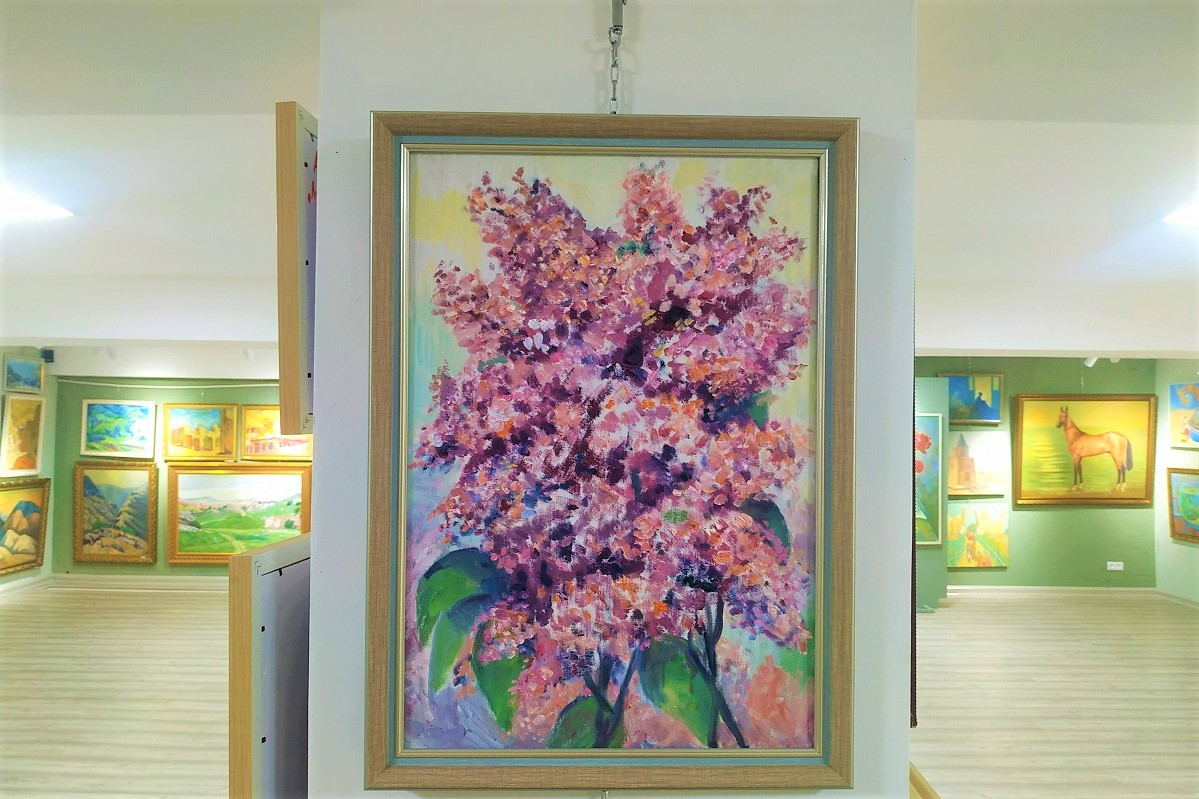
Almammedov’s flowers are a saga of their own. Each bud seems illuminated from within by love, while his famous mountains and hills appear frozen like sleeping guardians. They carry a monumental strength that should not be awakened. They preserve our peace as long as we protect their silence.
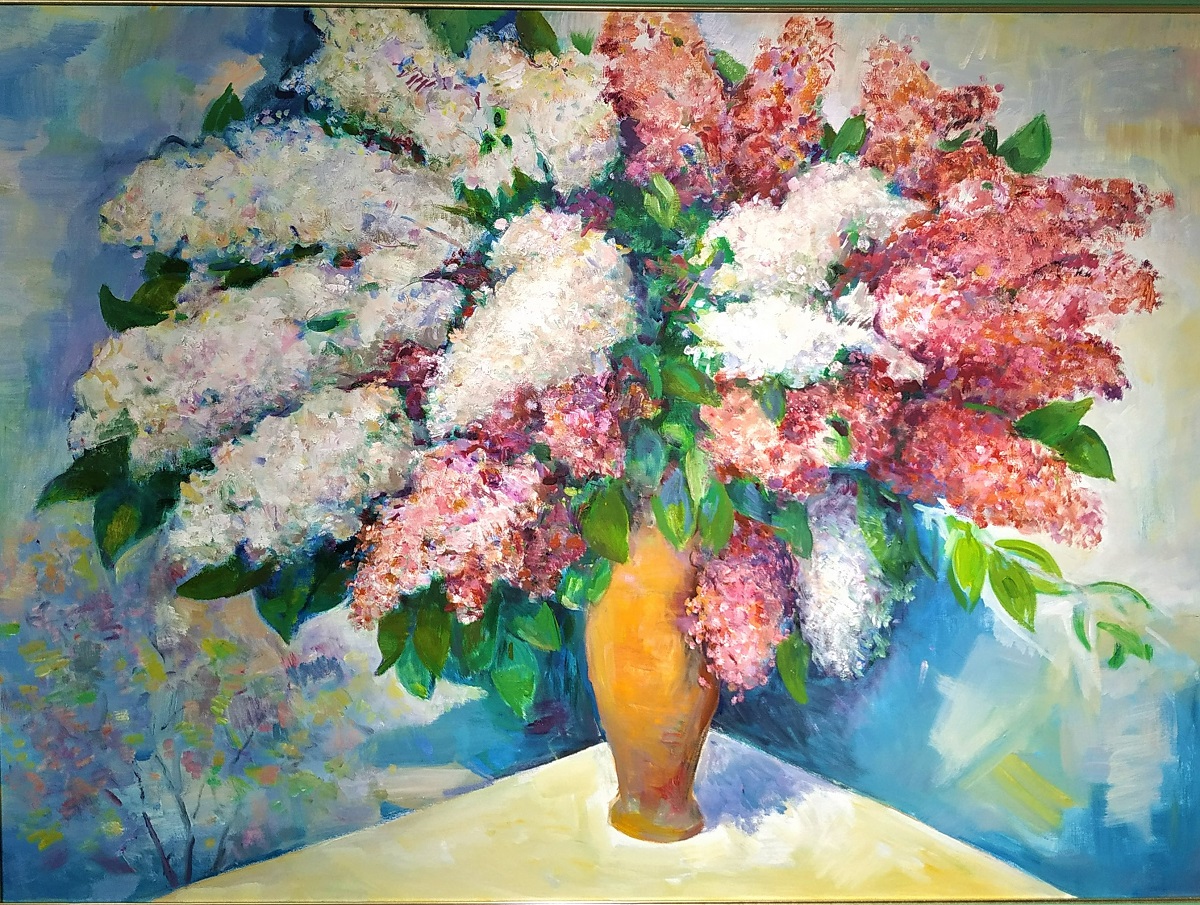
It is fascinating to observe how the maestro’s brush changes depending on geography. His native landscapes are painted with tender, almost prayerful stillness. But when the artist travels abroad, his brushstrokes become broader and more rapid. Streets, houses, and embankments appear on the canvas hastily, as if the painter fears missing the fleeting moment of a foreign city.
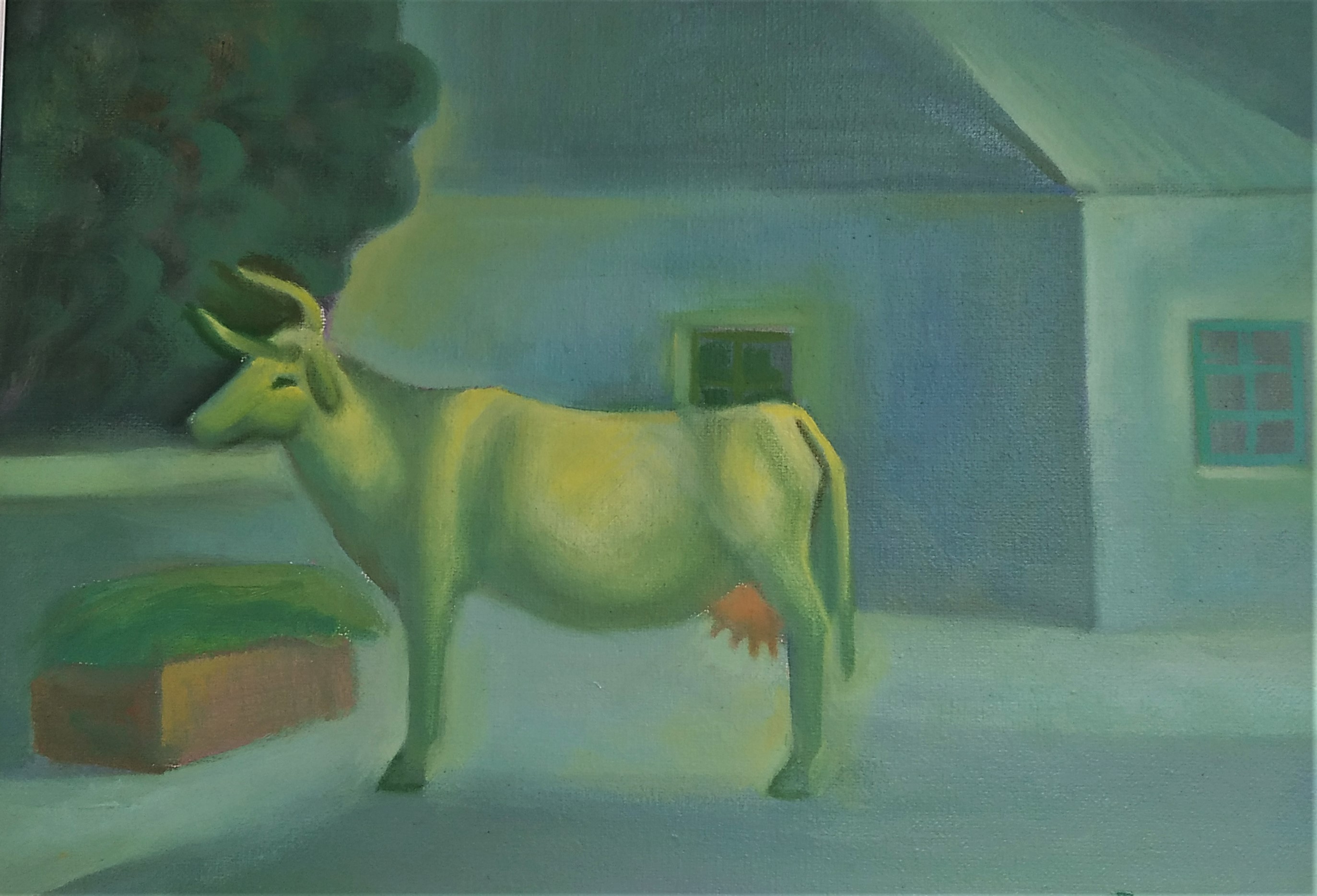
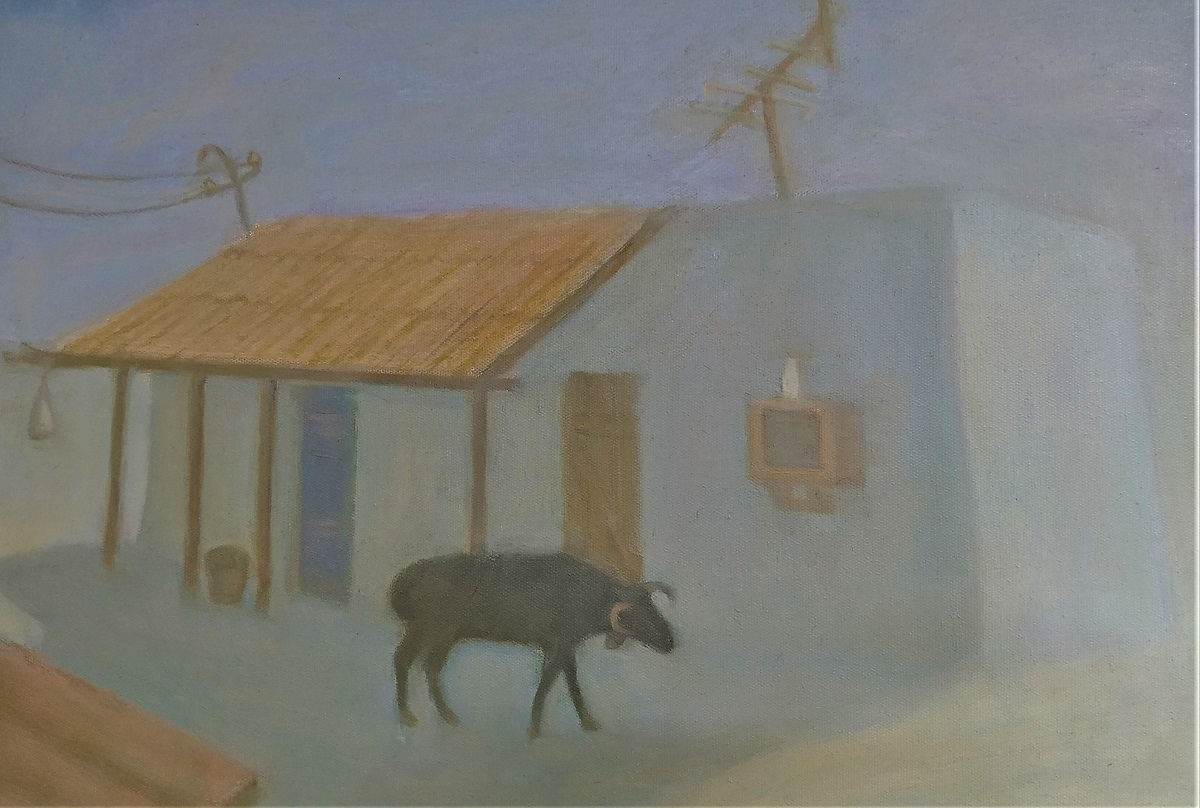
Berdy Charyev offers a different focus. His characters appear distant, as if we are observing them through a layer of clear water or through the mist of time. In Charyev’s world, time is not an abstraction but a physical substance, as dense as oil paint itself.
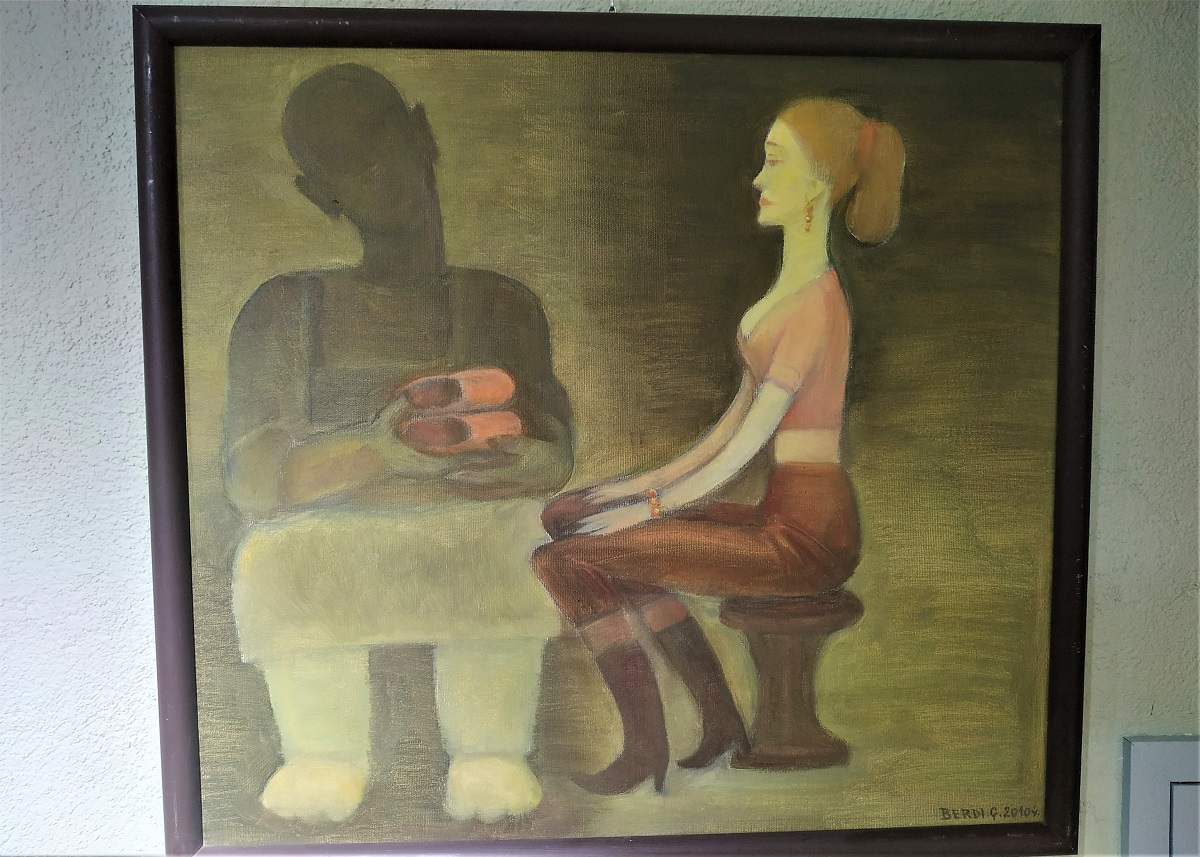
His people are static, much like Almammedov’s mountains. Charyev’s characters are frozen in their labor—a labor that is beautiful in itself, even if a person does not fully realize their great role in it. It is a humble self-devotion. A distinctive detail in his works is the “light accent”: a ray of sunlight falling on a single detail and transforming it into a deep visual metaphor.
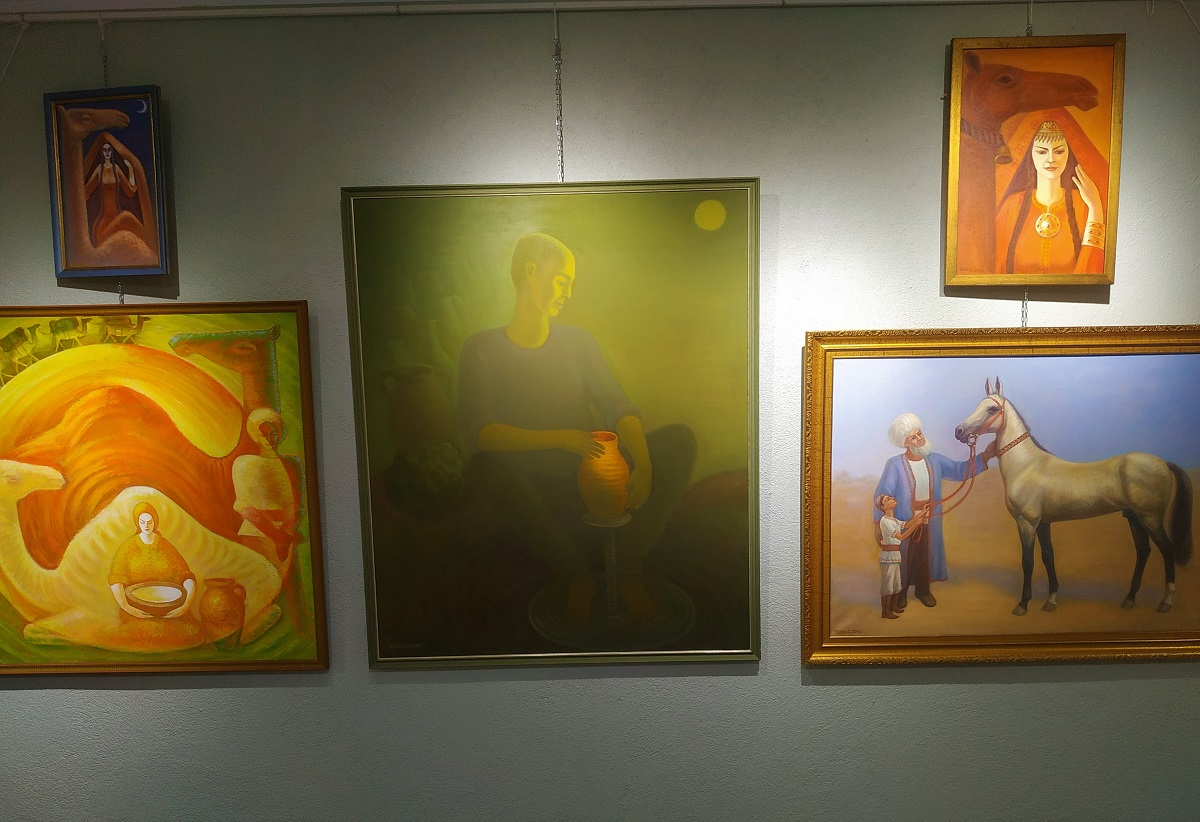
“This exhibition is not just a collection of canvases; it is a living conversation between generations,” says the curator, Jeren Klycheva. “We wanted to create a space where viewers could slow down. The magic of these works lies in the absence of flattery—there is only the pure light of the soul and the ‘nerve’ of a person who truly cares about beauty. When you see visitors pausing in silence before the paintings, you realize that all the efforts put into creating this gallery were worthwhile.”
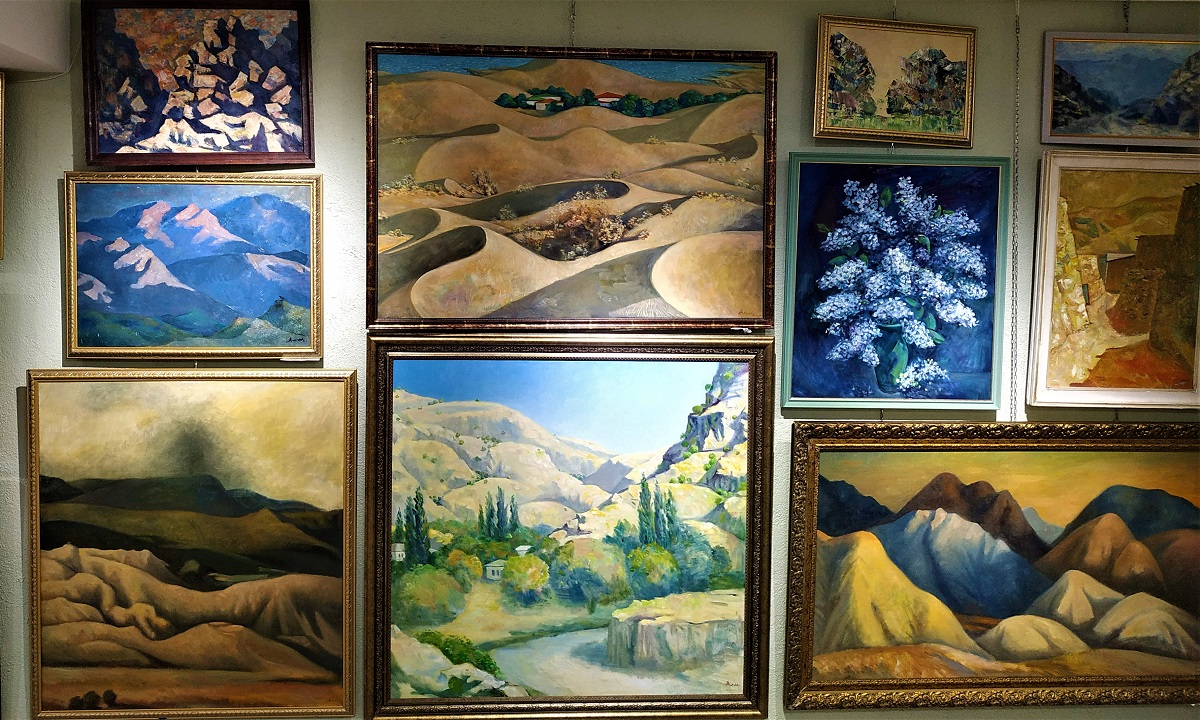
The exhibition on Aga Berdyev Street is not a static museum display. It is a living platform where a painting you admire can continue its story in your own home. The exhibition-sale format allows visitors not only to admire the “sleeping guardians” of the mountains or the “glowing flowers,” but also to take a piece of this spring balance with them. After all, true beauty is something you want to return to again and again.
The exhibition will run until March 30. Make sure to catch your own ray of light in the dialogue of these two masters.