||
The central idea of the intriguing and slightly ironic show "Our Children on the Internet," which recently took place in Ashgabat, grew out of the eternal debate between generations. Concert organizers Ekaterina Darchia and Elena Arakelyan decided not to simply entertain the audience with classical numbers but took a bold step, transforming the confrontation between live art and digital technology into a captivating stage duel.
The performance opened unexpectedly and metaphorically—with the "Dance of Notifications." The young performers, literally glued to the flickering screens of their smartphones, masterfully portrayed "digitized" characters, while the musical accompaniment flawlessly imitated the intrusive sounds of gadgets: from the beeping of incoming messages to the clicking of keyboards. The production vividly and humorously demonstrated what today's younger generation risks becoming without timely offline access.
After the "prisoners" of the virtual world left the stage, host and inspirational figure of the evening, Ekaterina Darchia, warmly welcomed the audience, reminding families of the main purpose of the event—the joy of lively, emotional connection. The colorful show offered a dynamic kaleidoscope of meanings. The musical remakes were a true highlight.
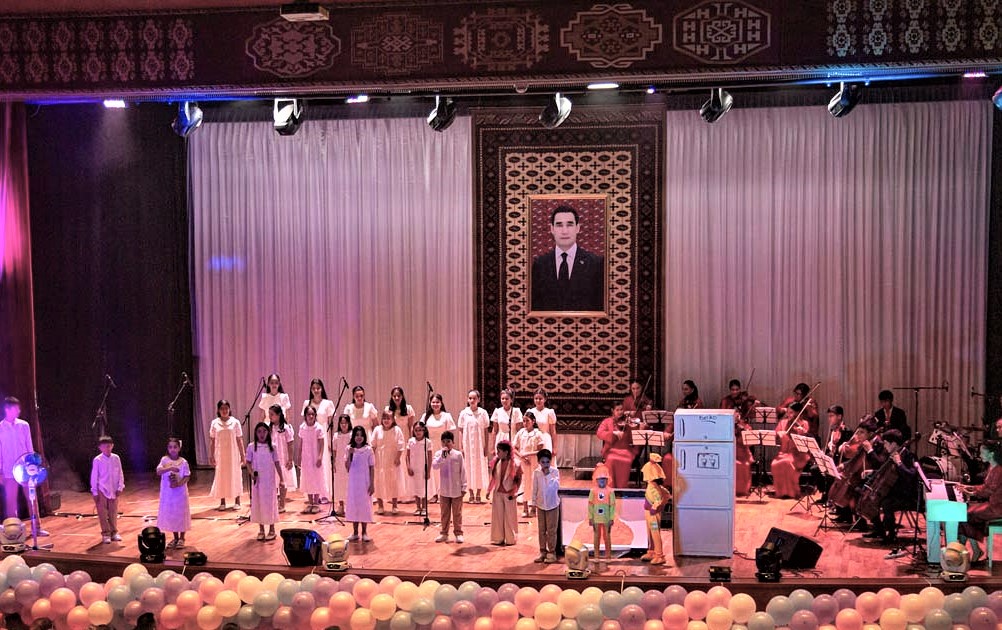
The famous song "Chunga-Changa" was performed with updated, adapted lyrics about the dangers of endless web surfing, and the forest robbers from "The Bremen Town Musicians" transformed into wily hackers hunting for parents' passwords. To restore the audience's faith in progress, characters dressed as Fixies took the stage, reminding them that technology is designed to help people, not to replace real-life friends.
The evening's dynamism grew with each performance, offering an alternative to virtual reality. Dancers from the Sundzha Lezginka School, led by Allaberdy Atayev, literally blew the house away with their expressive Caucasian rhythms, proving that folk dance requires far more concentration and energy than scrolling through short videos.
Immediately following this explosion of dance, the popular song "Dudochka" by composer Aina Shirova was performed, specially prepared for the evening by the composer in an exclusive jazz orchestral arrangement. A virtuoso piano improvisation performed by Tylla Shirova, winner of the prestigious state competition "Ýaş zehin," particularly delighted the sophisticated audience.
At the program's finale, when the audience sang along to the familiar tunes "What Progress Has Come to" and "Planet of Childhood" accompanied by the children's choir "Pevchie Solovyi" (directed by Gulyalek Bayrammyradova), the experiment's success became clear. Live music and genuine theatrical performances triumphed over social media. As they left the auditorium, adults and children alike animatedly discussed what they had seen, and, most surprisingly, many remembered their smartphones only to call a taxi home.
Ayna Yolbarsova