We are guided by what unites people




News
Articles
Media
Announcement
Technology
About Us
Contacts
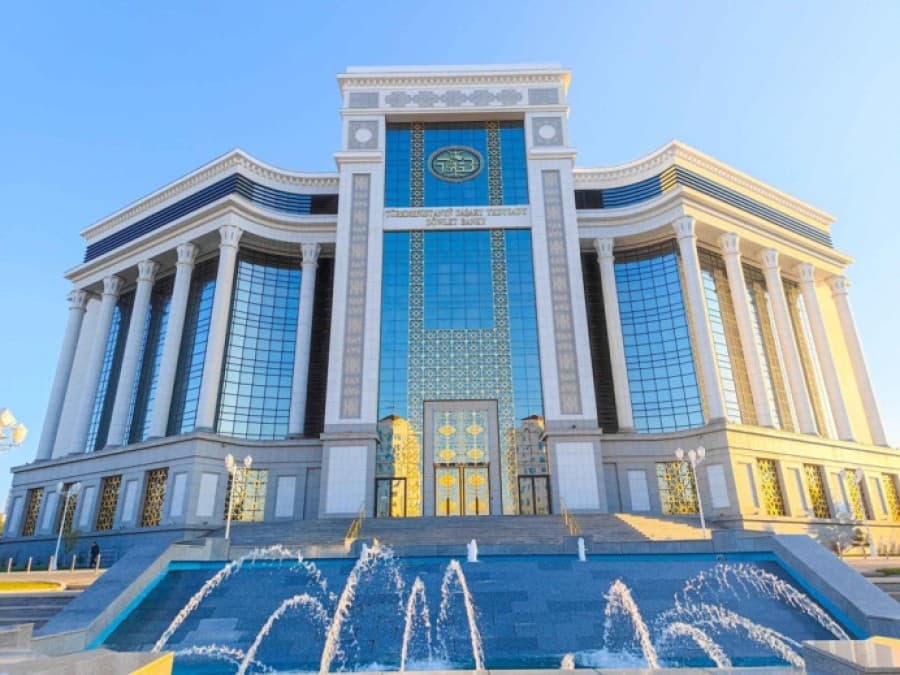
Turkmenistan is consistently implementing a state policy aimed at sustainable socio-economic development, modernization of the national economy, and strengthening the country’s position in the international arena. Strategic planning, the development of foreign economic relations, and the improvement of financial institutions play a crucial role in this process.
President of Turkmenistan Serdar Berdimuhamedov and the National Leader of the Turkmen people, Chairman of the Halk Maslahaty, Hero Arkadag Gurbanguly Berdimuhamedov attach great importance to the country’s socio-economic development, strengthening its financial and economic potential, and enhancing its international standing. In this context, such strategic documents as “Revival of a New Era of a Powerful State: National Program for Socio-Economic Development of Turkmenistan in 2022–2052”, “The Program of the President of Turkmenistan for Socio-Economic Development of the Country in 2022–2028”, as well as other state programs aimed at comprehensive modernization of the national economy, are being successfully implemented.
A well-considered foreign economic policy is an essential component of the country’s sustainable development and its active participation in global economic processes. Turkmenistan consistently expands foreign economic ties, increases the volume of international trade, investment, and technological cooperation, which in turn necessitates the establishment of reliable financial institutions and modern mechanisms to support foreign economic activities.
In this regard, the establishment of the State Bank for Foreign Economic Affairs of Turkmenistan became one of the key stages in the formation of the national financial and economic system. Founded on January 27, 1992, the bank has played a significant role in the development of market mechanisms, implementation of state programs, and integration of Turkmenistan into the international financial and banking system. Its creation gave a powerful impetus to investment policy development and became a reliable financial pillar for strategic sectors of the economy.
Over the years, the State Bank for Foreign Economic Affairs of Turkmenistan has accumulated extensive experience in developing international financial relations, financing large investment projects, providing working capital, and expanding the range of banking services for the population and businesses. By consistently implementing tasks arising from state programs, the bank makes a substantial contribution to attracting foreign investment and strengthening cooperation with international partners.
International Cooperation and Financial Partnerships
The bank’s client base primarily consists of state institutions in strategic sectors of the national economy, financial organizations, and private enterprises. In recent years, cooperation with leading financial institutions of the Asia-Pacific region—particularly Japan, the Republic of Korea, China, the United Arab Emirates, and the Kingdom of Saudi Arabia—has become increasingly active.
Currently, the bank effectively cooperates with more than 50 banks and financial organizations from nearly 20 countries worldwide, expanding the geography of partnerships annually. This enables prompt and reliable execution of international settlements and payments on behalf of clients.
Special attention is paid to cooperation with international financial institutions and development funds. Since 1994, the bank has been a member of the Islamic Development Bank and is also a member of organizations within the IsDB Group, including the Islamic Corporation for the Development of the Private Sector, the Islamic Corporation for the Insurance of Investment and Export Credit, and the International Islamic Trade Finance Corporation. These partnerships contribute to expanding the country’s investment opportunities and strengthening its position in the global financial market.
Financing Strategic Sectors and Major Projects
The stable development of the national economy is reflected in growing production indicators across the transport and communications, energy, industrial, trade, agricultural, construction, and services sectors. In this process, foreign investors play a significant role, with the State Bank for Foreign Economic Affairs of Turkmenistan acting as a key financial coordinator.
The bank has established cooperation with the Japan Bank for International Cooperation, the Export-Import Banks of China and South Korea, and export credit agencies of Germany, Italy, and Switzerland. These mechanisms have become the main sources of financing for projects in strategically important sectors of the economy.
With the bank’s participation, major infrastructure and industrial projects have been implemented, including the construction of polypropylene and polyethylene plants in Gyyanly, a urea plant in Garabogaz, a gas processing complex in Ovadandepe, and production facilities in Mary. These projects have significantly strengthened the country’s export potential.
Support for Modernization and Social Infrastructure
Together with international partners, the bank has financed the supply of European-made agricultural machinery, projects for modernization of the national energy system, and the development of small and medium-sized enterprises.
Particular importance is attached to financing socially significant facilities. Last year, with the support of the Islamic Development Bank and the Saudi Fund for Development, projects for the construction of oncology centers in Mary, Balkanabat, and Turkmenabat were launched. In November of last year, on behalf of the Government, an agreement was also signed with the Asian Development Bank to finance the construction of a secondary medical educational institution in Ashgabat.
The bank also participates in financing major international initiatives, including the construction of the Turkmenistan–Afghanistan–Pakistan–India (TAPI) gas pipeline on the country’s territory, which is an important element of the implementation of state programs.
Digitalization and Development of Cashless Payments
An important area of the bank’s activity is the expansion of cashless payments and the introduction of digital technologies. In cooperation with the international payment system VISA, national and virtual cards, internet banking, online lending, and e-commerce services have been introduced.
One of the key digital projects was the launch of the Galkynyş payment system, which provides individuals and legal entities with a wide range of remote banking services—from making payments and managing accounts to opening deposits, obtaining loans, and issuing cards. These solutions contribute to increasing the accessibility and quality of banking services, as well as automating internal processes.
International Ratings and Financial Stability
The State Bank for Foreign Economic Affairs of Turkmenistan makes a significant contribution to strengthening the country’s international financial image. In June 2025, Fitch Ratings assigned the bank a long-term issuer default rating of “BB-” with a Stable outlook, confirming its ability to meet obligations in both national and foreign currencies in a timely manner.
Fitch regularly analyzes the bank’s activities and updates its ratings and analytical reports to provide up-to-date information. On January 16, 2026, Fitch updated its report on the State Bank for Foreign Economic Affairs of Turkmenistan based on data presented in the bank’s audited financial statements for 2024. The report confirms that the bank’s rating remains aligned with Turkmenistan’s long-term sovereign IDR (“BB-”/Stable). Fitch analysts note the bank’s adequate capitalization level, which, according to Fitch’s methodology, reached 59%, indicating its reliability and financial stability.