We are guided by what unites people




News
Articles
Media
Announcement
Technology
About Us
Contacts
How can solar and wind energy be integrated without compromising the stability of the entire power grid? The regional online presentation of the European Union's EU RECA project, implemented by the German society GIZ, provided the answer to this question. Experts from Turkmenistan and neighboring countries were introduced to smart inverter technology that can protect national power grids from overloads and failures.
The Challenge of a "Green" Transition
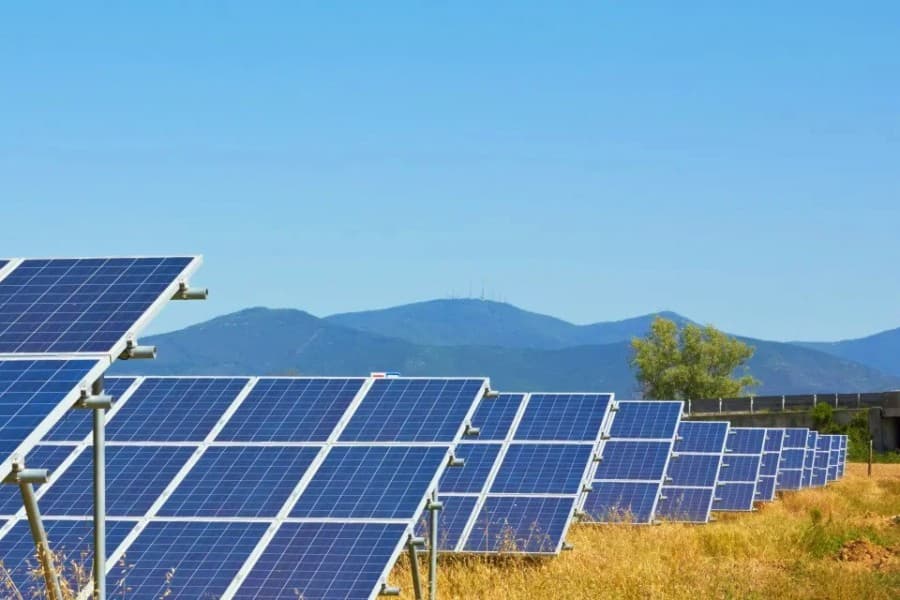
Turkmenistan's traditional energy system relies on powerful gas turbines, which maintain an iron grip on the grid. However, ambitious plans to build solar power plants (for example, in Serdar) pose a challenge to engineers: renewable energy sources (RES) are too variable. To prevent massive arrays of solar panels from unbalancing the grid, fundamentally new technical solutions are needed.
GFM Technology: The "Brains" in Every Outlet
Grid-Forming Inverters (GFM) were the key tool of the presentation.
These are not just current converters, but devices with a "grid-forming" function. If the system experiences a voltage surge or frequency drop, these inverters do not shut down but immediately provide backup, simulating the operation of a large power plant. Essentially, GFM inverters transform disparate solar and wind farms into a single, stable unit.
From Kazakhstan's Practices to the Region
The presentation, held on January 6 via videoconference, was based on the experience of a week-long training session conducted by GIZ experts at the Kazakh system operator KEGOC. This experience is now being scaled up across the region. For Turkmenistan, this is an opportunity to implement renewable energy sources not just by trial and error, but by using proven German and European practices.
The final product will be a technical report, a reference for energy professionals in the region. It is a practical guide on how to build a reliable and modern "green" bridge between the countries of Central Asia.
The regional project "European Union for a Sustainable Central Asia: Renewable Energy in Central Asia" (EURECA) is part of the "Green Central Asia" and "Team Europe Initiative." The project is commissioned by the German Federal Ministry for Economic Cooperation and Development (BMZ) and co-financed by the European Union as part of the Global Gateway strategy.