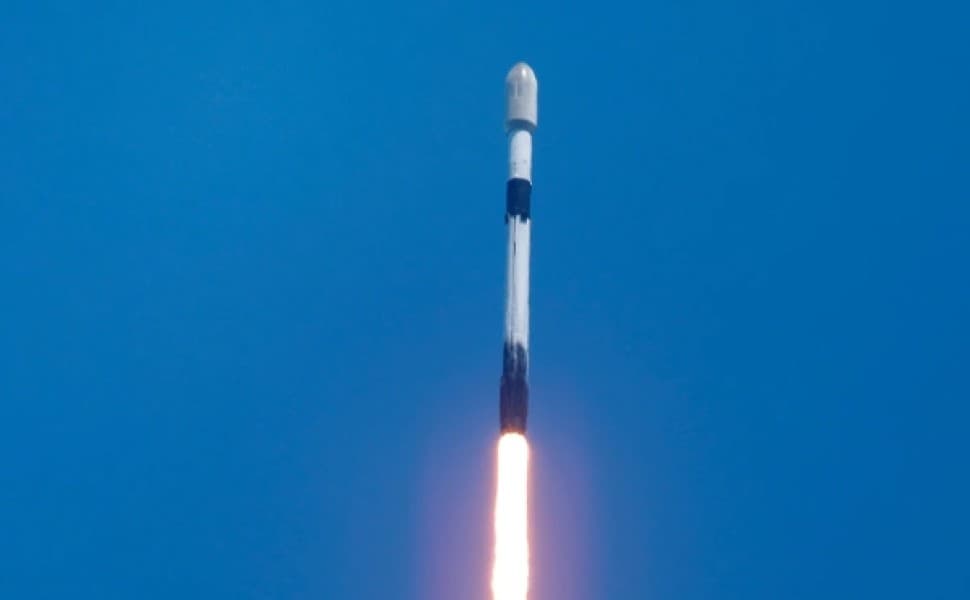



SpaceX's Starlink constellation has surpassed 10,000 satellites in low Earth orbit for the first time, nearly seven years after the launch of the first batch, according to Spaceflight Now.
The latest launch took place on the night of March 17 from Vandenberg Air Force Base in California. The Falcon 9 rocket launched 25 satellites into orbit using the first stage, serial number B1088, which had previously launched 13 times. After separation, the stage successfully landed on an unmanned platform in the Pacific Ocean—the 586th successful first stage landing in SpaceX history.
Since the beginning of 2026, the company has conducted 33 Falcon 9 launches, 26 of which were dedicated to Starlink, with an average launch frequency of two to three days. According to the company, as of February 2026, the Starlink service has over 10 million active customers in 160 countries. In March, the network launched in Niue, Kuwait and the Central African Republic.
Starlink satellites are positioned at an altitude of approximately 550 km, ensuring low latency. The satellites are equipped with laser links for data transfer between them and ion engines for orbital correction. Each satellite has a lifespan of approximately five years, after which it deorbits and burns up in the atmosphere.
In 2026, SpaceX also unveiled the Stargaze system for situational awareness in space: star sensors on each satellite allow it to track objects in orbit and prevent potential collisions.
The company plans to launch larger Starlink V3 satellites soon on a Starship rocket.