||
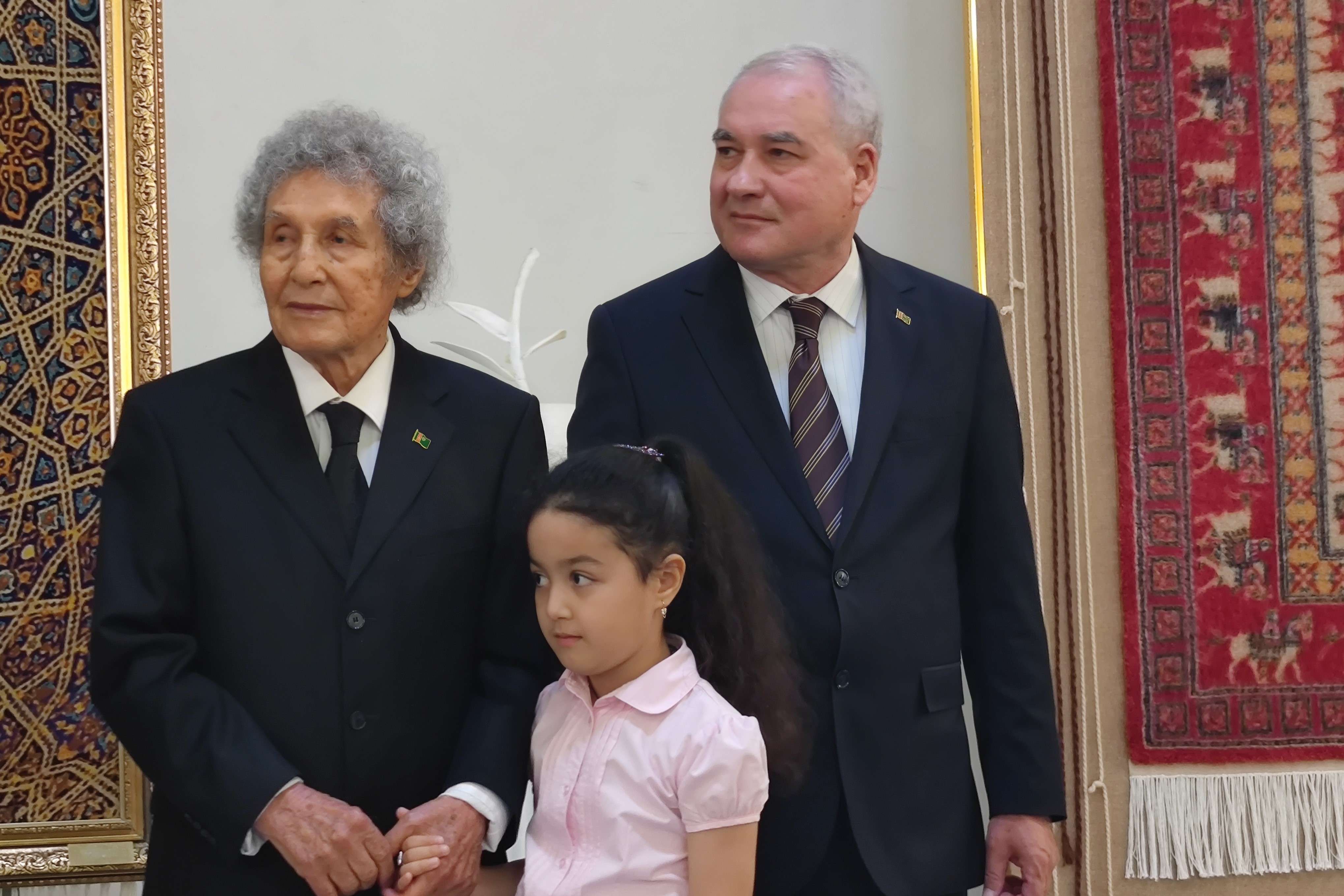
An exhibition of works by Babasary Annamyradov and Ada Gutlyev has opened at the gallery of the Academy of Arts of Turkmenistan. If we apply a system of weight categories to art, this duo is a true "heavyweight"—not in terms of regalia, but in the depth of the meanings they evoke.
Timed to the Turkmen Horse Festival, it bears the poetic title "I Will Call You Not a Horse, but a Brother." But behind the familiar images of grace and strength lies something much deeper—an invitation to the practice of contemplation.
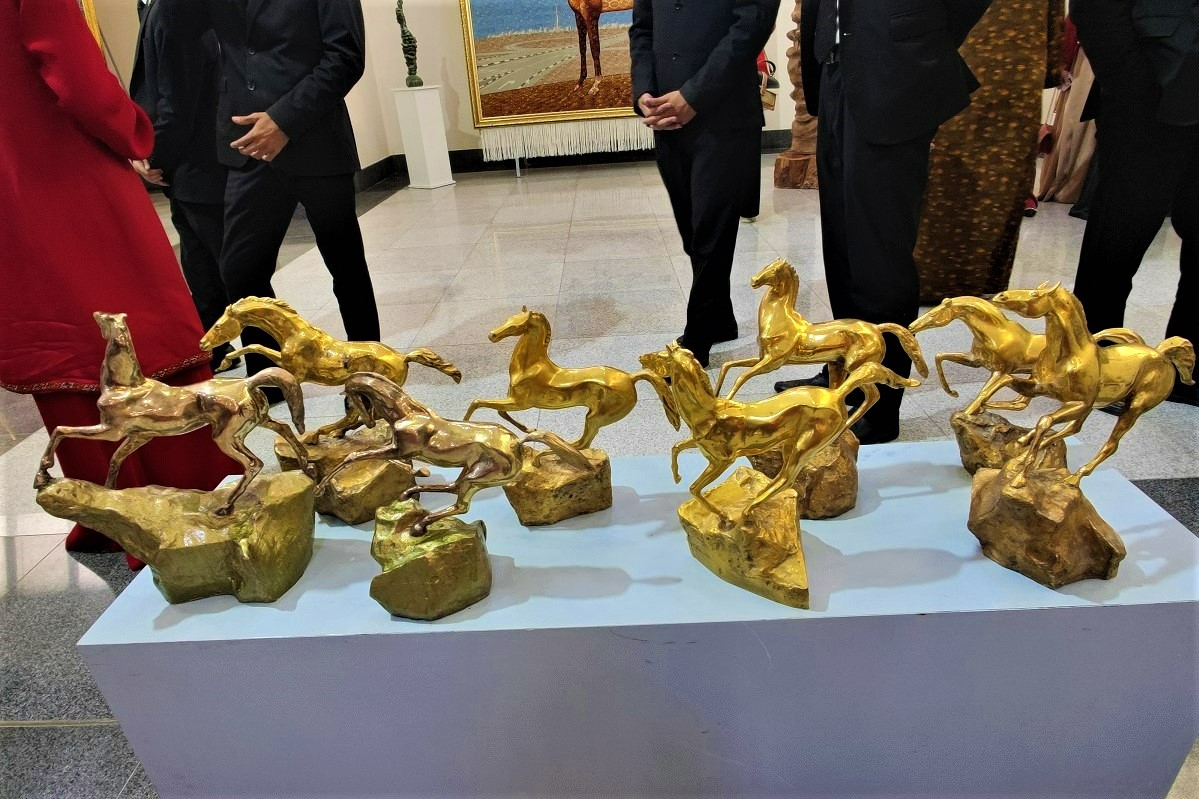
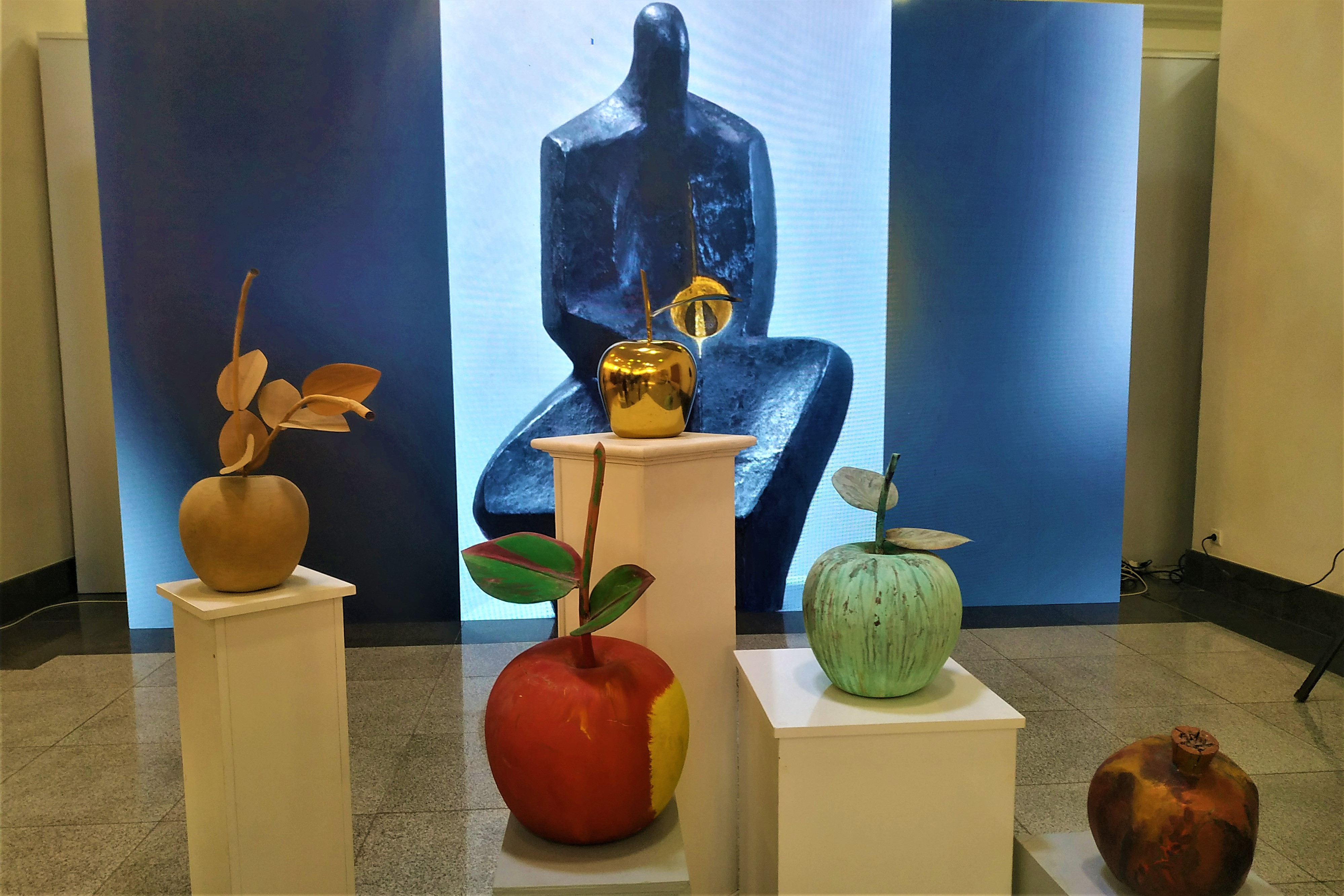
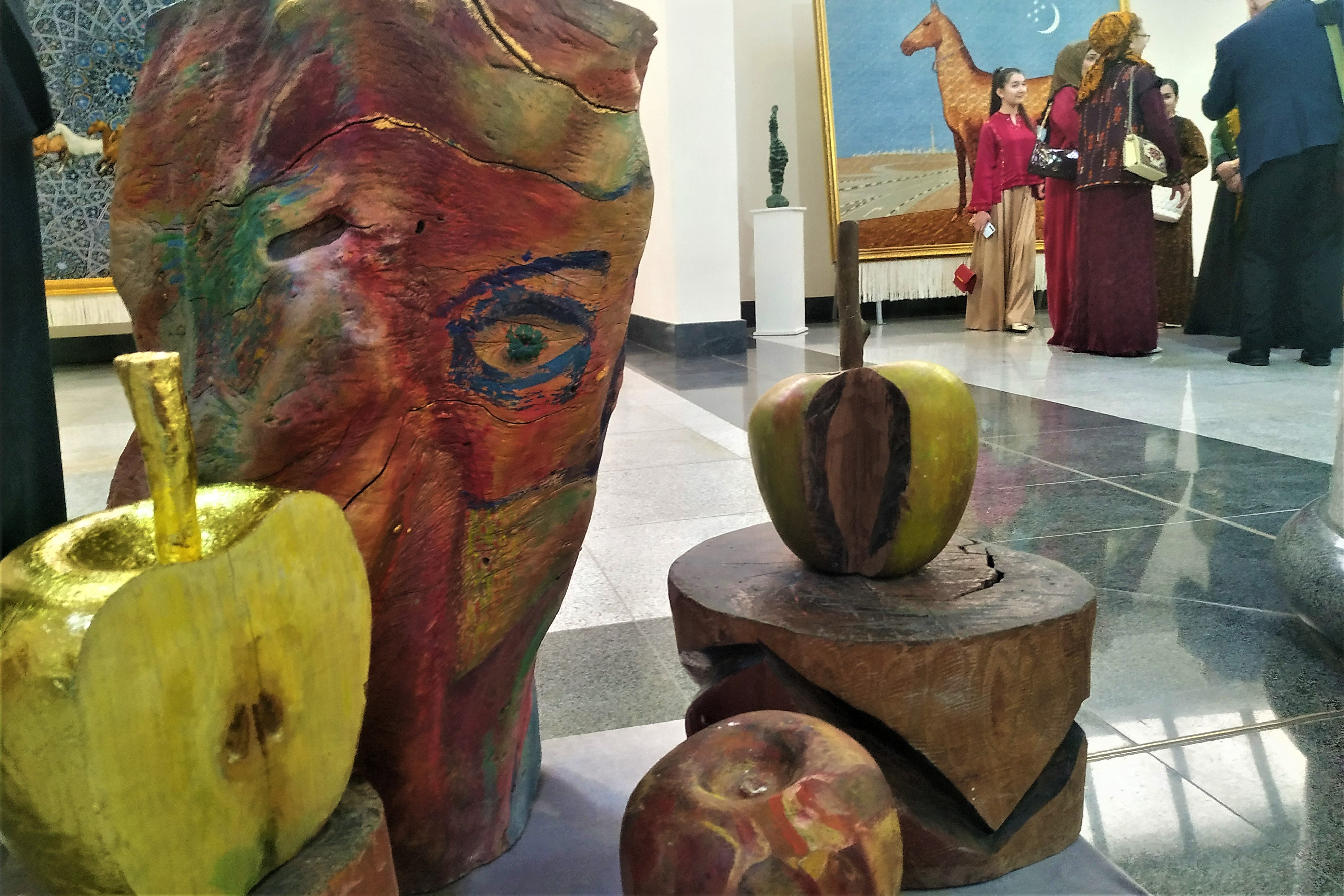
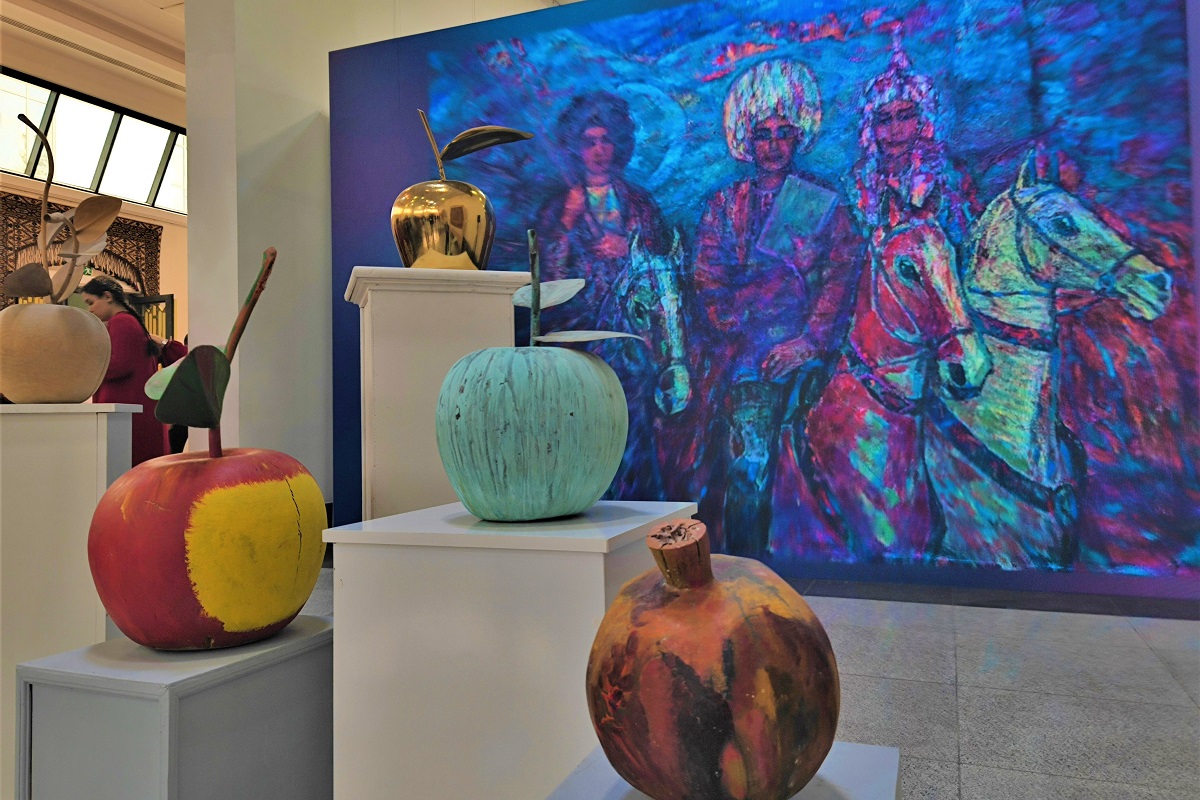
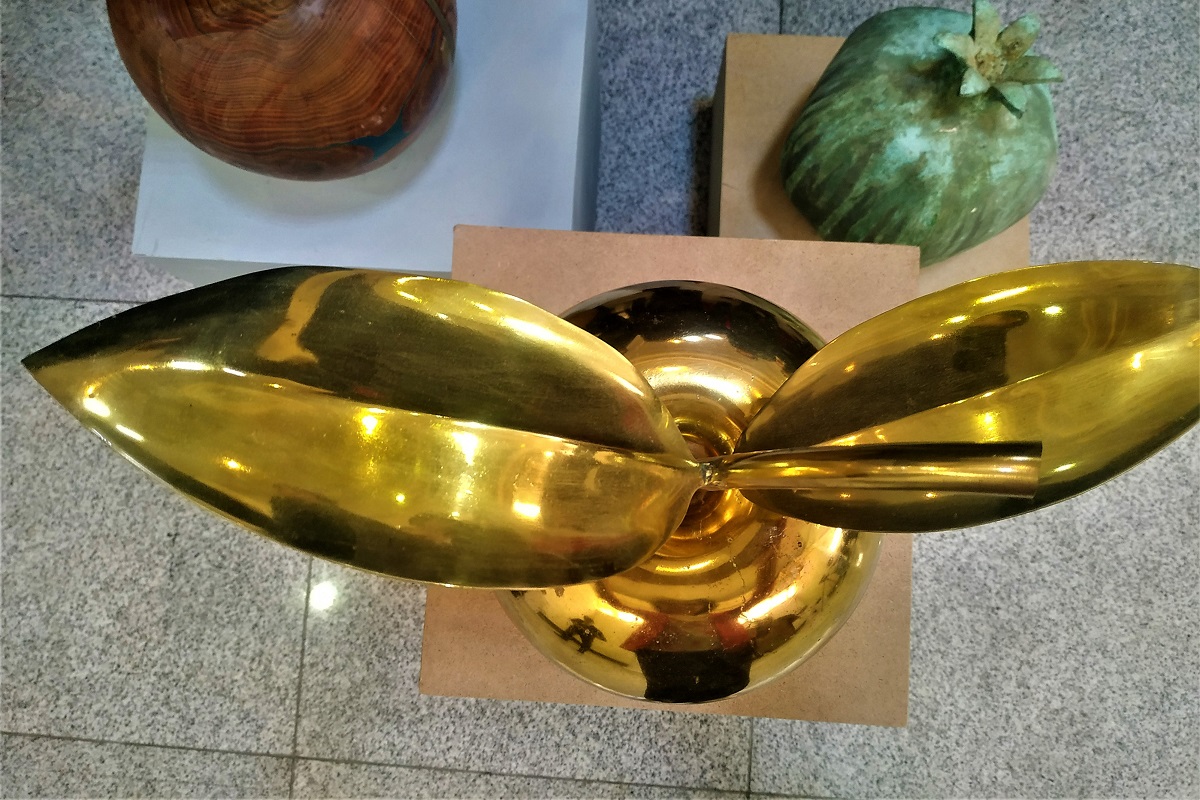
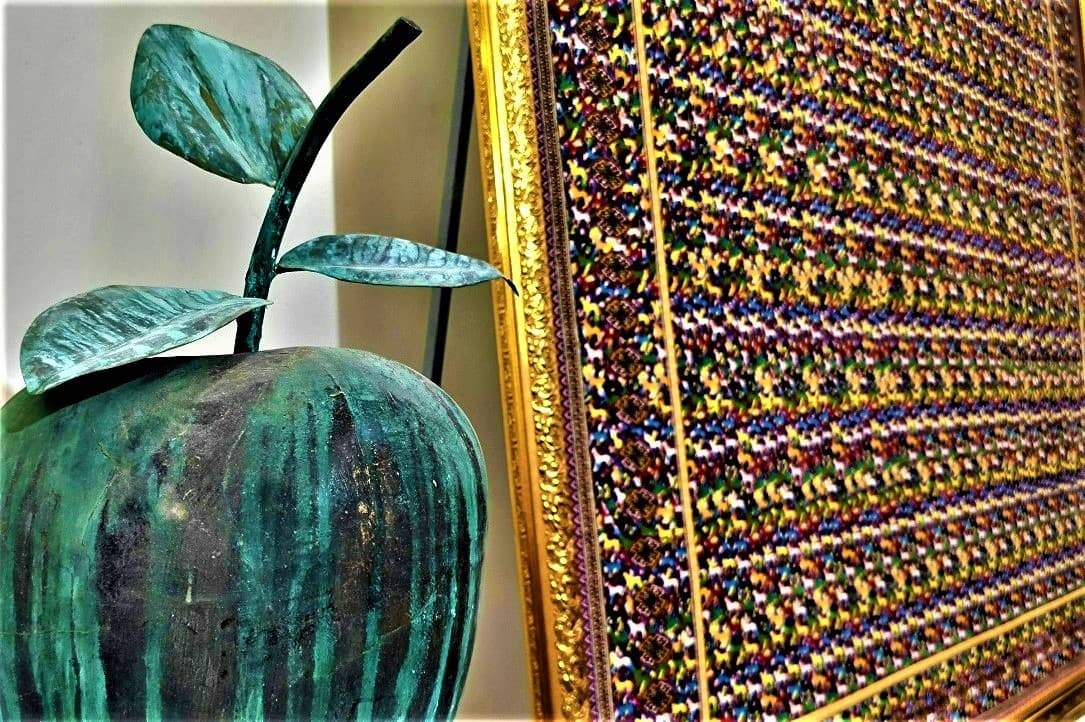
The sunny images of racehorses in Ada Gutlyev's paintings resonate with Babasary Annamyradov's famous "apples." These fruits—gold, wood, inlaid, perfectly smooth or provocatively rough—are more than just forms. They seem to be a model of the Earth itself, the embodiment of the circle of being, where every bend is a trajectory of eternity.
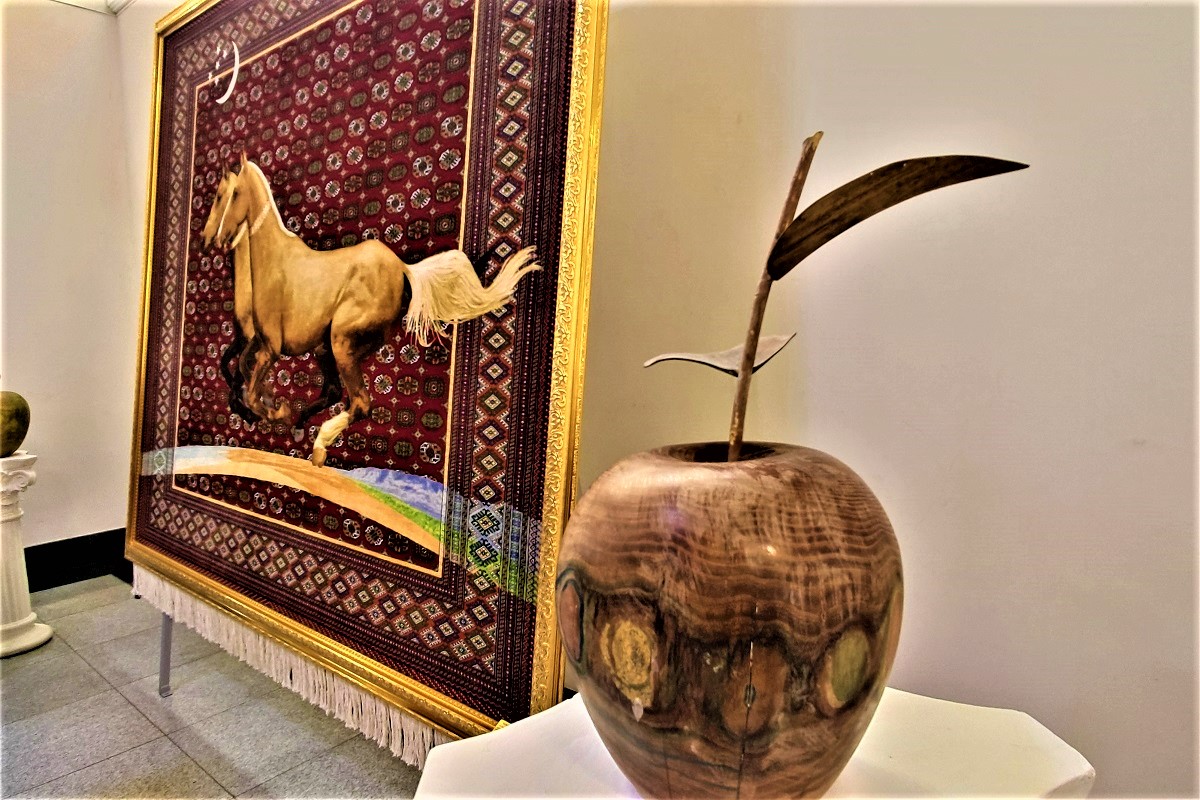
This irregular roundness contains a strange—and difficult to grasp—power: like life dormant in a tiny seed before unfolding into a vast tree. The artist doesn't simply recreate the form; he captures the moment when energy solidifies in the material, provoking the viewer to stop and listen to this resonant silence.
Ada Gutlyev's name has long been associated with the transformation of traditional carpet weaving into an experimental space. Carpet painting? Installation? His works stubbornly defy genre boundaries. It is the path of an explorer who consciously departs from the beaten path, preferring the solitude of a pioneer. This rejection of labels reveals a special honesty: the right to be yourself, even if your work hasn't yet been given a name.
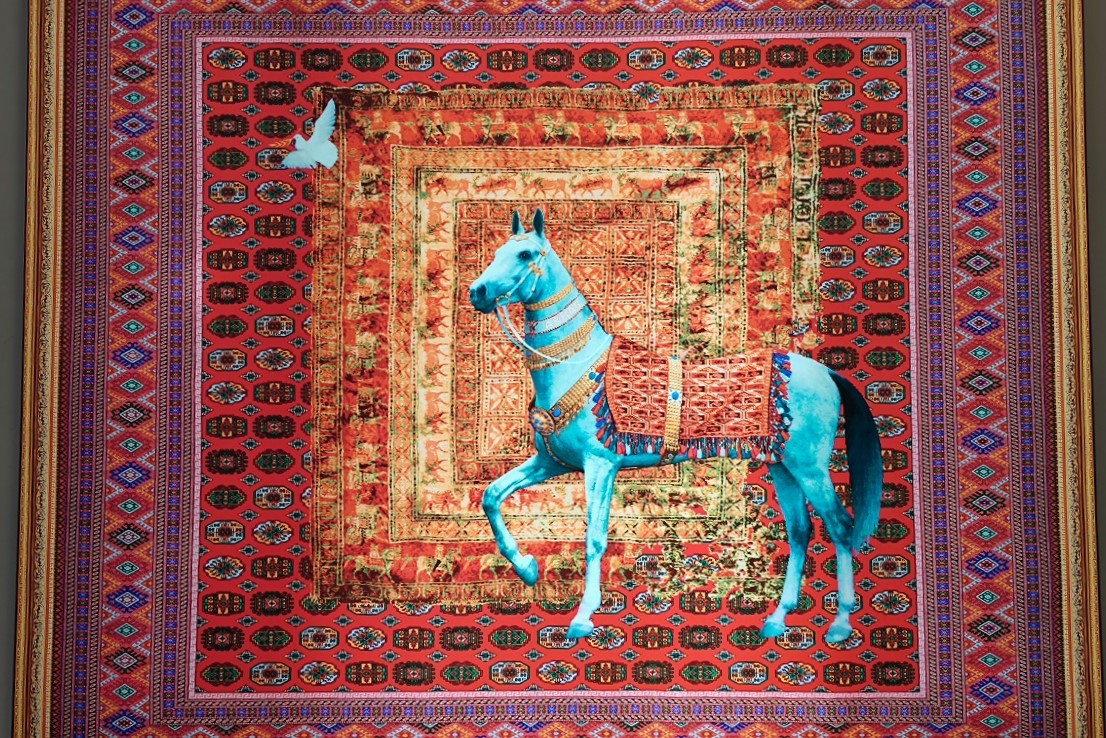
True art is an attempt to peer beyond the horizon of one's own perception. One day, in a conversation with an acquaintance, Ada Gutlyev learned of the mystery of the legendary Japanese Garden of Fifteen Stones. The story of fifteen stones, of which only fourteen are ever visible to the viewer, reminds us that we are limited by our ego and vantage point, and to see the whole picture of the world, we must look not with our eyes, but with the "eye of the mind."
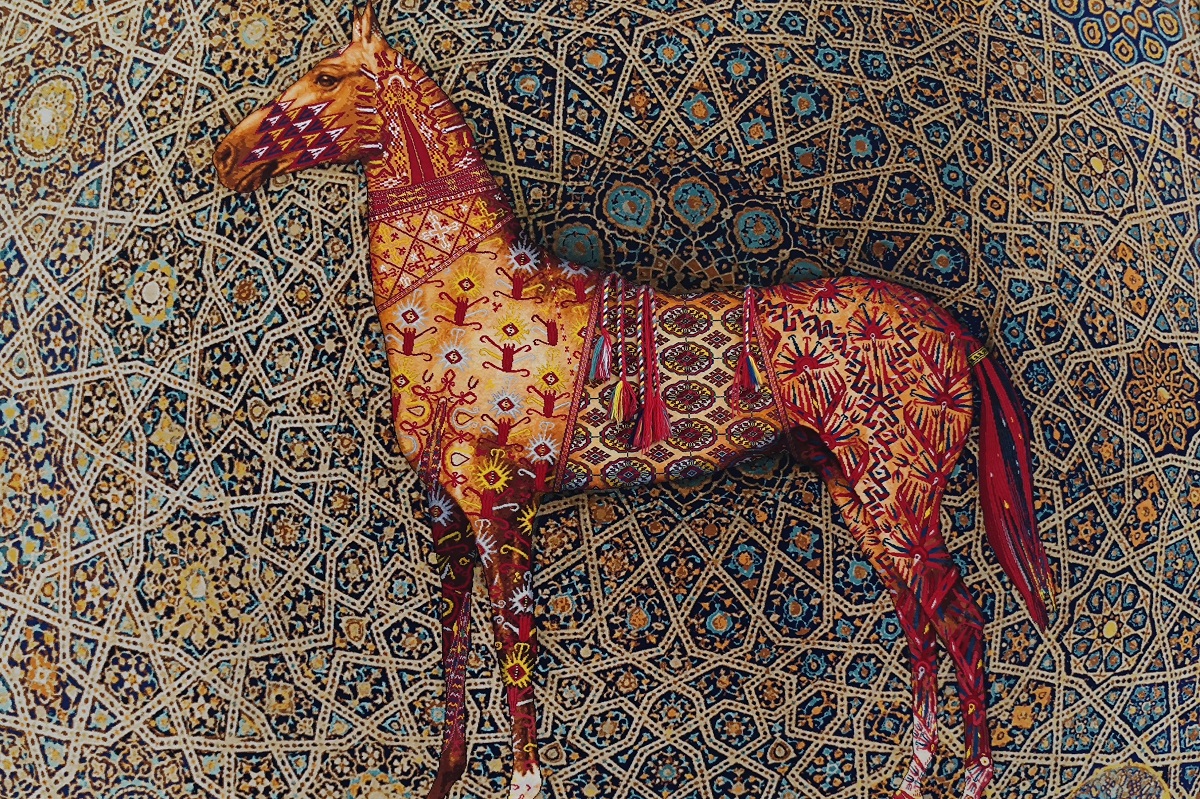
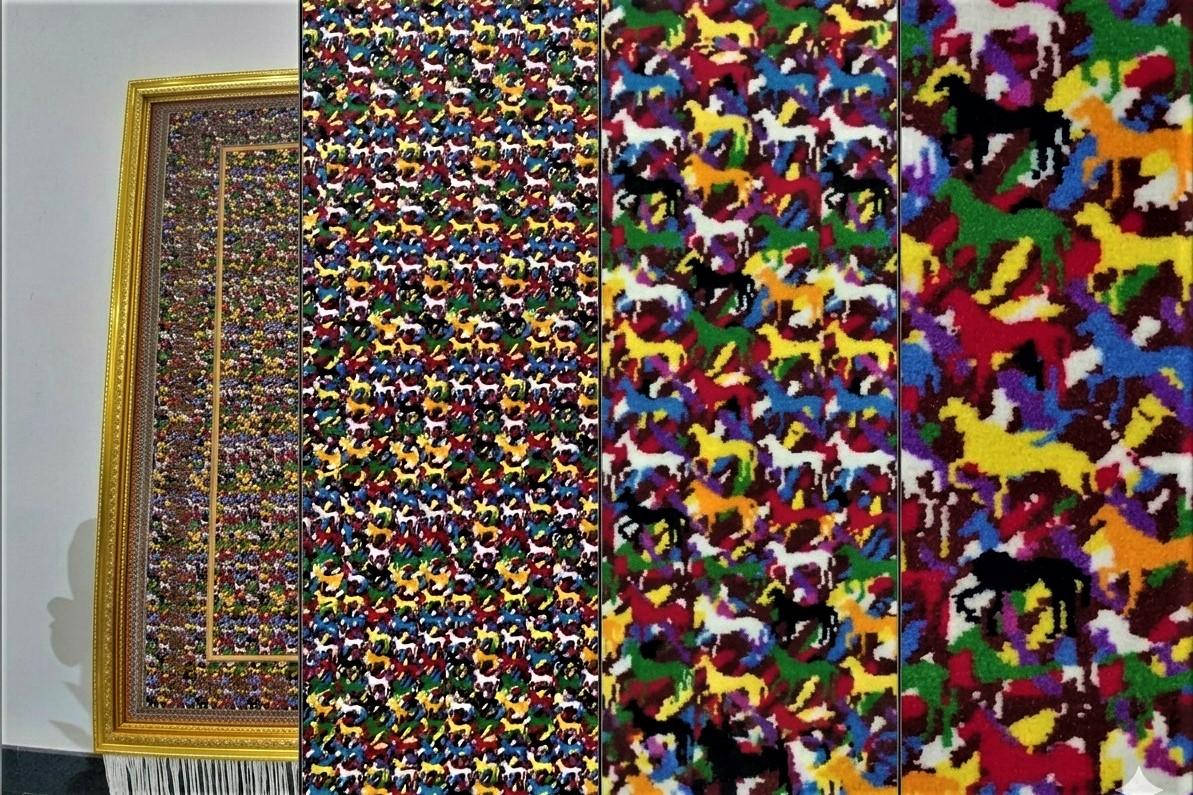
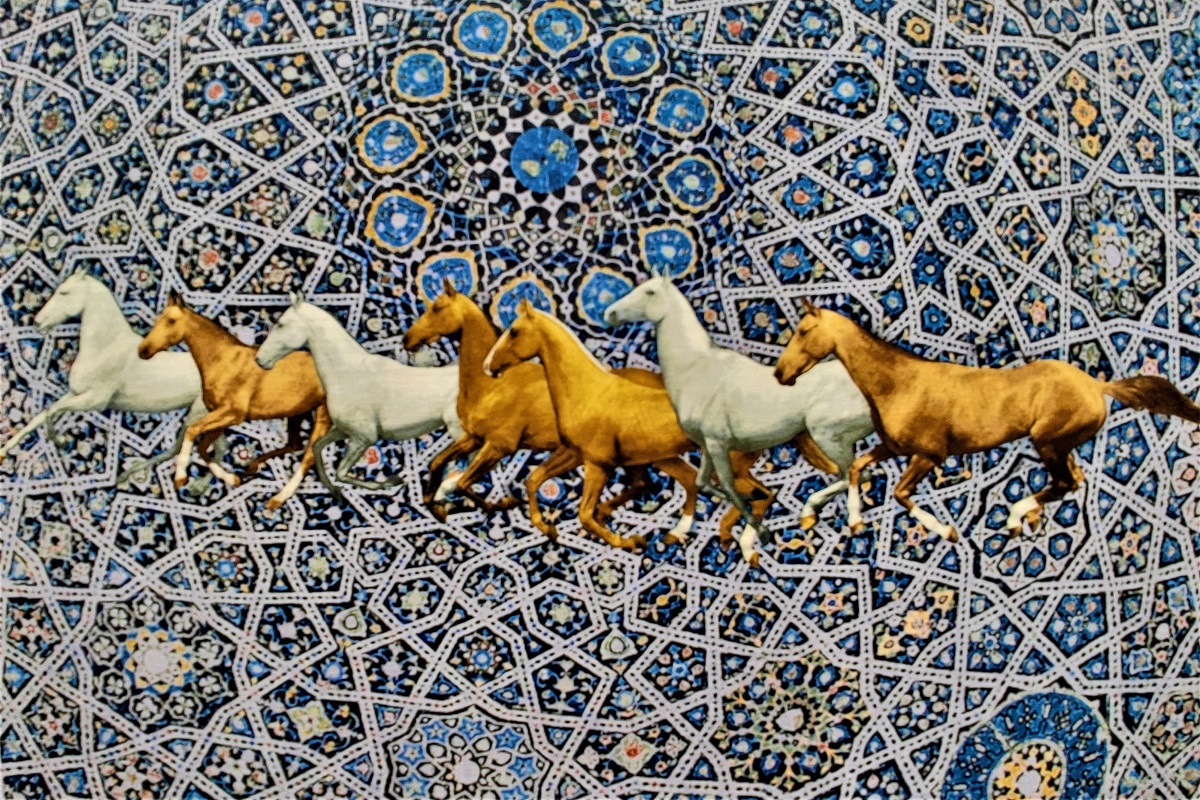
This idea – of a world that is always larger than we can grasp with our eyes – became a creative challenge for the artist. Inspired by this idea, Ada Gutlyev attempted to create a "carpet" interpretation of the Garden of Fifteen Stones, and one version of this interpretation is on display at the exhibition.
From a distance, the carpet appears to be a strict graphic pattern, but upon closer inspection, the rhythmic design "reveals": it is composed of hundreds of equine silhouettes. Another step, and the motionless figures of the horses begin to slip away, merging into a vibrant flow, that very Zen where form dissolves into movement. This is the balance between the immutable laws of the universe and the fluidity of our lives: the stones remain in place, but within them, an endless flow pulses.
The world is always larger than we can imagine. Its integrity can only be approached through inner silence, and it is precisely this vibration that characterizes Babasary Annamyradov's sculptural compositions. They often remain "misunderstood": the viewer, out of habit, searches for familiar outlines, but logic yields to abstraction.
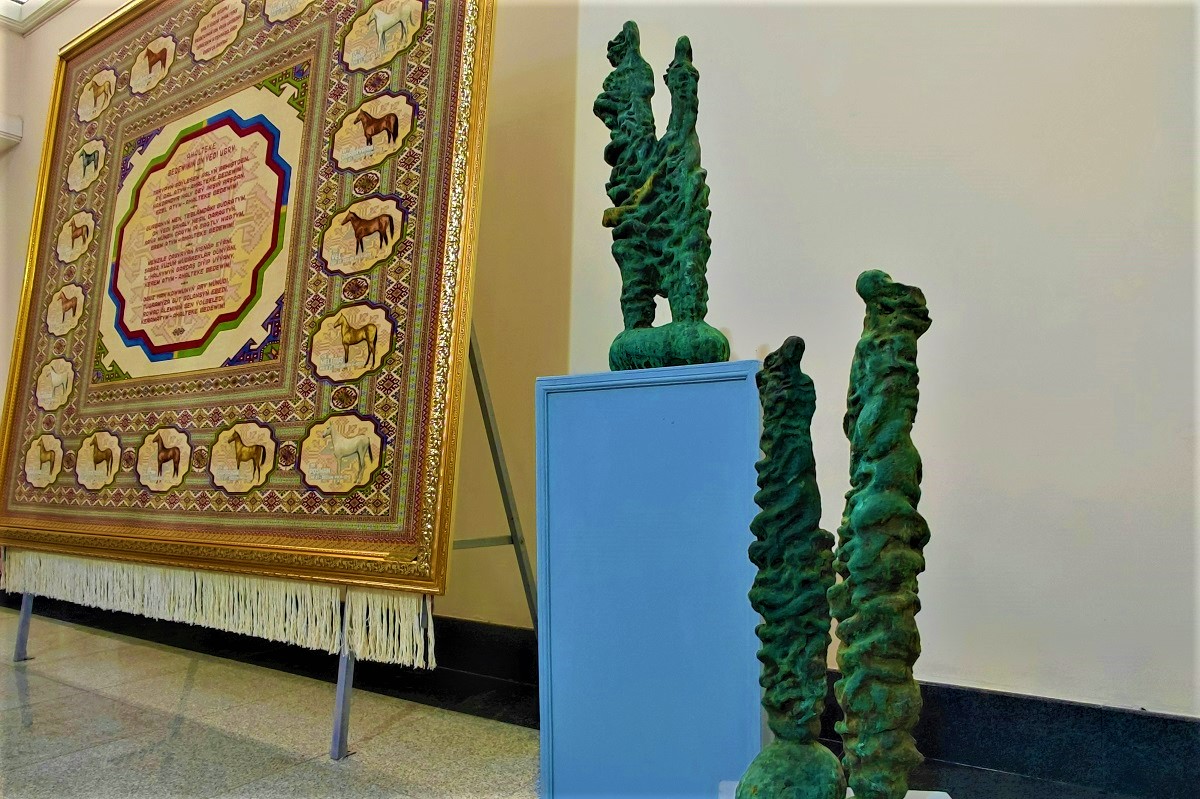
However, it is precisely where recognition ends that contemplation begins. I confess: I, too, didn't fully "understand" these works intellectually, but I felt them almost physically. It's like a chemistry lab, where certain compounds must be constantly maintained in a state of subtle fluctuation to preserve their essence. These sculptures are not frozen blocks, but living substances.
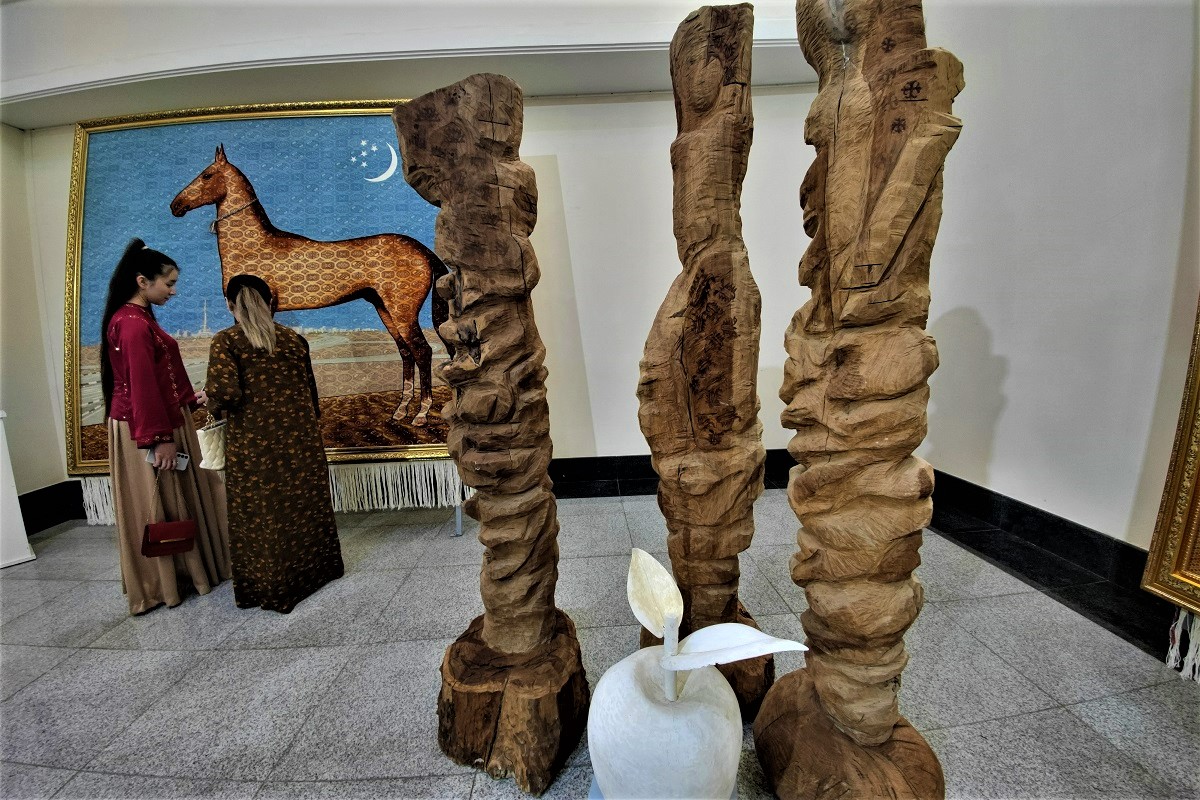
To capture their rhythm, you need to engage that very feeling that allows you to see the "fifteenth stone." At this moment, you stop searching for form and begin to perceive pure energy. And at this point of contact between artist and viewer, emotions are born that require no words.
Victoria SHCHUPAK




 Chinese New Year