


The origins of the ties between the Turkic-Persian community and the Arab world are rooted in deep antiquity. Interaction between the peoples inhabiting the territories of present-day Central Asia and the Arabian Peninsula began as early as the 2nd century BC, during the period when the caravan routes of the Great Silk Road were being established. The lands stretching from the Caspian Sea to the Pamirs served as key transit hubs for trade and the exchange of goods—ranging from Chinese silk and Samarkand paper to Arabian incense and precious gems.
In the 8th century, with the spread of Islam, the interaction between these two worlds acquired a spiritual and intellectual dimension. Merv, Amul, Urgench, Bukhara, and other cities of Central Asia transformed into centers of learning within the Islamic world. Great scholars—including Al-Bukhari, Al-Khwarizmi, Ibn Sina, Mahmud al-Kashgari, Al-Zamakhshari, and others—produced works that became foundational to the entirety of Islamic civilization.
Since the early 1990s, a new phase has begun in the relations between these two macro-regions. The countries comprising the Gulf Cooperation Council (GCC) were among the first to recognize the independence of the Central Asian states. The GCC consists of six member states: Bahrain, Qatar, Kuwait, the United Arab Emirates, Oman, and Saudi Arabia.
The organization was established in 1981 with the aim of fostering economic, political, and other forms of cooperation among member states, enhancing regional stability, and advancing shared interests. It is worth noting that in Arab countries, the Persian Gulf is referred to as the "Arabian Gulf."
The development of diplomatic dialogue between the GCC and Central Asia has unfolded in several stages.
The period from 1991 to 2000 marked an initial phase of "finding common ground"—the establishment of bilateral relations and the opening of the first diplomatic missions in each of the Central Asian countries.
From 2001 to 2010, a steady progression of bilateral relations was observed, alongside the formation of a legal framework for cooperation, the signing of agreements across various sectors (economics, culture, and education), and the implementation of the first major investment projects involving Arab capital in Central Asia.
However, since the 2020s, a qualitatively new stage of cooperation has emerged.
…On September 7, 2022, in Riyadh, Kingdom of Saudi Arabia, the head of Turkmenistan’s foreign ministry, Rashid Meredov, participated in the inaugural ministerial meeting of the Strategic Dialogue between the Cooperation Council for the Arab States of the Gulf and Central Asia.
This platform was originally established with the aim of expanding political dialogue between the countries of these two macro-regions and fostering inter-regional cooperation in the trade-economic and cultural-humanitarian spheres.
The meeting participants discussed pressing aspects of the international agenda, issues of regional security, and further steps toward establishing effective cooperation in the fields of trade, economics, investment, culture, and science.
During his address at the time, the Foreign Minister of Turkmenistan noted that the Turkmen side views this meeting as a crucial first step toward establishing a full-scale partnership framework between the states of Central Asia and the Cooperation Council for the Arab States of the Gulf.
Rashid Ovezgeldyevich specifically emphasized that the discussion centered on initiating a process to systematize, streamline, and instill a long-term character and stability into the entire complex of relations between the countries—a framework grounded in history and necessitated by contemporary realities and needs.
Within the framework of the forum, the parties proposed establishing practical cooperation in the fields of energy, transport corridors, and logistics, as well as in ensuring food security and organizing cultural, humanitarian, and scientific events. The discussion on water security—a critically pressing issue for populations residing in arid climatic zones—stood out as a distinct and pivotal topic.
Following the meeting, the parties adopted a Joint Action Plan for 2023–2027 (essentially a Roadmap for Cooperation), aimed at fostering practical interaction across a wide spectrum of sectors.
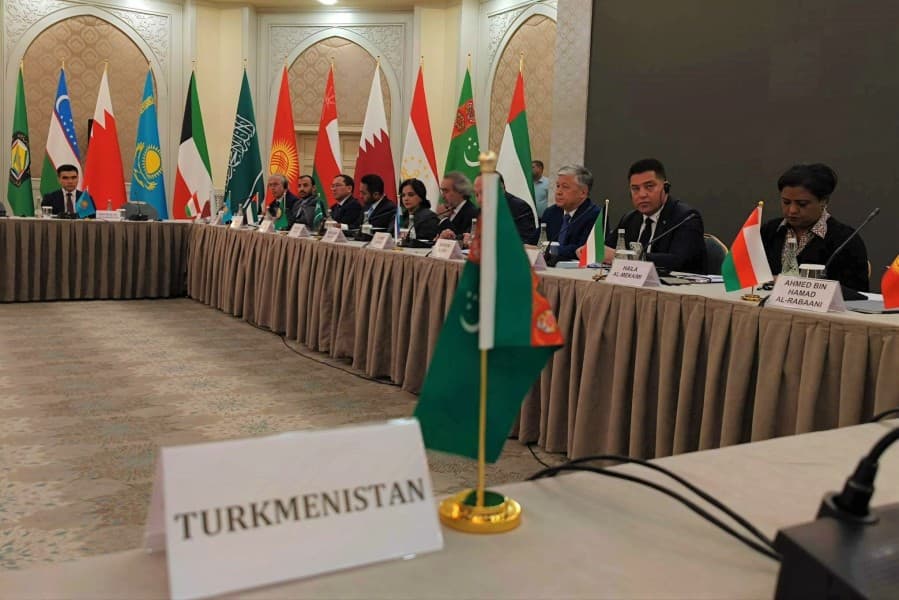
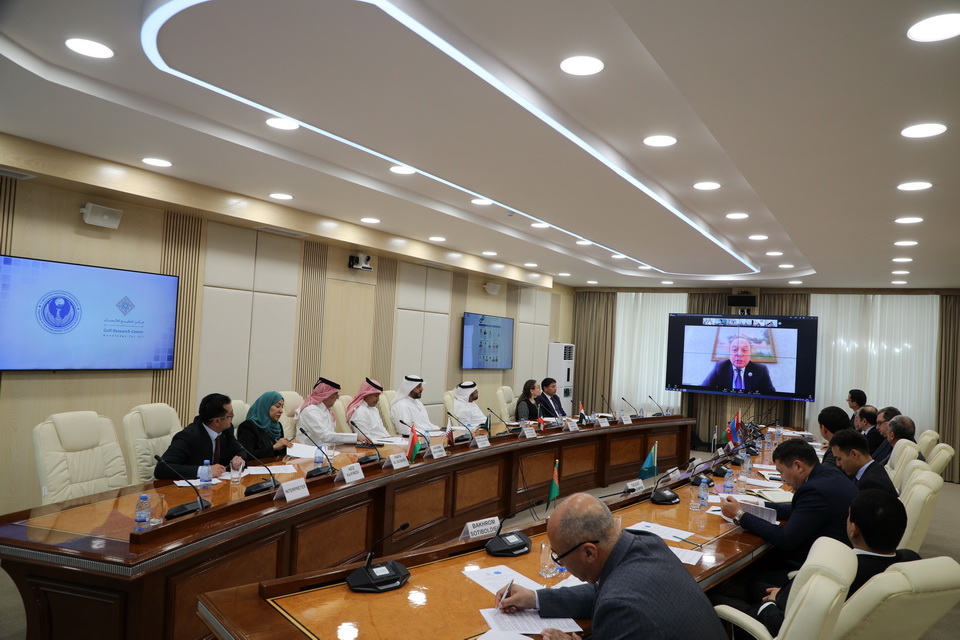
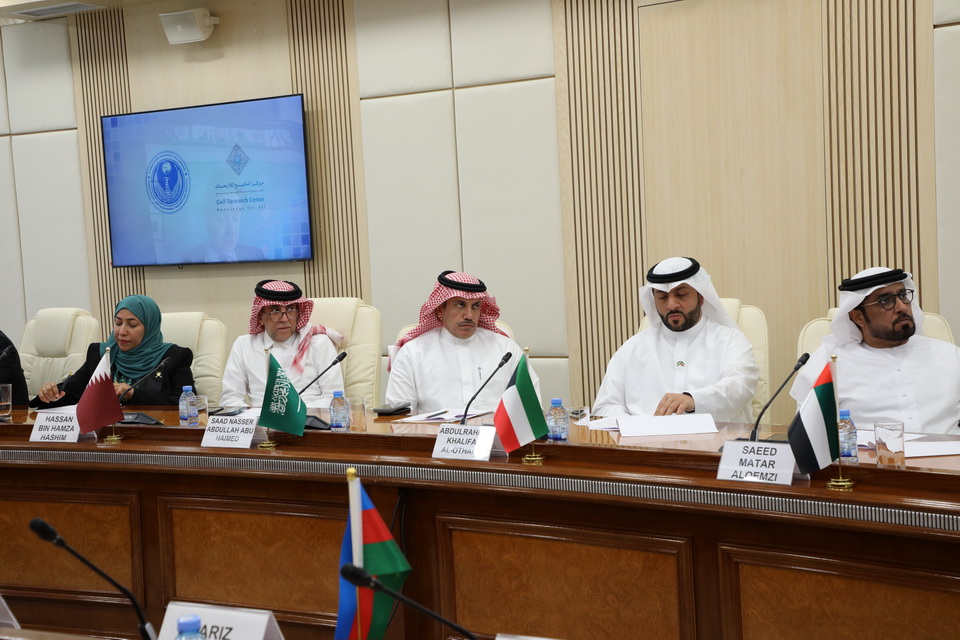
Recently—on April 20—the Second Forum of Think Tanks in the "Central Asia + GCC" format was held. Given the prevailing situation in the Gulf region, the meeting was conducted online. It brought together representatives from leading research institutions—including the Center for Strategic Studies at the Institute of International Relations of the Ministry of Foreign Affairs of Turkmenistan—as well as diplomatic missions and the expert communities of both macro-regions.
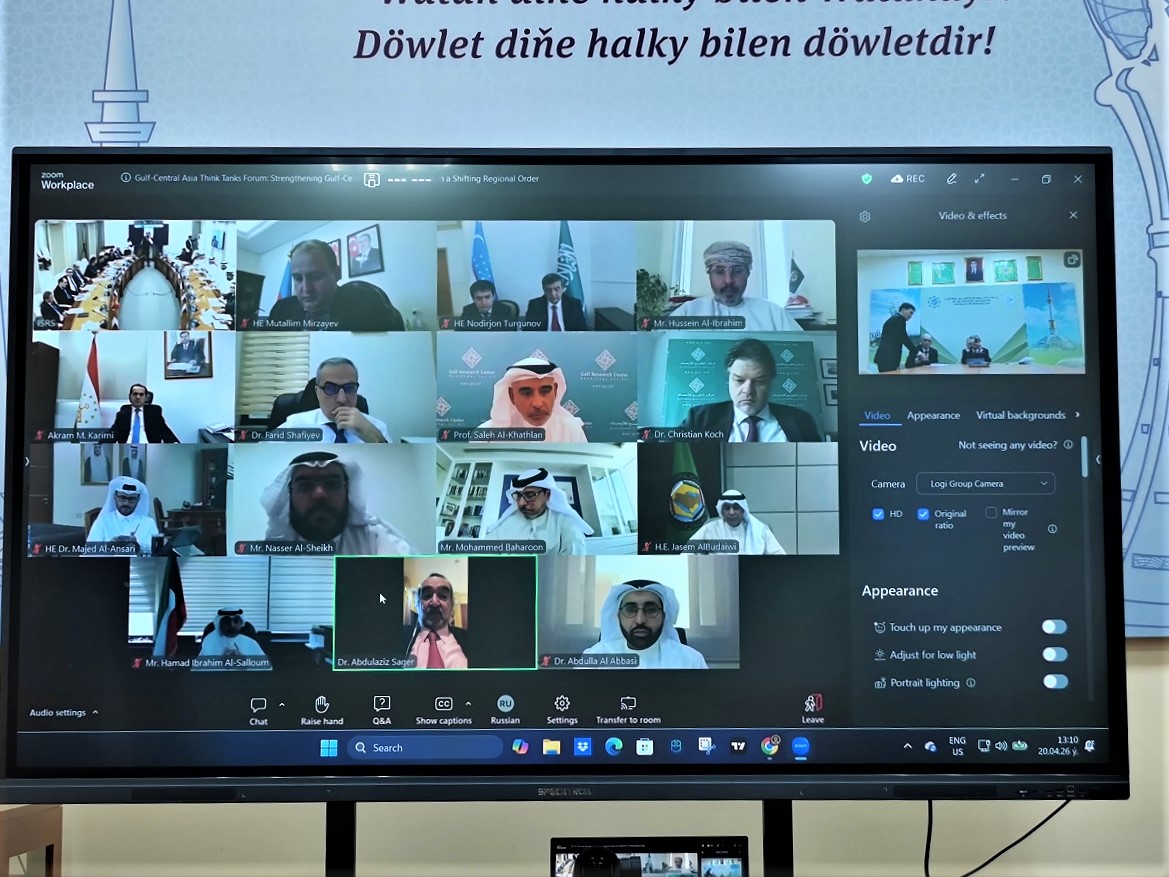
Forum participants noted a qualitative shift in relations between Central Asia and the Arab countries of the Gulf. The "CA + GCC" format, launched in 2023, is evolving into a strategic platform for formulating coordinated approaches.
It was observed that, within this short timeframe, significant results have been achieved in fostering closer ties between Central Asia and the Arab region. The cumulative volume of accumulated investments from GCC countries into the Central Asian economy has exceeded $20 billion, while mutual trade has reached approximately $5 billion.
As for Turkmenistan’s role, it is worth recalling that several years prior to this event—specifically on August 1, 2022—a meeting took place in Avaza involving Deputy Prime Minister and Foreign Minister Rashid Meredov, along with senior officials overseeing Turkmenistan’s fuel and energy complex, trade and services sectors, and transport and communications complex, and the Secretary General of the Cooperation Council for the Arab States of the Gulf.
The set objective was achieved: during the meeting, a detailed discussion was held regarding the prospects for cooperation between Turkmenistan and the Arab states of the Gulf, culminating in the signing of a Memorandum of Understanding between Turkmenistan’s Ministry of Foreign Affairs and the General Secretariat of the Cooperation Council for the Arab States of the Gulf concerning a consultation mechanism.
A year later, at the GCC + Central Asia summit held in Jeddah, President Serdar Berdimuhamedov put forward a number of proposals aimed at expanding the partnership between the two regions—a development reported by ORIENT. Among these proposals was the establishment of a permanent mechanism: a meeting of the Foreign Ministers of the Central Asian states and the Gulf Cooperation Council.
Precisely such a ministerial meeting took place a year later—on April 14, 2024—in Tashkent, attended by a Turkmen delegation led by Deputy Prime Minister and Minister of Foreign Affairs Rashid Meredov.
The meeting participants discussed an even broader range of issues, focusing on strengthening mutually beneficial and comprehensive cooperation across the trade-economic, investment, transport-communications, cultural-humanitarian, environmental, and tourism sectors, as well as on the implementation of the Joint Action Plan for Strategic Communication and Cooperation for 2023–2027.
In its address, the Turkmen side put forward initiatives aimed at strengthening cooperation among the participating countries of the strategic dialogue across the transport and communications, energy, trade and economic, and cultural and humanitarian spheres—a topic also covered by ORIENT.
That same year, a Turkmen delegation participated in an investment forum for member states of the GCC and Central Asia, held in Riyadh. The forum featured presentations covering a broad range of thematic areas, as well as dialogue sessions and seminars focused on renewable energy sources, petrochemicals, agriculture, industry, healthcare, tourism, logistics, infrastructure, smart cities, technology, and digitalization. During the meeting, data regarding the performance of the Turkmen economy and its oil and gas sector was presented.
Specifically, this included information on hydrocarbon resources (estimated at over 71 billion tons of oil equivalent), the attraction of foreign investment (totaling over $11 billion at that time), renewable energy sources (with a combined capacity of 6,523.2 MW across eleven power plants), the role of the private sector (which accounted for 71.3% of the country's GDP), and the development of agriculture and the assurance of food security, among other topics.
In September 2024, the first meeting of ambassadors from GCC and Central Asian countries took place in Brussels, during which issues of interregional cooperation and the strengthening of economic and political ties were discussed. The Ambassador of Turkmenistan highlighted the importance of the Gulf states as investors and partners that have played a key role in the country's development since the moment of its independence.
Particular emphasis was placed on the oil and gas sector and the development of transport corridors. The Turkmen side reaffirmed previously voiced proposals regarding the regular organization of trade forums, business meetings, and exhibitions, as well as the deepening of cultural and humanitarian ties and academic cooperation.
In February 2025, a business forum bringing together the Arab Gulf states and Central Asian nations—with the participation of Azerbaijan—was held in Abu Dhabi. Once again, though at a more concrete level, discussions focused on the development of the energy sector, agriculture, technology, innovation, and investment cooperation. Forum participants underscored the importance of forging new business partnerships and exchanging expertise to foster sustainable economic growth within the region.
During the forum, a series of panel discussions were organized, providing a platform for experts to share their accumulated experience as well as their views on the prospects for further advancing the dialogue. A tangible outcome of the meeting was the signing of several documents.
The Third Ministerial Meeting of the Strategic Dialogue between Central Asian States and the Cooperation Council for the Arab States of the Gulf (GCC) took place on April 16–17, 2025, in Kuwait City. On this occasion, the Turkmen delegation was led by Deputy Minister of Foreign Affairs Ahmed Gurbanov, who highlighted the promising potential for joint initiatives between the Central Asian states and the GCC across various sectors—including the fuel and energy complex, the processing industry, construction, shipping, textile manufacturing, and the humanitarian sphere.
Discussions also addressed the implementation of the Agreement between the governments of Iran, Oman, Qatar, Turkmenistan, and Uzbekistan on the establishment of an international transport and transit corridor (the Ashgabat Agreement).
…Revisiting the recently held think tank forum in the "Central Asia + GCC" format, it is worth noting that global instability—stemming from events in the Persian Gulf—has exerted significant pressure on energy markets and regional economic growth.
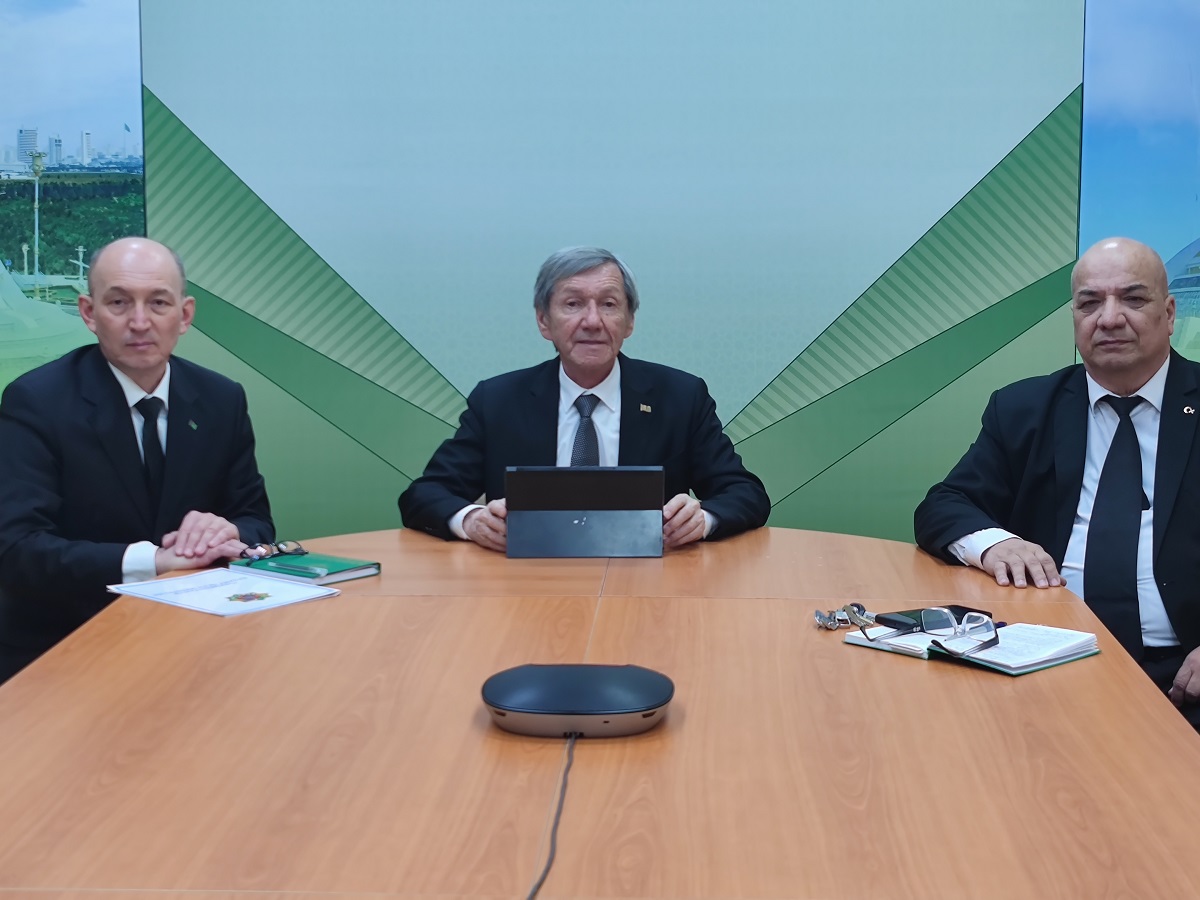
In light of this, external factors have underscored the need to develop—if not entirely new, then at least additional—transport and logistics mechanisms for adaptation for the countries of Central Asia. This is because the difficulties that have arisen regarding the connectivity between the two regions have had a detrimental impact on their economic stability.
It was noted that, under such circumstances, establishing a diversified system of transport corridors would help reduce regional vulnerability to emerging challenges. Eldor Aripov, Director of the Institute for Strategic and Interregional Studies under the President of the Republic of Uzbekistan, explained that, in this context, "the objective is to forge a more flexible and diversified system of economic and transport linkages—one capable of functioning effectively amidst external turbulence."
Consequently, the most viable approach in such situations is one in which strategic autonomy is achieved through the expansion of partnerships, rather than through the restriction of engagement. The conclusion drawn from this is that, in order to further enhance capabilities, it is essential to establish long-term coordination mechanisms.
In this regard, President Shavkat Mirziyoyev put forward an initiative to develop a Multilateral Agreement on Friendship, Interconnectivity, and Cooperation—an instrument capable of laying a systemic foundation for the advancement of interregional ties.
Regarding cooperation between think tanks, it was proposed to conduct joint research and exchange expert assessments focused on strengthening mutual trust between the two regions amidst global turbulence.
According to ISRS Director Eldor Aripov, the Second Central Asia–GCC Think Tank Forum demonstrated that, "against the backdrop of global transformation, a robust platform for cooperation is taking shape—one oriented not only toward adapting to external changes but also toward jointly shaping a long-term development agenda."
Thus, relations between Central Asia and the Arab states of the Gulf are characterized by a blend of historical ties, contemporary political decisions, economic interests, and efforts to institutionalize cooperation. At the current stage, cooperation between Central Asia and the GCC—despite objective difficulties—opens up genuine strategic prospects, underpinned by shared goals in political, economic, and social development, as well as common approaches to international and regional issues.
Bekdurdy AMANSARYEV,
Senior Research Fellow at the Center for Strategic Studies, Institute of International Relations, MFA of Turkmenistan