



In the world of music, generational continuity always plays a key role, but it is young professionals who bring a special energy to the classroom and onto the stage that makes the classics resonate with contemporary music. Shirkhan Batyrov is one of the brightest representatives of the new generation of teachers in the Wind Instruments Department of the Maya Kulieva Turkmen National Conservatory.
His career is developing rapidly: he is not only honing his skills as a soloist on the clarinet and saxophone, but he also leads the student orchestra and oversees several chamber projects, from quartets to quintets.
Such multitasking requires not only talent but also a modern perspective on the profession. As a young teacher, Shirkhan finds a unique approach to students, speaking their language while remaining true to the traditions of higher education in music. In our conversation with him, we touched on how work with future orchestral artists is structured today, the specifics of managing small ensembles, and why it is important for a modern musician to be a versatile performer.
— Shirkhan Akmuradovich, how much does your approach to teaching differ from how you were taught?
— I try to maintain the foundation laid by my mentors, but I add more lively dialogue to the process. It's important for today's students to understand why they're doing each exercise. I try to be more than just a strict examiner, but a senior colleague who goes on stage every day and faces the same professional challenges.
-You conduct both large orchestras and small ensembles like quintets. Where do you feel more creative freedom?
-It's a completely different experience. In an orchestra, I create the overall form; I'm the architect of sound. In a quintet or quartet, I'm more of a participant in the process, even if I'm the director. A small ensemble is a delicate psychological undertaking, where every instrument is on display. For a young musician, working in such a group is the best way to learn to listen to your partner.
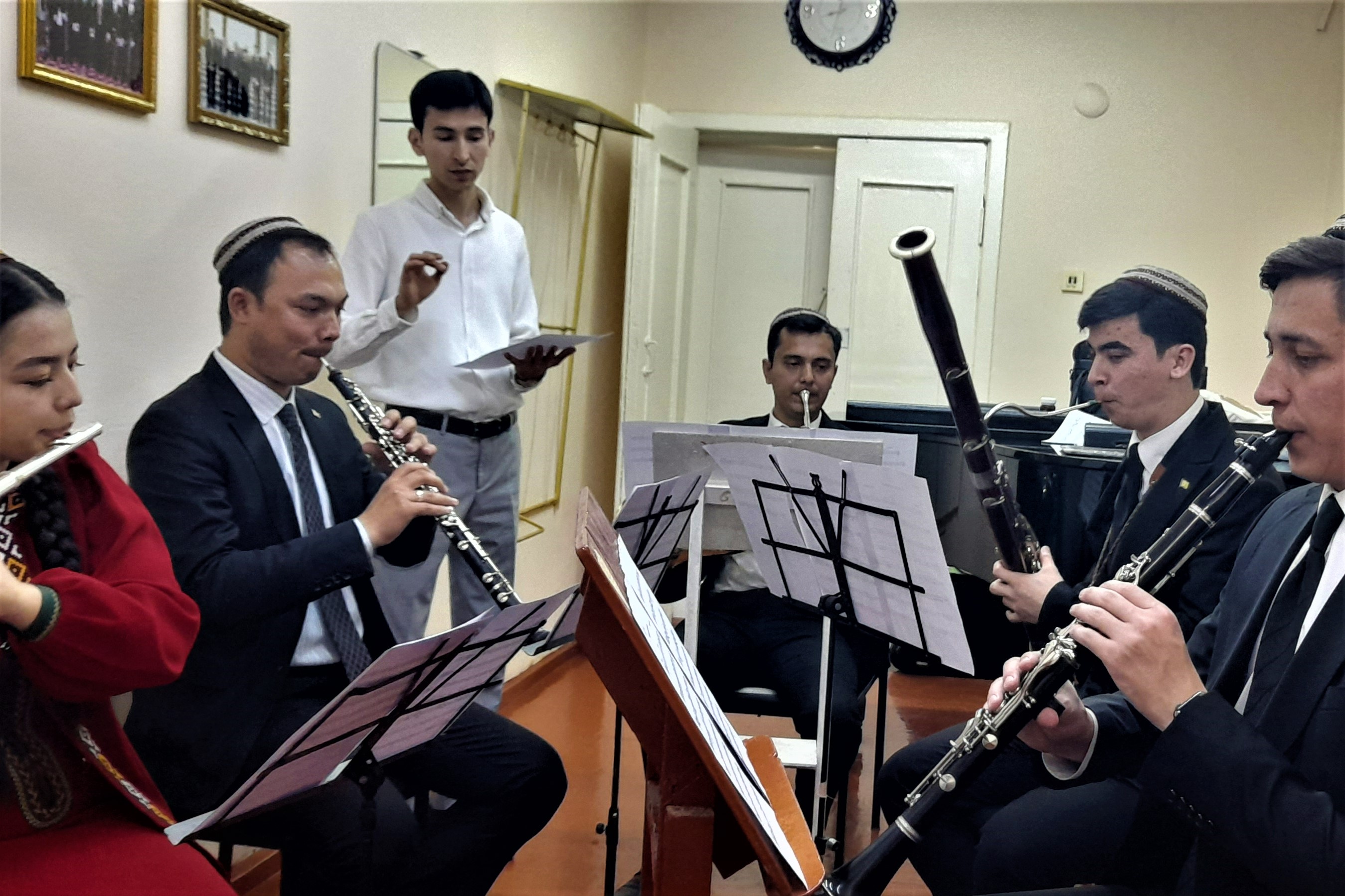
-The saxophone and clarinet are often perceived as instruments from different worlds: one is for jazz and pop, the other for strict classical music. How do you reconcile them in your work?
-I don't think they need to be reconciled; they complement each other, especially since these two instruments are considered related. The clarinet gives me technical discipline and an understanding of classical form, while the saxophone allows me to express myself through improvisation. I also advise my students not to limit themselves to one genre. The broader a musician's horizons, the more in demand they are today.
-Is it difficult to balance the workload of project management with daily instrumental practice?
-It's a matter of discipline. A teacher has no right to sound worse than their students, so the instrument always takes priority. Project management gives me the opportunity to realize ideas that would be impossible to realize alone. When I see my students in an orchestra or quartet begin to feel music the way I do, it gives me tremendous motivation to move forward.
-May 9th is just around the corner. Your orchestra is undoubtedly already preparing a special program for this sacred date?
-Absolutely. We're preparing a major celebratory concert featuring true masterpieces of Turkmen classical music dedicated to the war years. Audiences will hear Aman Agadzhikov's profound music "Mirasdar," Nury Khalmamedov's poignant compositions "Esger ýüregi" and "Maňa seniň gözleriňden gitme ýok," as well as a modern ode to memory, "Baky diri esgerler" by Ayna Shirova. This piece was specially orchestrated by the composer for our orchestra. Our concert dedicated to May 9th will feature the first performance of the waltz "Baky diri esgerler" by a brass orchestra. And, of course, it’s impossible to imagine a festive concert without the immortal symbols of Victory: Matvey Blanter’s “Katyusha,” Mark Fradkin’s “Random Waltz,” and David Tukhmanov’s legendary anthem “Victory Day.”
— What do you envision as the ideal outcome of your work as a teacher in a few years?
— My goal is for our graduates to be prepared to work in any professional ensemble, be it a state symphony orchestra or a jazz band. I want them to graduate from the conservatory not just as performers, but as thoughtful musicians who love their craft as much as I do.
Aina Yolbarsova
