We are guided by what unites people




News
Articles
Media
Announcement
Technology
About Us
Contacts

Aina Shirova's concert was a long-awaited event, one the composer had been preparing for many years. This concert brought together in a single score the results of many years of creative exploration and presented listeners with a mature expression of the composer's musical philosophy.
Aina Shirova is known in the professional community as a composer possessing a rare gift for creative freedom. Her path in contemporary art is not simply a search for aesthetics, but the consistent development of a unique musical language that expands conventional academic frameworks. The strength of her creativity lies in her profound inner independence: in a world of changing trends, she chooses to remain true to her own artistic vision. This sincerity allows her to create music that sounds deep, poignant, perhaps unusual, yet utterly honest. Each of her works is an exploration of new forms, proving that true art is born when the author is guided, above all, by their own intuition and inner truth.
The hall was packed: the air was filled with that special anticipation that always precedes major premieres. Guests strove to secure the best seats so as not to miss a single nuance of the upcoming performance. The evening's program promised to be more than just a concert, but an invitation to a creative experiment, demanding openness and engagement from the listener.
The evening opened with the Melodiya Orchestra, conducted by international competition laureate Annaoraz Dovletov. The ensemble presented works in a variety of styles—from strict academic classical music to light pop-jazz intonations. This combination of genres imbued the evening with a special dynamism and freshness. The orchestra performed the dramatic waltz "Immortal Regiment," as well as the light and lyrical compositions "Walk in the Rain" and "Pipe."
The "Immortal Regiment" waltz is a profound and solemn piece that set a high emotional bar for the evening. The music sounded monumental, yet without excessive pathos. The composer managed to convey through sound the living connection of time, transforming the piece into a touching dedication to sacred memory and the continuity of generations.
"Walk in the Rain" provided a contrast, adding a special vibrancy to the evening. Its light, transparent texture and vibrant rhythm created the atmosphere of a watercolor sketch in the hall: the music seemed to paint a picture of spring rain, filled with freshness and the light breath of life. A highlight of the program was the premiere of the song "Pipe," performed by soloist Bakhar Durdyeva.
Aina Shirova's "composer's game" transcended the traditional format, transforming the audience into an active participant in the creative process. Listeners were asked to recognize subtle sonic allusions within the complex texture of the score: echo effects, imitation bird calls, or sudden jazz improvisations. The most captivating intellectual challenge, however, was to discover the same musical theme hidden in two works completely different in mood and spirit.
The tasks chosen for this composer-led interactive session were not particularly challenging, as such enlightenment requires gradual adaptation, like a complex dish.
The concert continued with pieces from the "Sea Sketches" cycle for wind instruments. Shirkhan Batyrov masterfully performed "Salty Spray" on the saxophone and "Footprints in the Sand" on the clarinet, stimulating the imagination to its full potential.
For those who appreciate technical complexity, Begench Murzayev presented the "Old Nisa" cycle, with its mystical-sounding "reverse" arpeggios and contrasting tempos and dynamics.
The performance of the wind quintet under the artistic direction of Shirkhan Batyrov was particularly engaging. The musicians—Ogulay Pirzhanova, Mukam Babayeva, Goshly Danayev, Akmurat Kadyrov, and Shakhzod Khodzhayev—presented the piece "Once Upon a Time." This piece was included in the program by popular demand, becoming a true gift for connoisseurs of the composer's work. The piece's popularity is also evidenced by the fact that numerous professional arrangements exist for various instrumental ensembles.
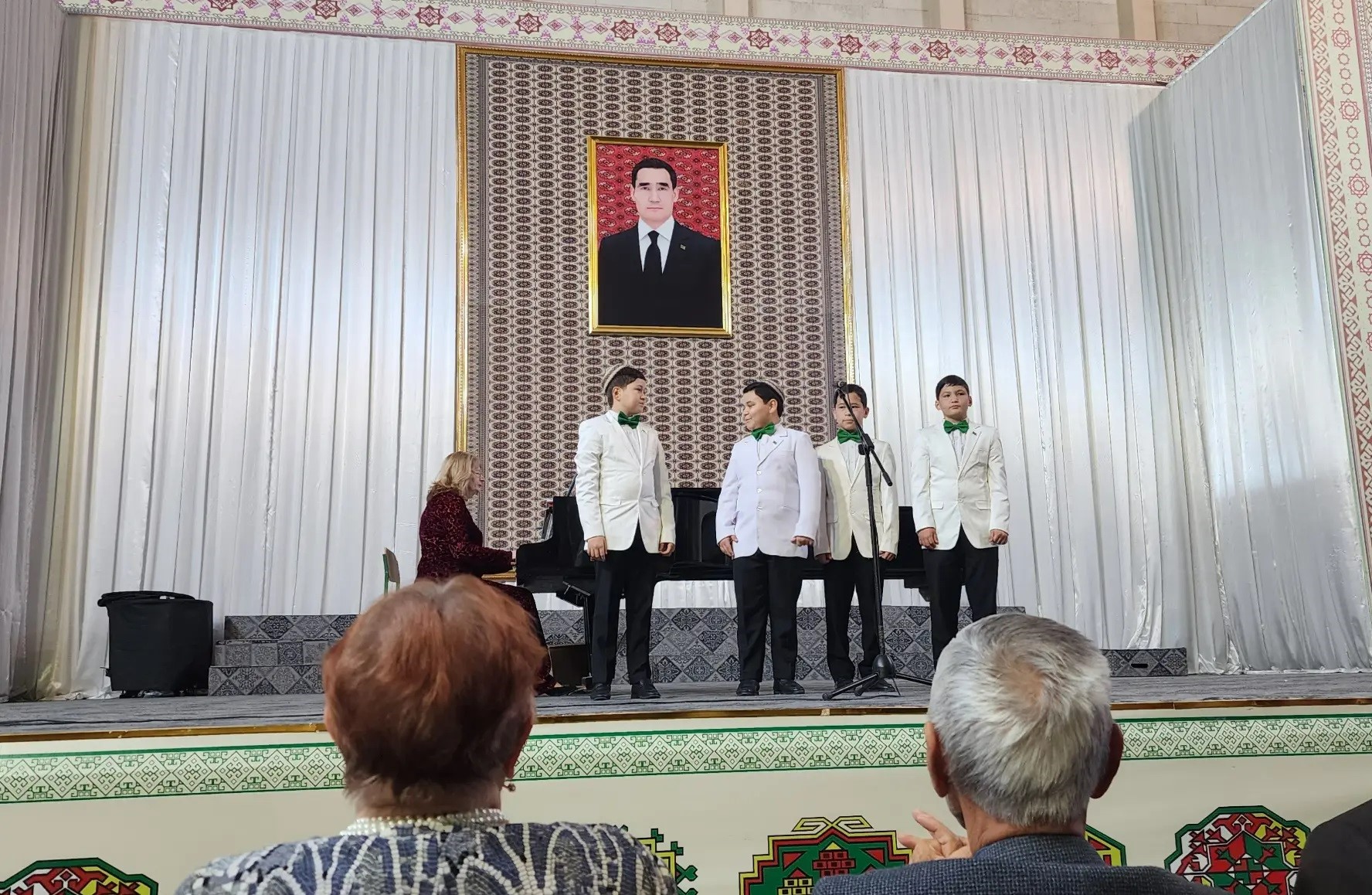
The evening's charm was enhanced by performances of young musicians. Students from the Special Music Boarding School at TNC took the stage. The vocal number "We Are Children," prepared under the direction of Kerim Dzhumakuliev, performed by a quartet of charming soloists wearing festive bow ties, evoked genuine smiles and applause from the audience.
Other students from the school (in Begench Murzaev's class) picked up the creative baton. They performed parts of Aina Shirova's "Children's Album," transforming their piano performance into a vibrant performance with elements of pantomime. This combination of music and movement allowed for a new exploration of the imaginative world of the composer's children's compositions.
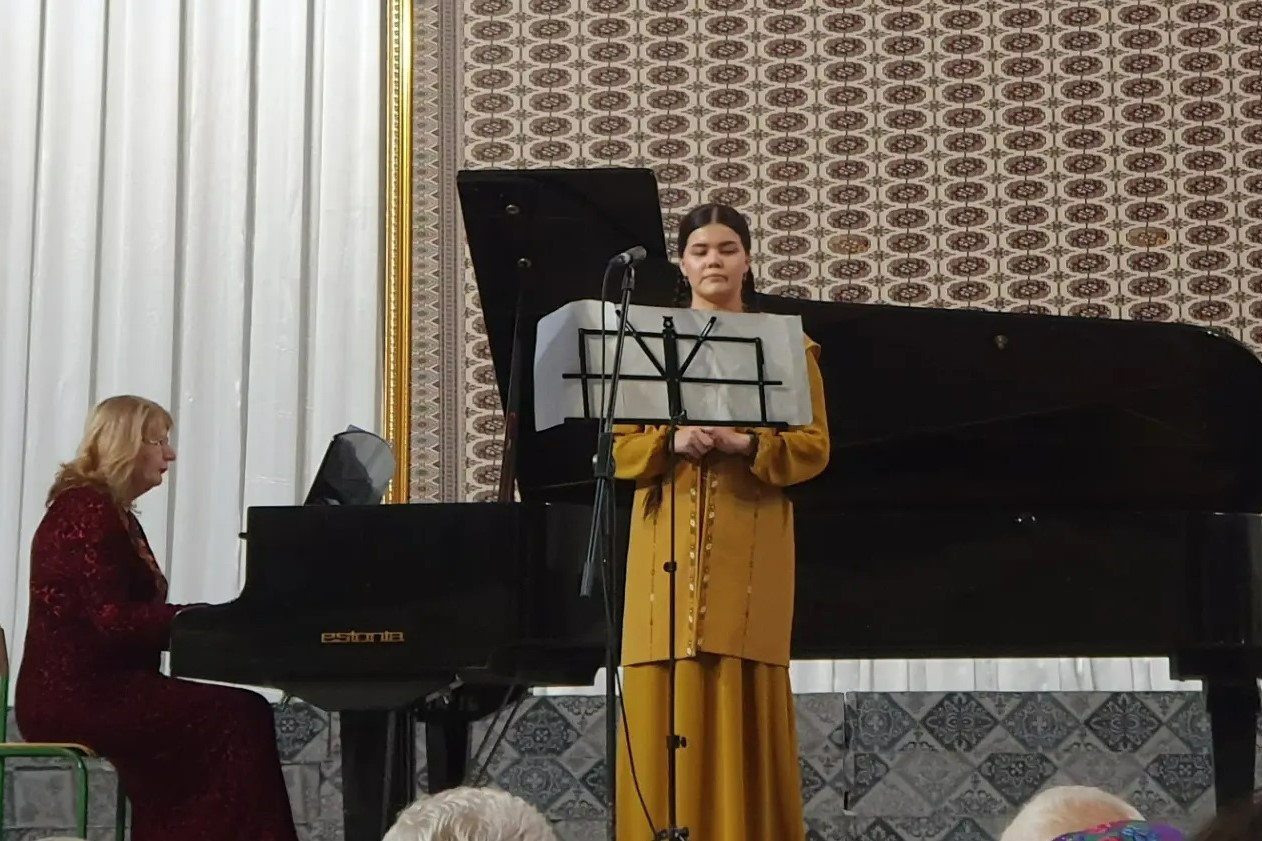
Vocalist Aizheren Abdullaeva performed the songs "Bird Swings" and "Sunny Homeland," based on the poems of Khemra Shirov. This concert also featured the premiere of "Dawn Song," performed by Bakhar Durdyeva and violinist Leyli Salykhova. Stella Faramazova, a winner of international competitions, provided the highest level of professionalism and emotional intensity throughout the evening, her impeccable piano accompaniment uniting all the program's numbers into a single artistic whole.
Young pianist Jeyran Ismailova delivered a memorable solo performance, presenting her own interpretation of "Variations" and "Piece for Piano." Her artistry, combined with a subtle, almost intuitive sensitivity, masterfully conveyed the atmosphere of Aina Shirova's savory oriental images.
A true surprise for the guests were the instrumental theater pieces, where the music transcended the keyboard and the lines of music. In one of the miniatures, Tylla Shirova so convincingly "fed" invisible birds that the lack of scenery only emphasized the power of the artistic performance. And the use of a simple mobile phone flashlight in the play "Light of a Distant Star" finally reconciled the digital age with the austere confines of the conservatory.
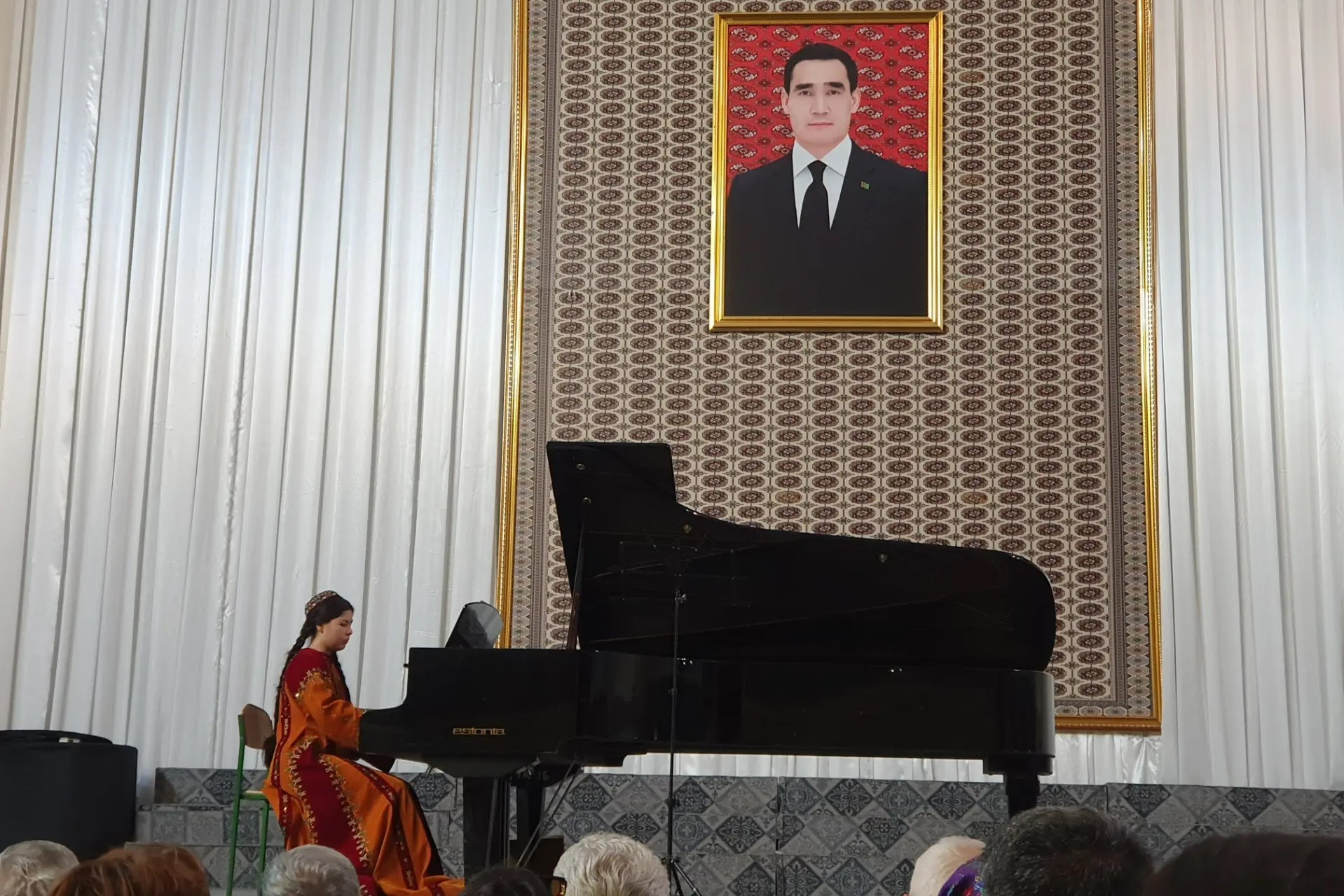
The highlight of the evening was the play "Annoying Fly." Tylla Shirova's virtuoso performance transformed the music into a living story, which the audience followed with bated breath. When, at the finale, the pianist brought the adventures of the "pesky hero" to a witty end with a single sharp clap, the audience responded instantly: after a wave of hilarious laughter, similar claps scattered through the rows like the explosions of a piston. This reaction from the audience, who had momentarily become "fly hunters," became an organic part of the piece itself, blurring the line between stage and audience.
The interactive session continued with an invitation to the audience to become co-authors. Aina Shirova presented a new, unfinished composition to the audience, inviting them to jointly decide its future. The guests themselves chose the musical character, tempo, and instrumental palette. Now the composer must distill this collective impulse into a coherent form. At one of the following concerts, we will hear the finished product and discover the direction in which this "folk" creative choice led the composer.
A wonderful finale to the evening was a performance by the renowned Mukam violin ensemble, under the direction of People's Artist of Turkmenistan Harold Neimark. They performed "Mama's Waltz" for the first time on stage. As a delicious dessert, the audience was treated to the piece "Lights of Nowruz," which had once brought the ensemble triumph at the TURKSOY festival.
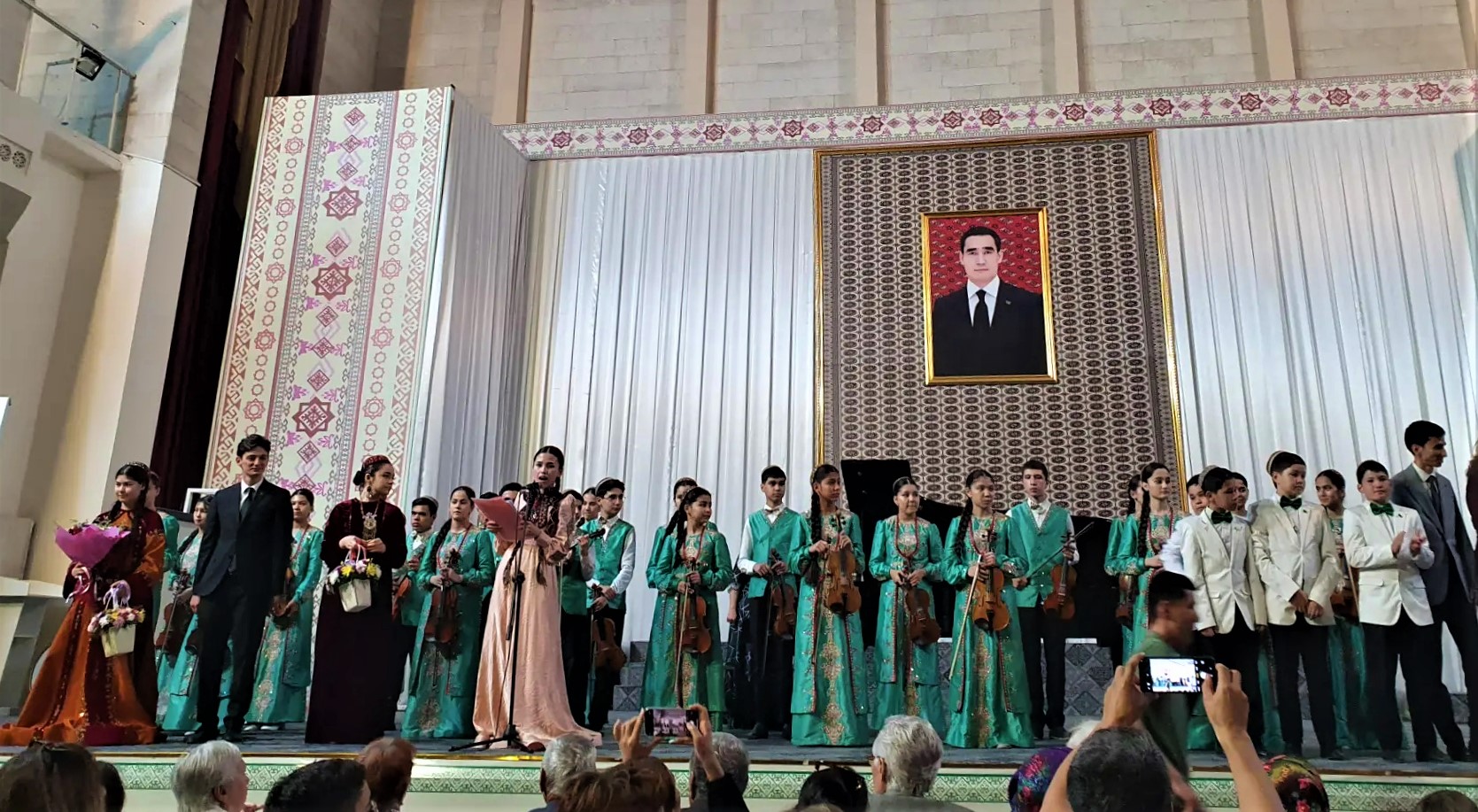
The concert concluded, and everyone involved—the organizers and the musicians—were finally able to catch their breath. It was a journey stretching her limits, demanding profound faith in her craft. But the most important thing this evening proved was that Aina Shirova's music, free from stereotypes, is absolutely self-sufficient. In the battle between familiar canons and daring innovation, the final score was undeniable: 1-0 in favor of the composer.
Victoria Baylieva