||
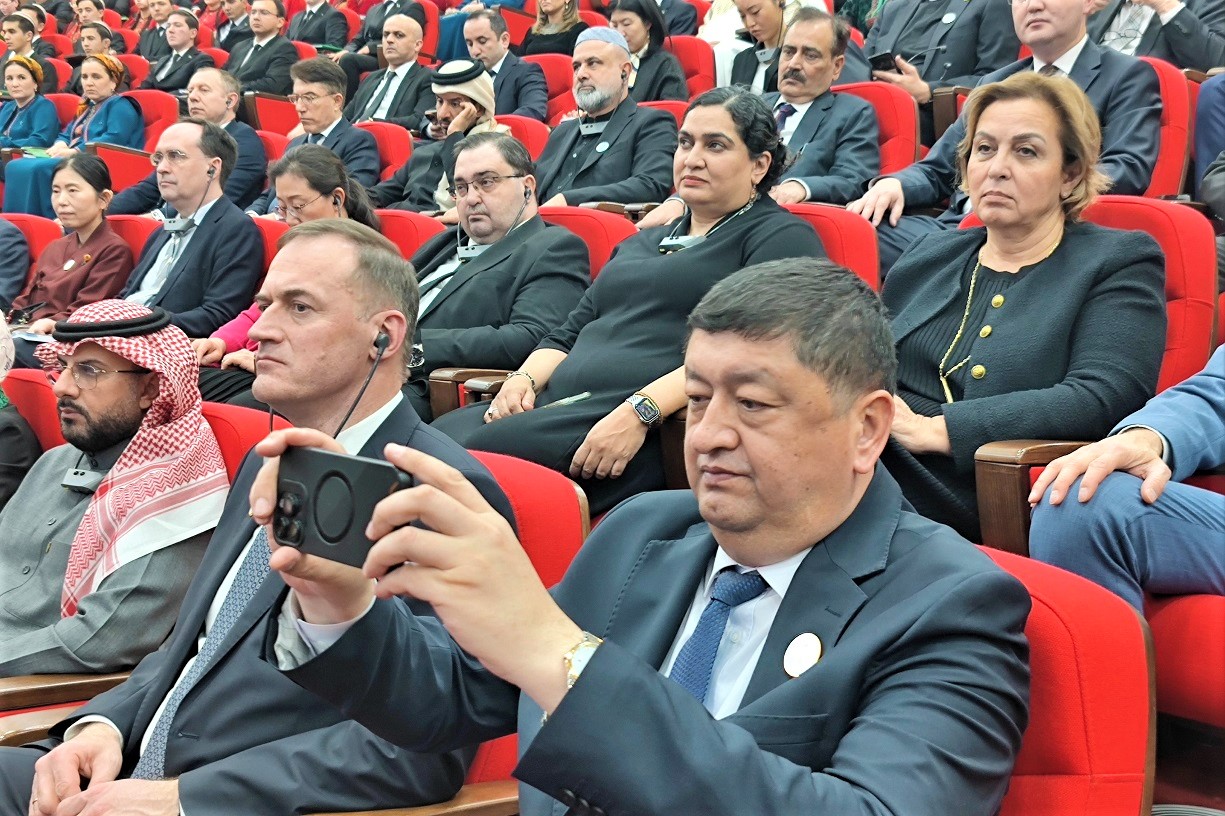
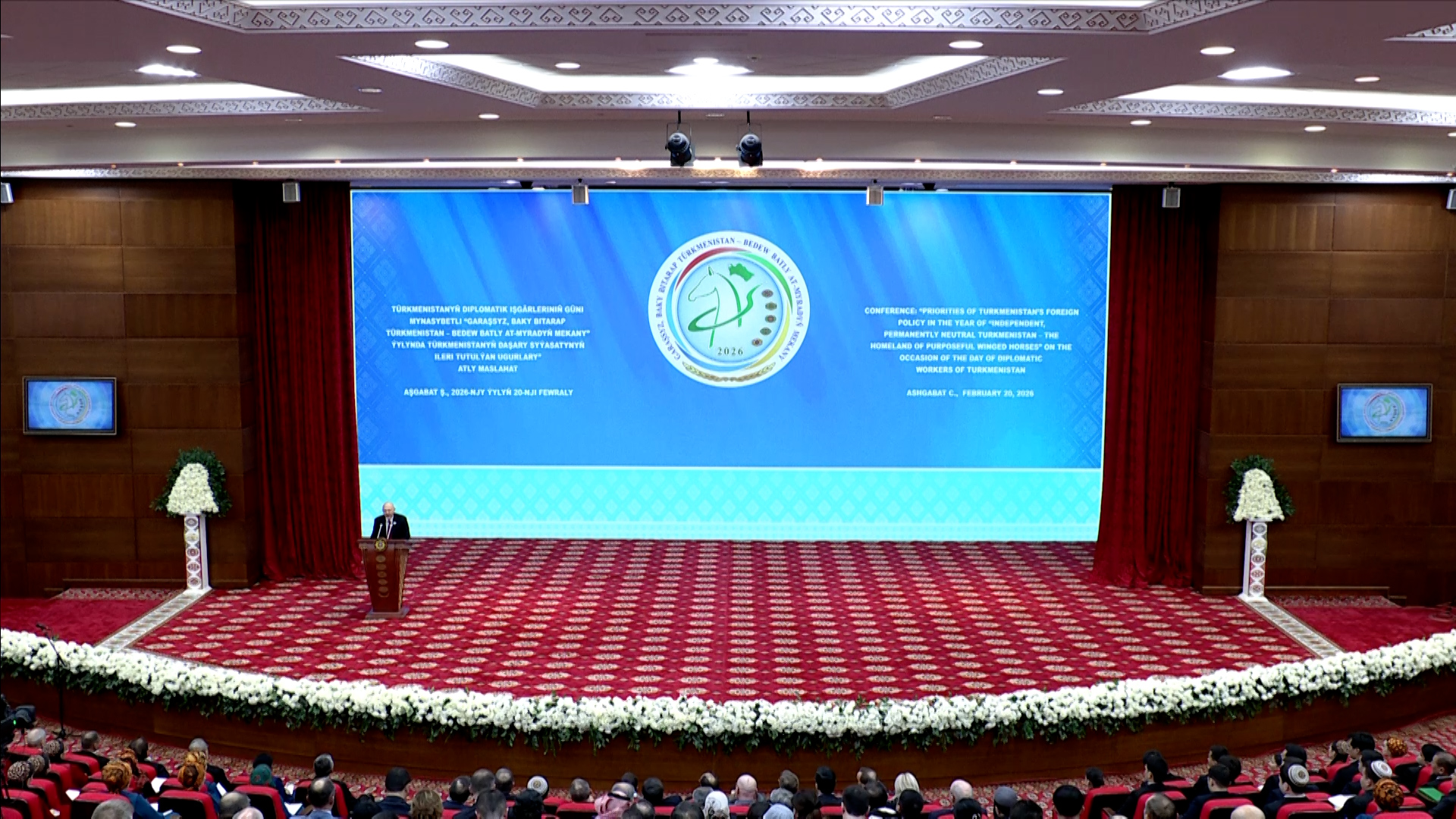
Ashgabat, February 20 | ORIENT. An international conference on the country's foreign policy priorities was held at the Institute of International Relations of the Ministry of Foreign Affairs of Turkmenistan. The event, timed to the professional holiday of the Ministry of Foreign Affairs staff, brought together members of the government, heads of diplomatic missions, and the future architects of Turkmen diplomacy.
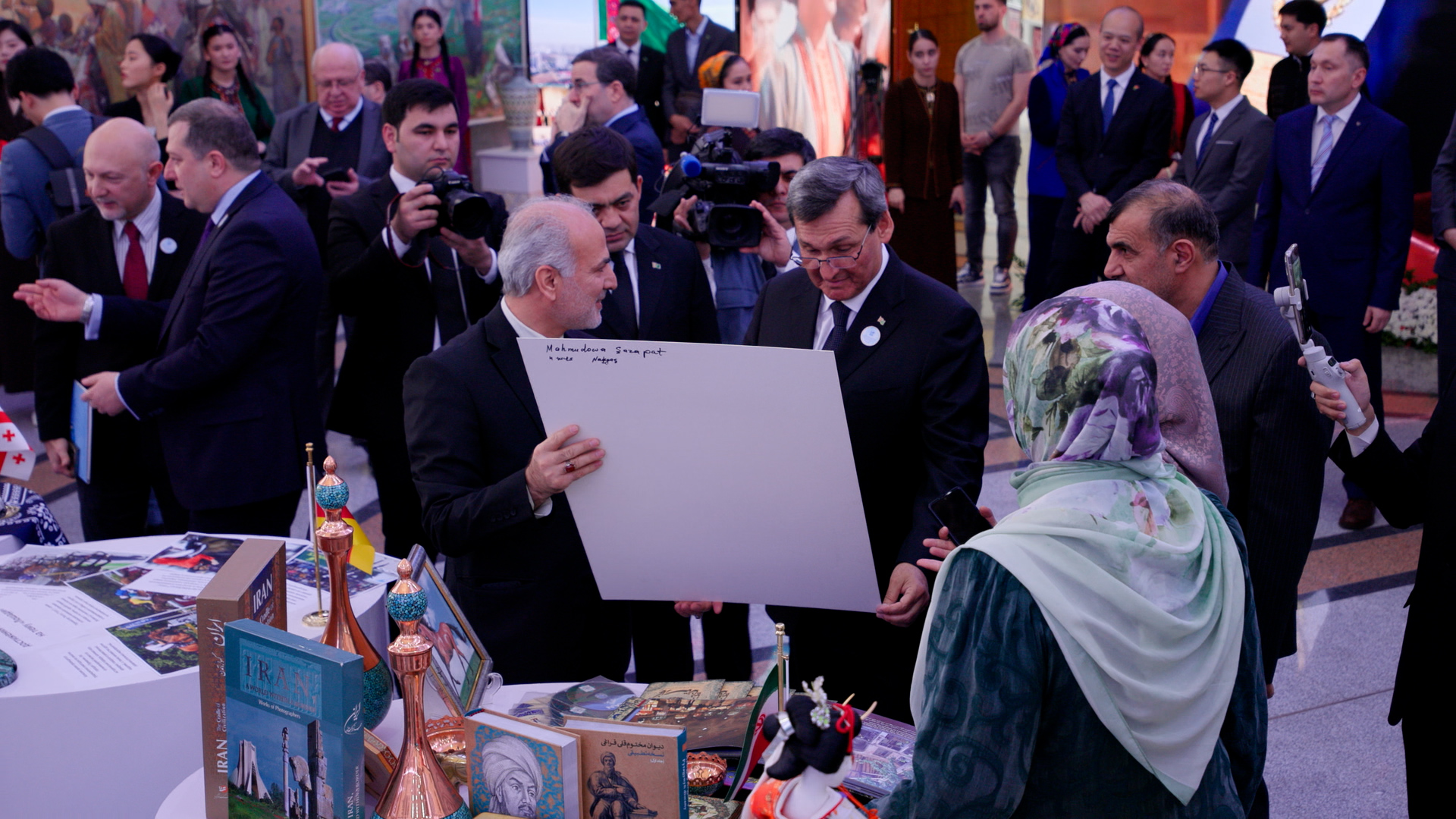
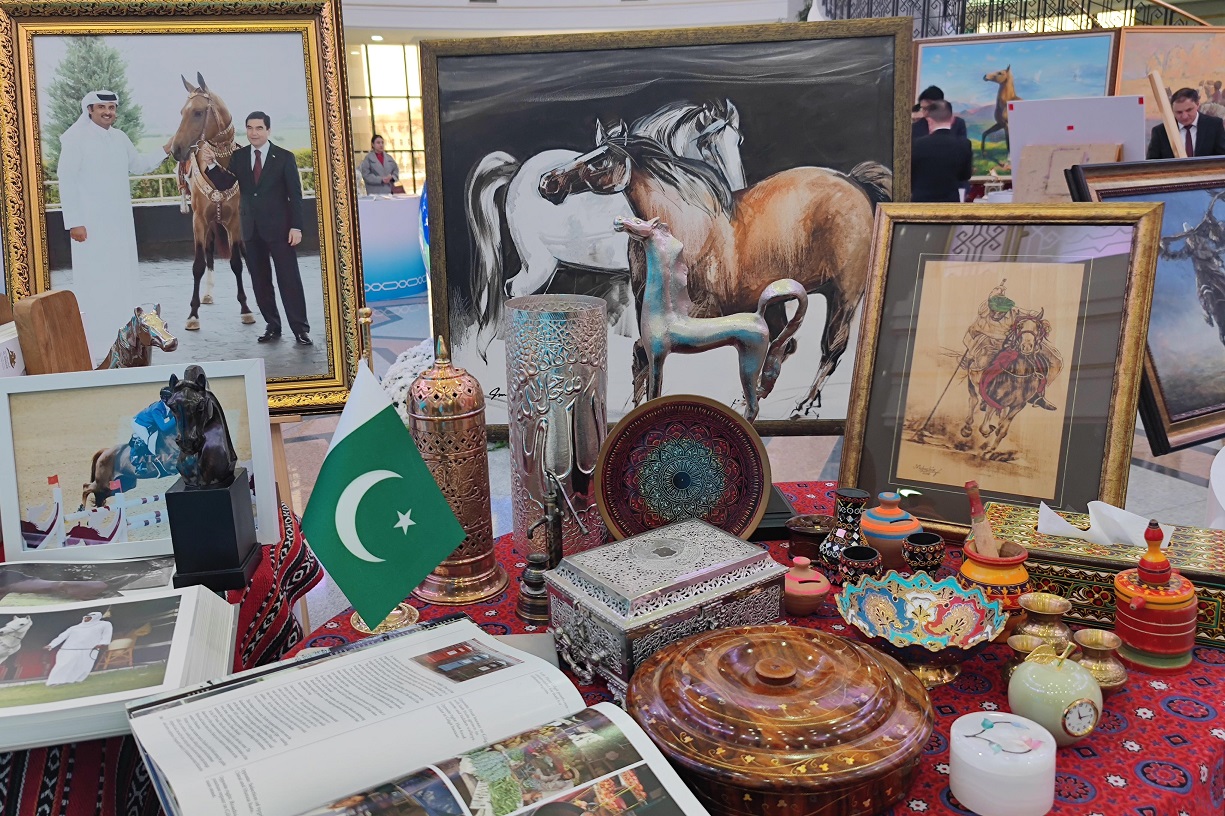
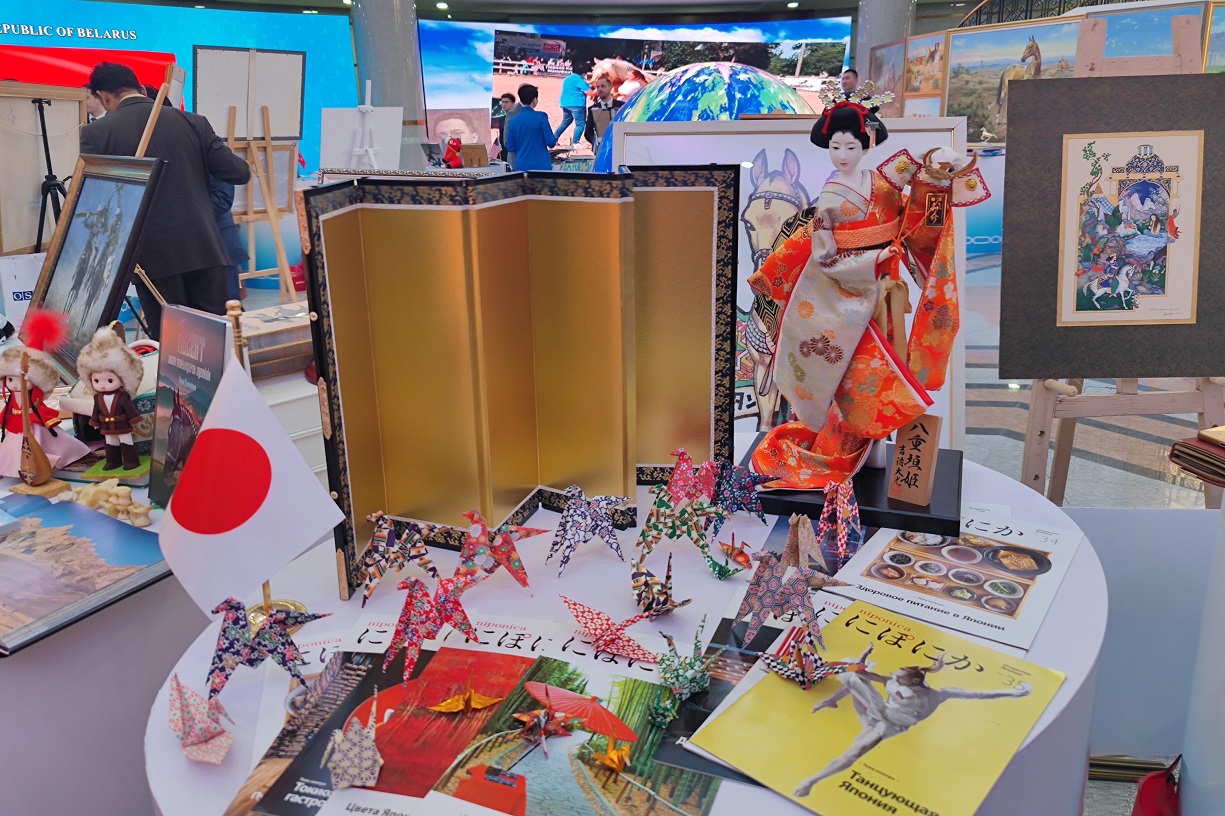
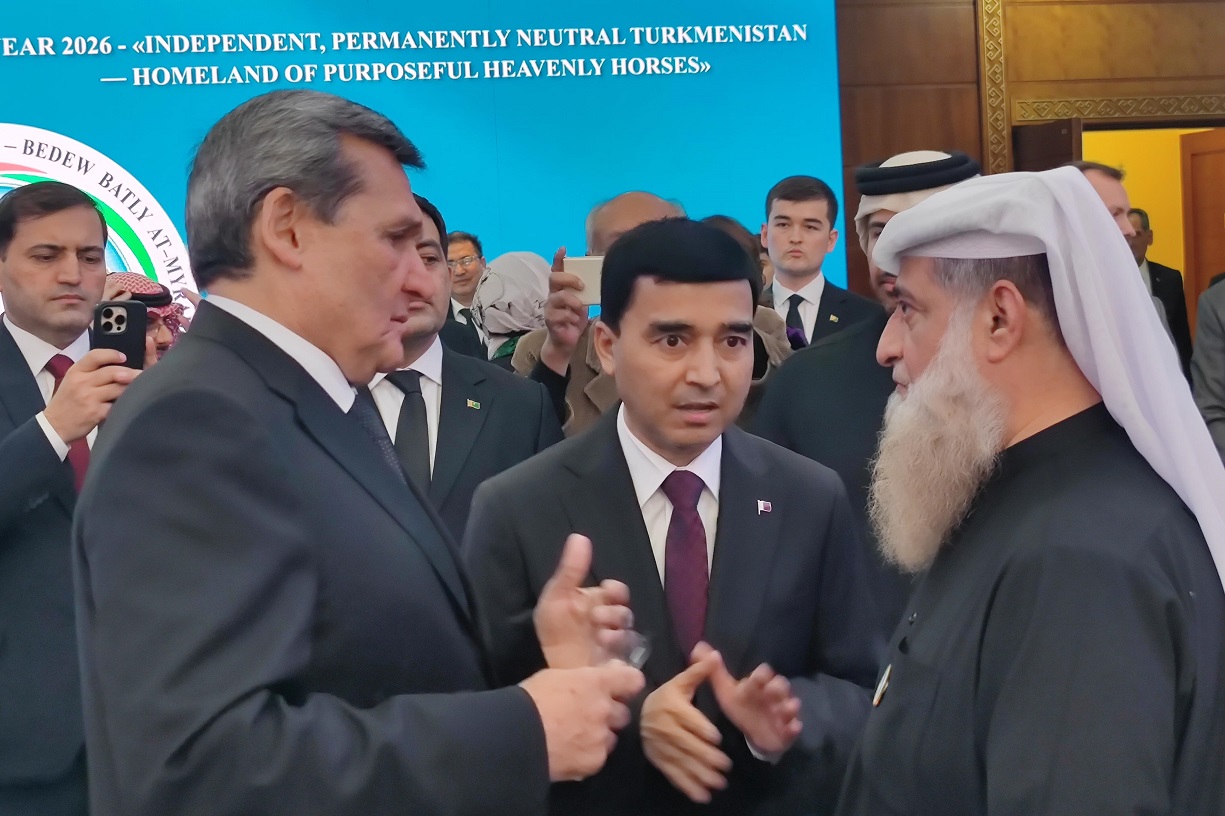
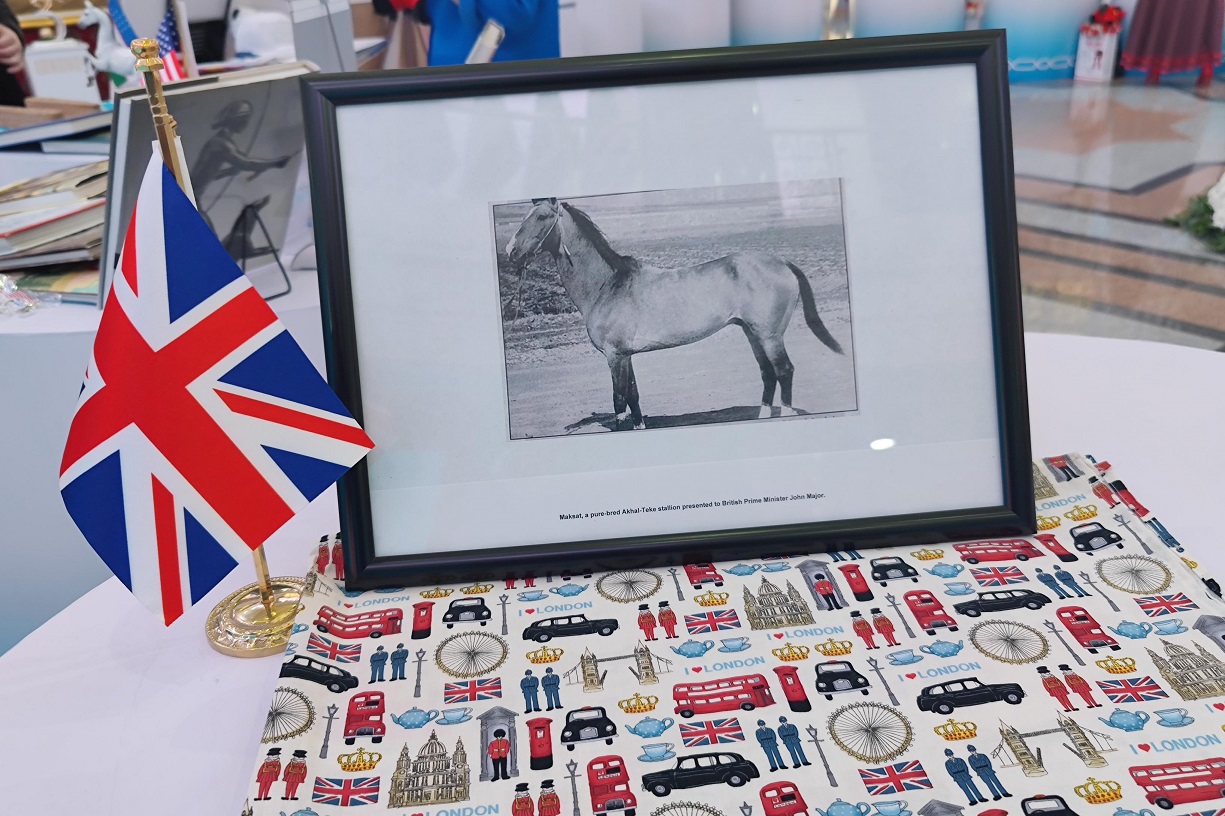
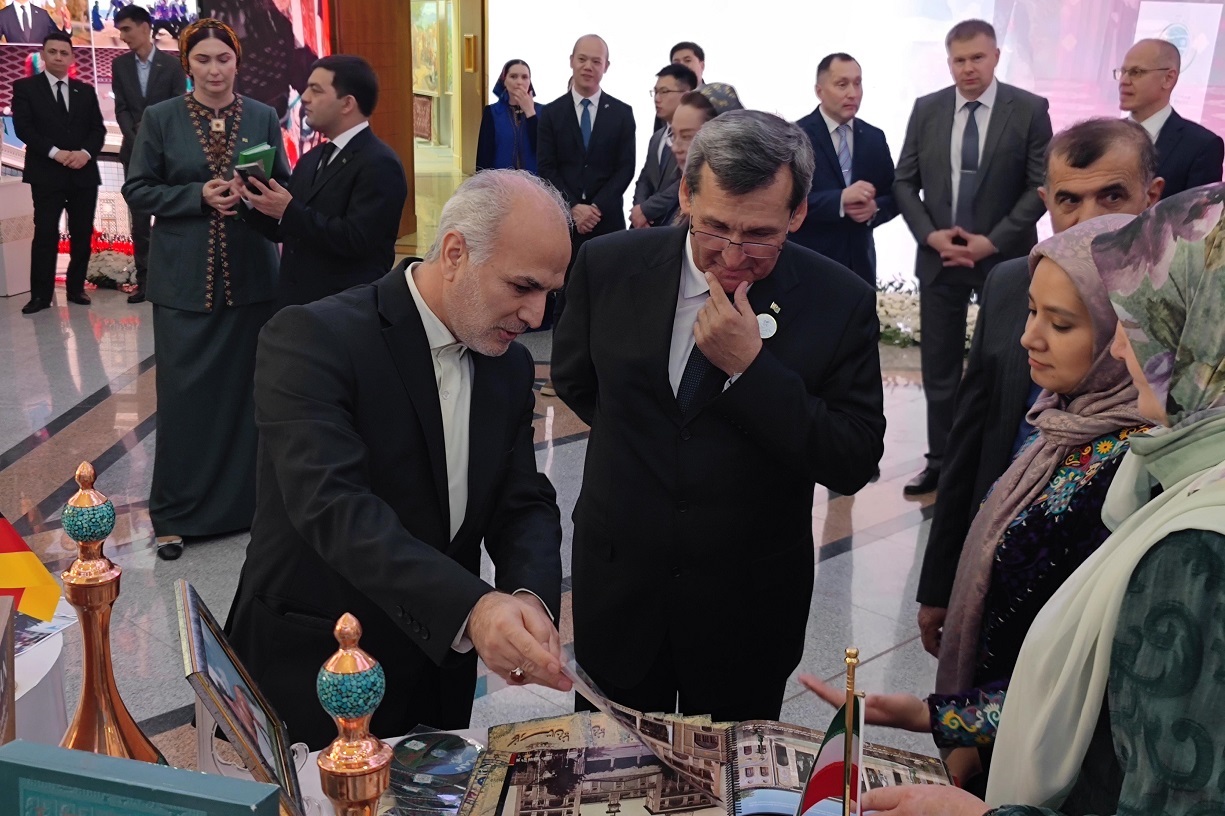
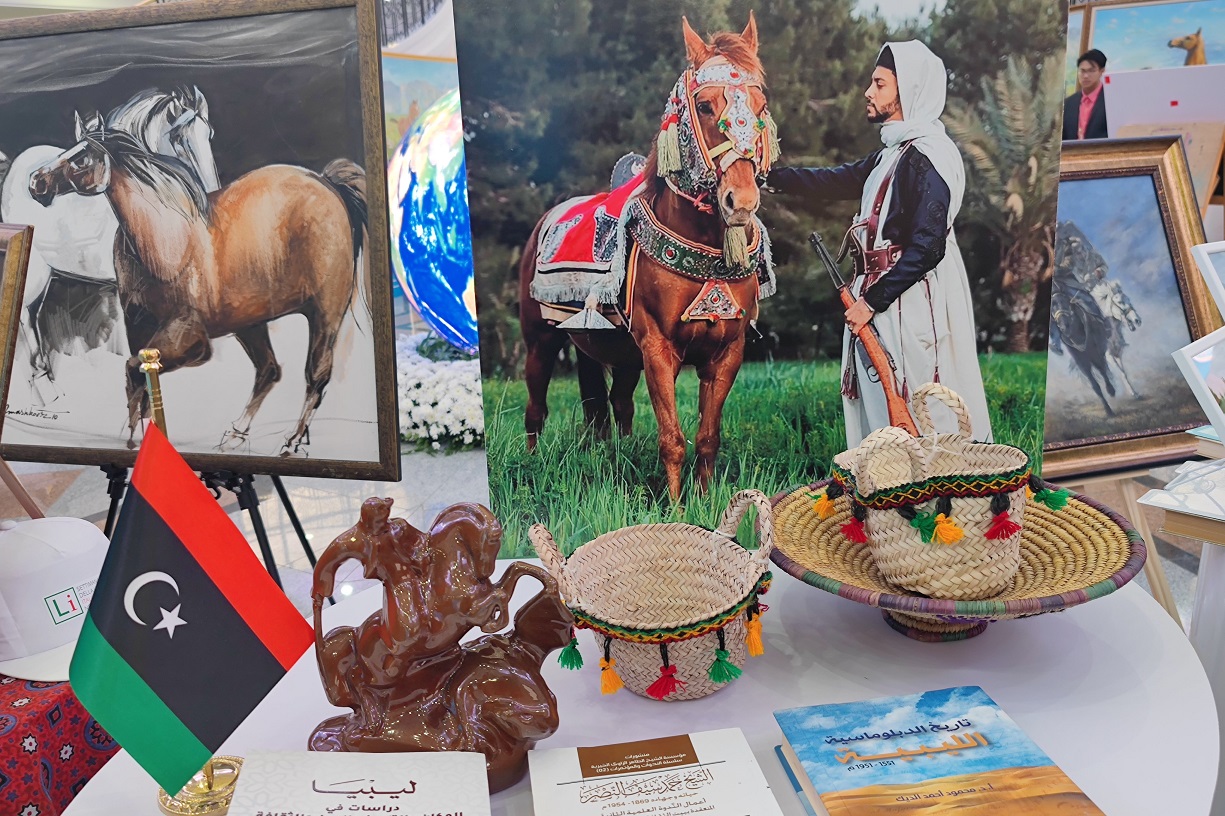
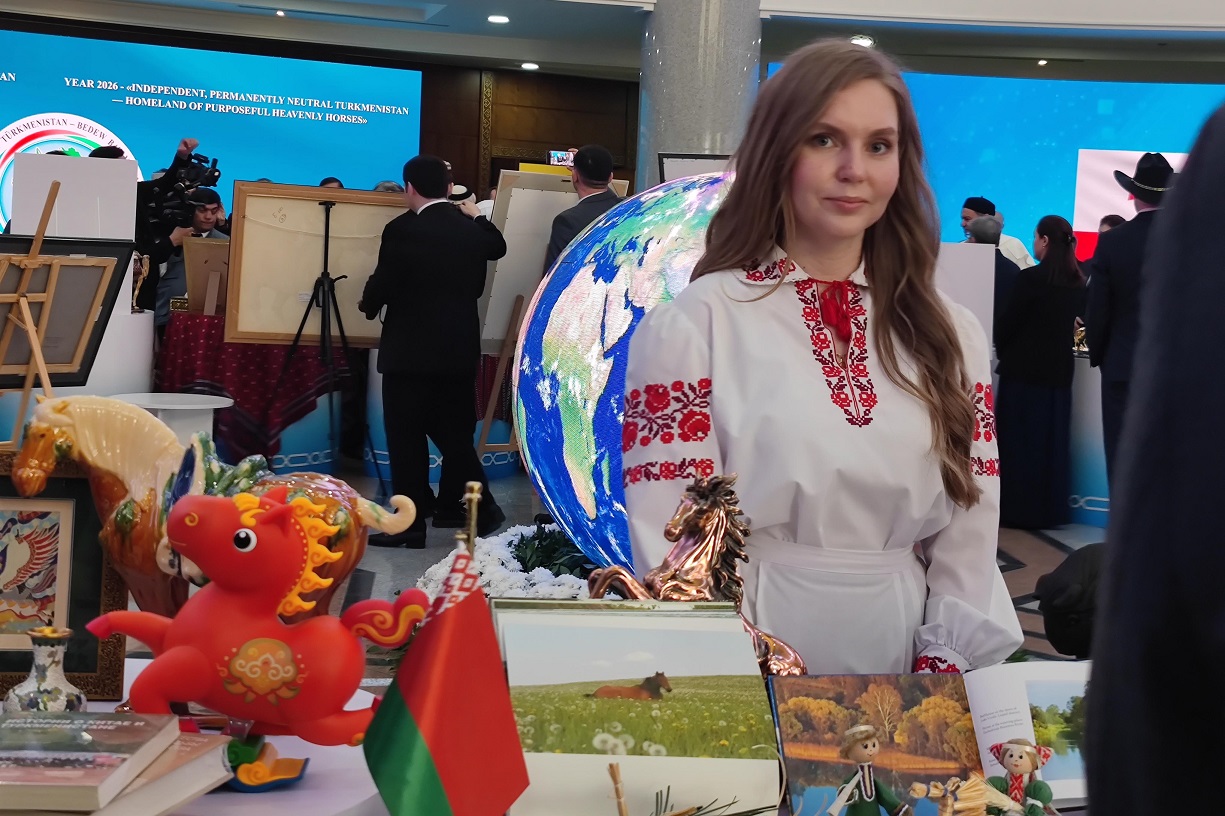
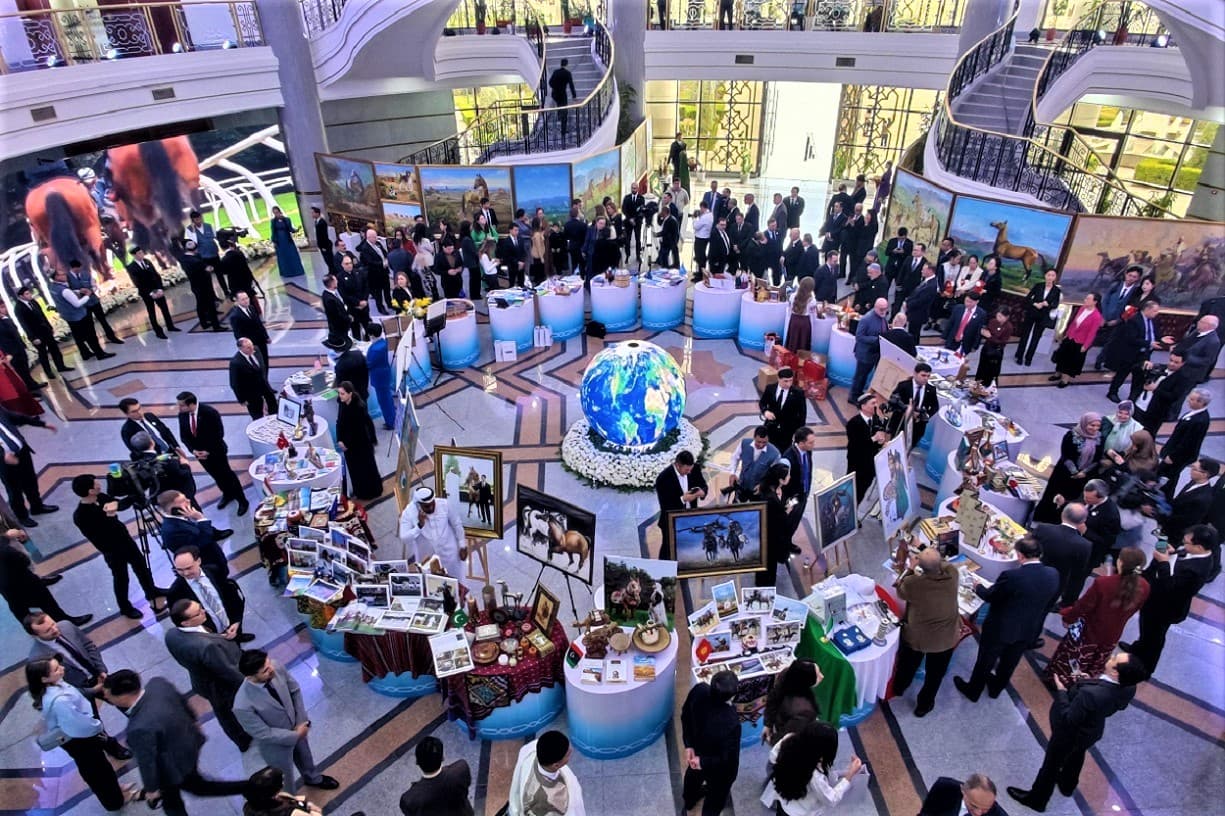
The festival began in the Institute's lobby, which temporarily transformed into a vibrant panorama of cultures and traditions. The exhibition, organized by foreign embassies and international organizations, took on a special significance this year. In the context of the 2026 motto—"Independent Neutral Turkmenistan – the Homeland of Purposeful Winged Horses"—the image of a horse could be found in virtually every pavilion. These souvenirs and images have become a symbol not only of Turkmenistan's national heritage but also of the dynamism of modern diplomacy.
The official part of the conference was opened by Gulshat Yusupova, Rector of the Institute of International Relations of the Ministry of Foreign Affairs, setting the tone for the discussion on the continuity of generations in the diplomatic service. The highlight was the reading of a congratulatory message from the President of Turkmenistan, Serdar Berdimuhamedov. In his message, the head of state emphasized that Turkmen neutrality remains the unshakable foundation of stability in the region, and the professionalism of diplomats is the main instrument for implementing the country's peace-loving course.
Diplomacy with "Soul and Heart"
Speaking at the conference, Foreign Minister of Turkmenistan Rashid Meredov presented a profound analysis of contemporary geopolitics. In his report, Turkmen diplomacy was presented not as a static instrument, but as the vanguard of global processes, offering the planet a model of "global governance with a human face."
The minister emphasized that Turkmenistan's ideas are not mere formal statements, but realistic strategies that are changing the global landscape. The country's energy and transport diplomacy have already become an integral part of the UN agenda.
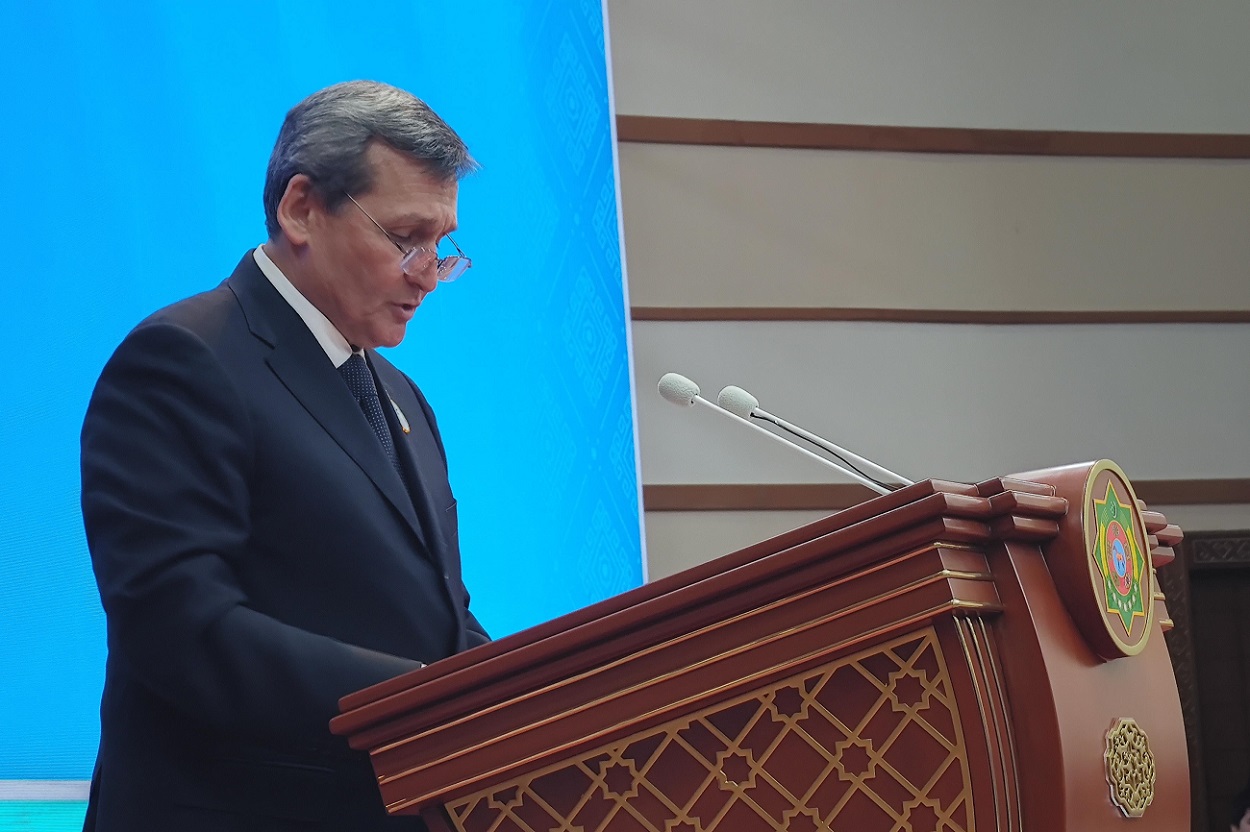
"International initiatives serve as a continuation of large-scale projects within the country... This demonstrates that Turkmenistan's ideas and proposals are realistic and effective, not just formal statements," the Foreign Minister noted.
Particular attention was paid to the UN Decade of Sustainable Transport and the results of last year's conference for landlocked countries in Turkmenbashi. These steps confirm Turkmenistan's important role in shaping the architecture of Eurasian connectivity.
One of the most striking parts of the report was the discussion of the future world order. Rashid Meredov stated bluntly that the future system of global interaction will only be viable if national characteristics are respected, without the imposition of ready-made "recipes" and interference in internal affairs.
The minister introduced a crucial humanistic concept into diplomatic discourse: "The global governance system... requires an unambiguous focus on strong social support for the population... It must, figuratively speaking, 'have a soul and a heart' open to the needs and aspirations of the people. Only in this way can it become attractive and find genuine support in the world."
Turkmenistan advocates for UN reform, while preserving its unique legitimacy. The minister emphasized that international law is not a rigid dogma but must remain the "most reliable pillar" of security.
In this regard, a strategic initiative was announced: "At the current session of the UN General Assembly, Turkmenistan put forward an initiative to declare 2028 the Year of International Law. Broad support for this proposal will be an important step in strengthening the foundations of peace."
Concluding his speech, the minister noted that the effectiveness of the Turkmen service is based on a combination of innovation and the experience of its ancestors. The country's diplomacy is at the forefront, based on the unshakable foundation of neutrality.
Voice of the UN: Central Asia as a Zone of Responsibility and Trust
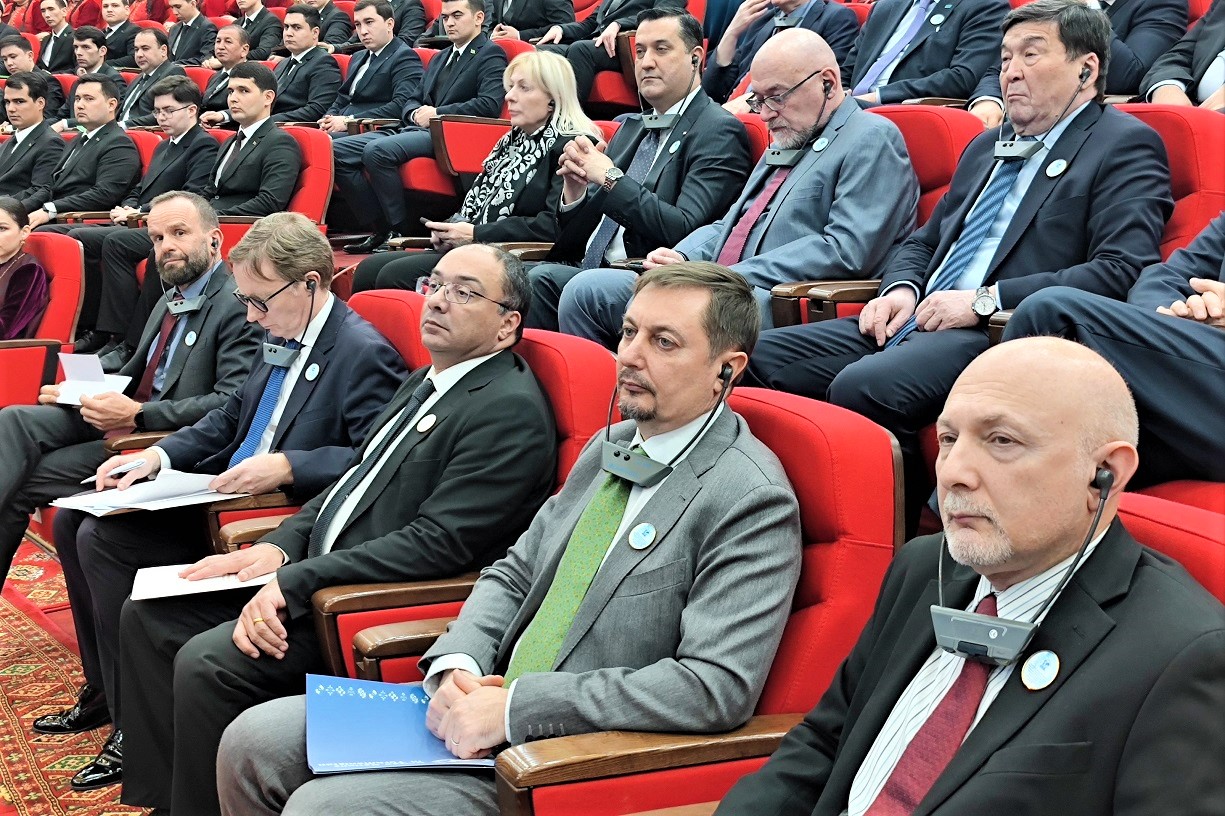
The importance of the event was confirmed by the lineup of speakers from international organizations. A keynote address by Kakha Imnadze, Special Representative of the UN Secretary-General and Head of the Regional Centre for Preventive Diplomacy for Central Asia (UNRCCA), was an important addition to the Foreign Minister's keynote address. He emphasized that Turkmenistan's diplomatic service deservedly enjoys high prestige, and the country's neutral status has become "an important factor in strengthening regional stability."
The head of the Regional Centre particularly emphasized the alignment of Ashgabat's initiatives with António Guterres's global goals: "Turkmen diplomacy actively supports the principles of respect for international law and demonstrates responsibility in implementing them. I would especially like to highlight Turkmenistan's initiative to declare 2028 the Year of International Law, aimed at strengthening the rule of justice in global affairs."
Speaking about the regional agenda, Kakha Imnadze described modern Central Asia as a politically active region, where Turkmenistan serves as a driver of connectivity. He also revealed plans for future cooperation: within the framework of the UNRCCA Action Plan for 2026–2030, joint work will focus on early conflict prevention and water and energy security.
Ashgabat's role this year was emphasized: "Turkmenistan's chairmanship of the Commonwealth of Independent States is of particular significance this year, opening up new opportunities for preventive diplomacy throughout the CIS."
A Call to Reason and Out-of-the-Box Thinking
UN Permanent Representative to Turkmenistan Dmitry Shlapachenko continued the discussion on the role of law in the modern world. His speech sounded like a sincere recognition of Ashgabat's efforts in a world that is becoming increasingly unstable.
"Your efforts are needed now more than ever. We see a world that is increasingly less based on respect for the UN Charter. Therefore, it is difficult to overestimate Turkmenistan's desire to return us to a fundamental set of principles that would make our world a better place," Shlapachenko emphasized.
The comparison of legal foundations with humanistic values was particularly moving. Mentioning the beginning of the holy month of Ramadan, the UN Permanent Representative noted that for many people, the vision of peace remains distant, and therefore Turkmenistan's initiatives serve as an important guide.
Dmitry Shlapachenko also highlighted the ability of Turkmen diplomacy to "think outside the box," citing as an example a unique project to train young diplomats from across Central Asia. This initiative, supported by the UN office, as well as Italy and the UK, is intended to lay the foundation for long-term friendship and a “new spirit of cooperation” in the region.
The Relay of Centuries and Modern Corridors
Arsen Avagyan, Ambassador Extraordinary and Plenipotentiary of the Republic of Armenia to Turkmenistan, emphasized the inseparability of historical memory and the pragmatism of the present day in his address. He recalled the deep roots linking the two peoples, mentioning one version of the origin of the name Ashgabat, dating back to the Parthian king Arshak I (Ashka I), and the unique manuscripts on Turkmen history in the Yerevan Matenadaran.
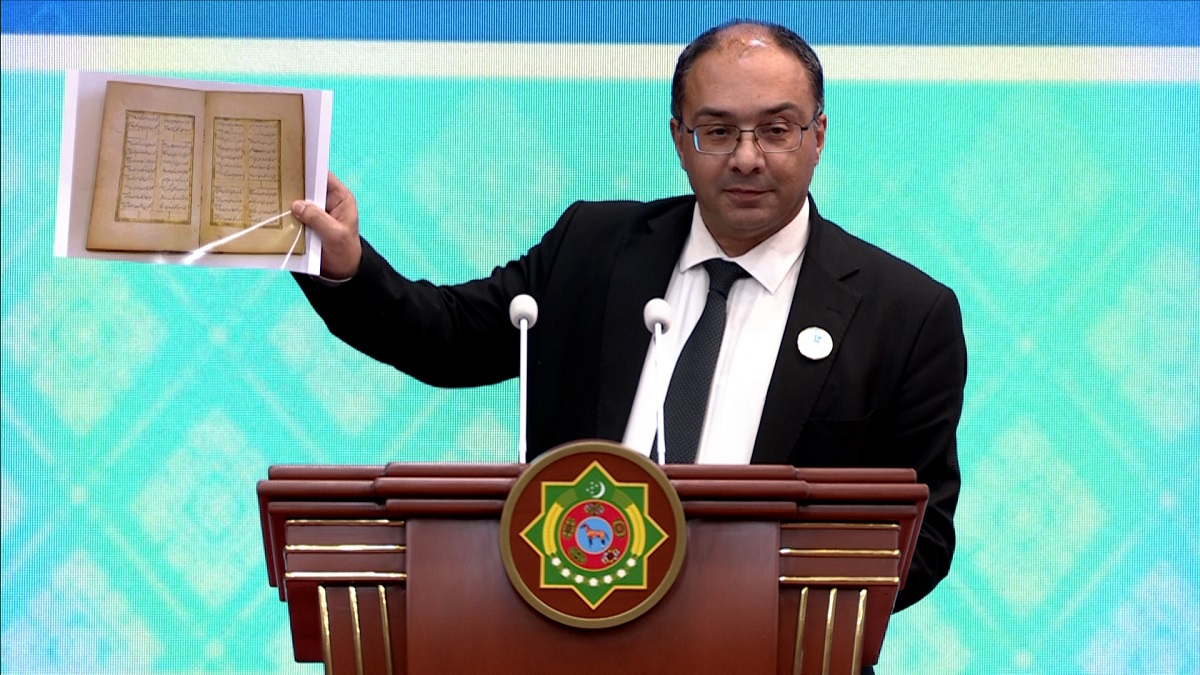
However, the diplomat's main focus was new horizons for cooperation. Avagyan emphasized that in a rapidly changing world, Turkmenistan and Armenia are becoming important links in global routes: "Participation in international infrastructure projects contributes to the development of new strategic vectors. This is the Trans-Caspian route, which is opening up new opportunities associated with the implementation of the TRIPP (Trump Route for International Peace and Prosperity) project in the South Caucasus—a route passing through Azerbaijan and Armenia."
The Ambassador particularly noted the high dynamism of bilateral contacts, recalling two visits by Armenian President Vahagn Khachaturyan to Turkmenistan in 2025. He noted that Ashgabat is demonstrating a far-sighted approach, transforming the principles of neutrality into tangible tools for regional integration and sustainable peace.
Diplomacy in the Digital Age
The audience was particularly drawn to the presentation by British Ambassador Stephen Conlon, who departed from traditional formats and presented a conceptual perspective on the profession in the age of artificial intelligence. The Ambassador formulated "Ten Eternal Rules of Diplomacy," demonstrating how modern technologies enhance, but do not replace, traditional skills.
The key point: AI can provide data, but it cannot build trust. "Personal connections based on empathy and respect will always carry weight. Technology lacks true social intuition," the diplomat emphasized.
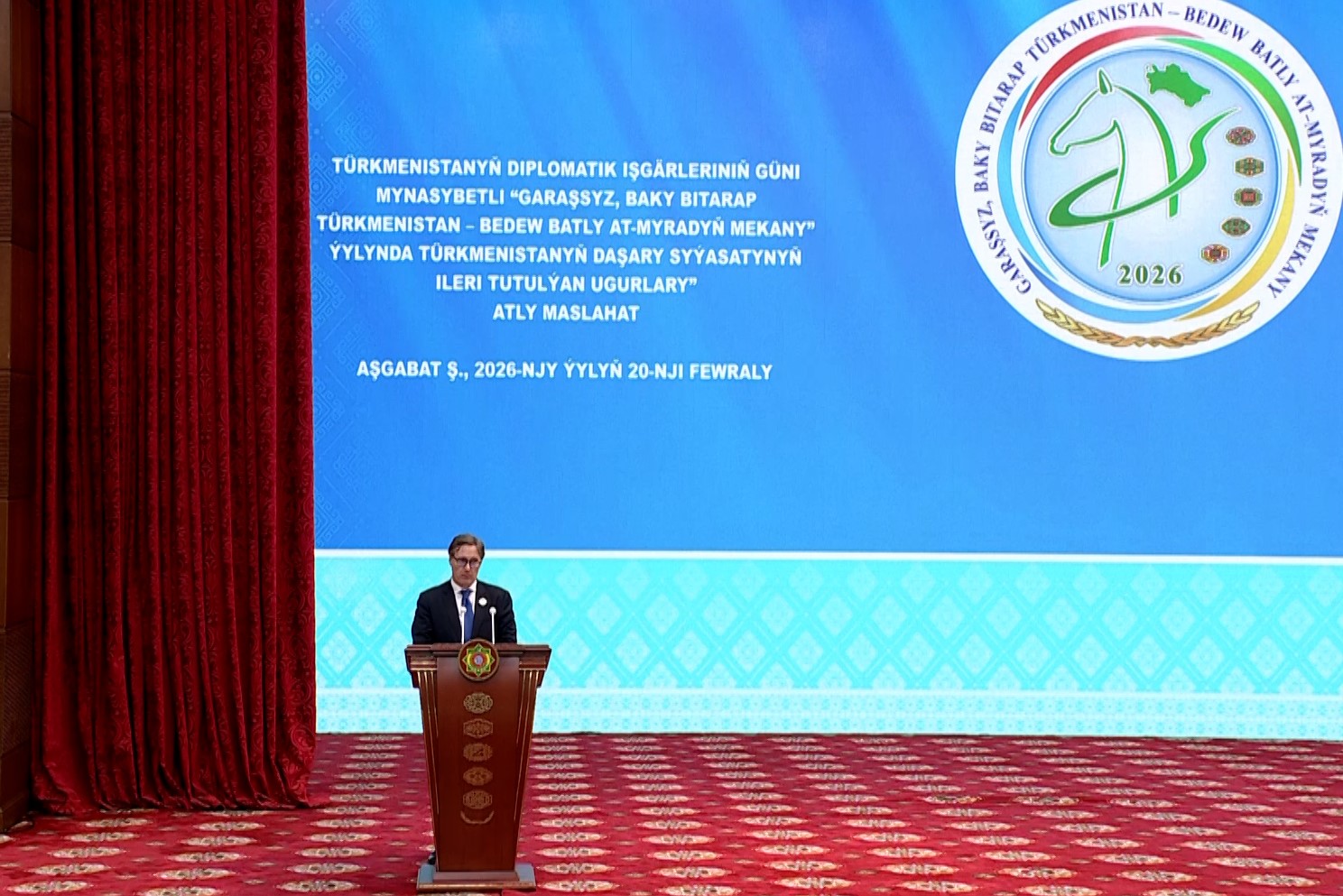
Here is Stephen Conlon's brief code of conduct for a diplomat in the age of AI:
Active Listening: Algorithms monitor conversations, but only humans can read between the lines. Restraint: AI's speed shouldn't lead to hasty decisions. Pause for reflection is invaluable.
Cultural Code: AI helps with research, but knowledge of local history and language is indispensable.
Trust: Personal communication is the "heart" of diplomacy and cannot be digitized. Precision of Words: In the digital age, any ambiguity is instantly distorted. Write in a way that "cannot be misunderstood."
Tact: Politeness is cheap, but it buys a lot. AI lacks tact.
Honesty: In a world of fakes, a diplomat must be a benchmark for fact-checking. Trust is the industry's main currency.
Adaptability: The UK is already creating dedicated units to integrate AI into the Foreign Office. Being flexible means being effective.
Strategy: AI maps out possible futures, but only humans choose the path. Humility: Titles and technology don't make us infallible. It's important to admit mistakes and learn from younger colleagues.
Stephen Conlon recalled Talleyrand's words about the dangers of "excessive zeal," urging future diplomats to use AI as a support, not a substitute, for their own judgment.
The Indispensable Human Factor in Politics and Economics
The final and perhaps most moving chord of the conference was the speech by Eric Livny, Head of the European Bank for Reconstruction and Development (EBRD) Office in Turkmenistan. Addressing IIR students not only as a banker but also as an educator with 30 years of experience, he touched on a topic that concerns every graduate today: "Will Artificial Intelligence Replace Me?"
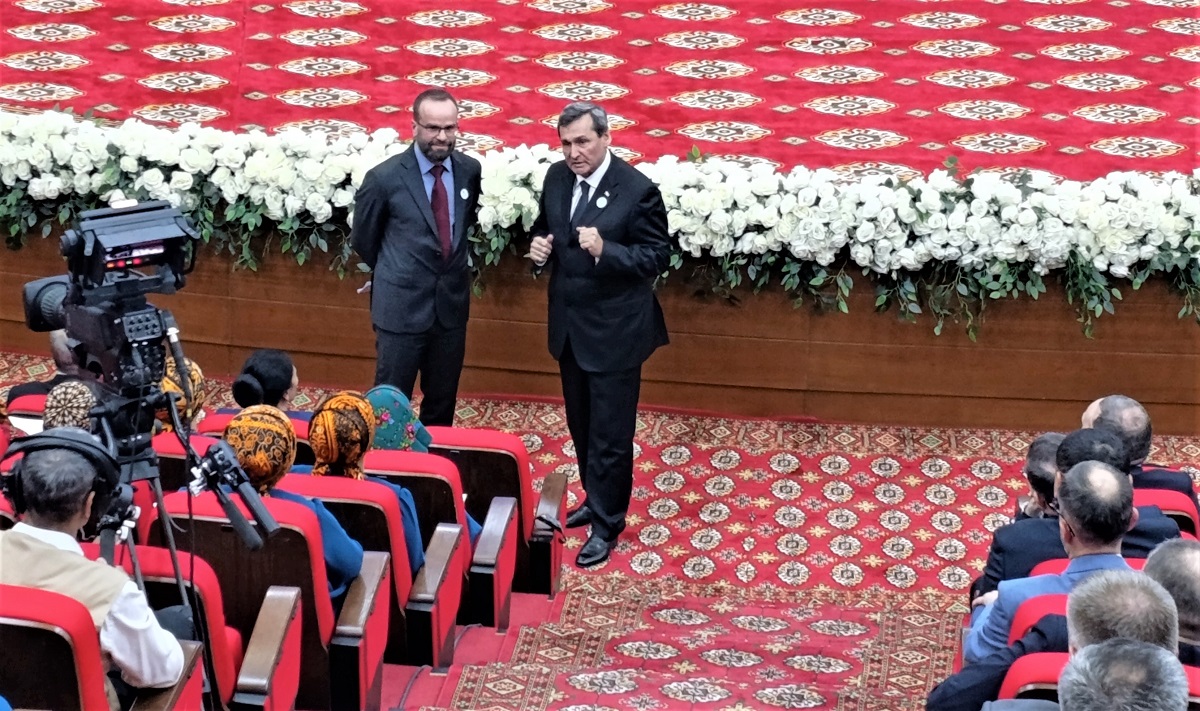
Livny frankly acknowledged that the world young professionals are entering is full of uncertainty—from rethinking globalization processes to tectonic shifts in the global economy. However, it is precisely in this turbulence that he sees a unique opportunity for future diplomats.
"In a rapidly changing world, you will certainly not have time to get bored. You will have to help your country navigate between conflicting blocs, attract capital for the latest technologies, and secure markets," Livny noted.
The main "positive," according to the EBRD head, is that diplomacy remains one of the few areas where "machines" will never replace humans. "Building reliable, trusting relationships is a task for people, not robots. Diplomacy begins with a human handshake when meeting someone and ends with the signing of multi-million-dollar investment contracts. Your professional choice is absolutely timely."
This idea about the indispensability of the "human factor" logically closed the circle of discussion, returning the audience to the thesis about the "heart and soul" of diplomacy, voiced at the beginning of the conference by Rashid Meredov.
A Day That Brought Together Meanings
The official part symbolically concluded with an awards ceremony for young employees. In the context of the Year of the "Goal-Oriented Winged Horses," this felt like a passing of the baton to those who will be implementing the ambitious goals announced.
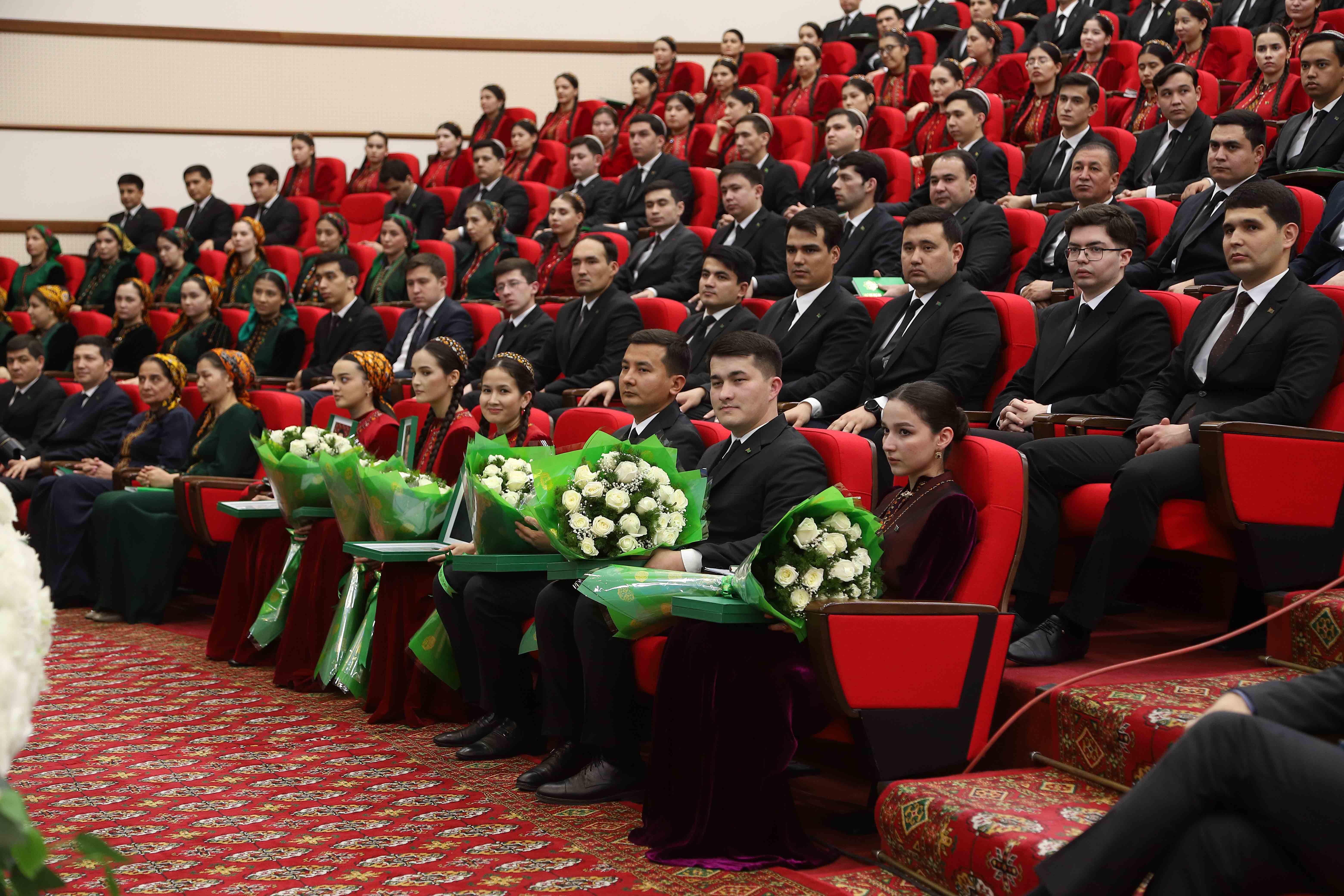
The official day concluded with a festive concert prepared by IIR students. Young talents, through music and dance, expressed their love for their homeland and openness to the world, and a gala dinner allowed guests to continue communicating in an informal, truly friendly atmosphere.




 Chinese New Year