We are guided by what unites people




News
Articles
Media
Announcement
 Chinese New Year
Technology
About Us
Contacts
Chinese New Year For decades, China’s housing market expanded at remarkable speed, focused on delivering enough homes for rapid urbanization. The results were clear: urban living space per capita rose from just over 7 square meters in the 1990s to more than 40 square meters by 2020. As the market matures, the priority is shifting from how many homes are built to how well people live in them. In this transition, a new term has emerged: ‘good houses’.
Redefining ‘Good’
‘Good house’ is not a specific housing type but a policy concept signaling the sector’s future direction. It first appeared in the 2025 Government Work Report.
“There’s no single answer to what a ‘good house’ is,” says Wang Ying, associate professor specializing in urban planning at Tsinghua University. Wang adds people’s needs differ by life stage. Young professionals, families with children and elderly households can prioritize different features. Still, Wang points that there are clear bottom lines. A good house must first be safe and healthy. Then comes comfort. Beyond that are broader goals such as low-carbon living and intelligent systems. At this stage, the concept is often summarized in four principles: safety, comfort, green and smart, which are embedded in the national standard Project Code for Residential Building, effective May 1, 2025.
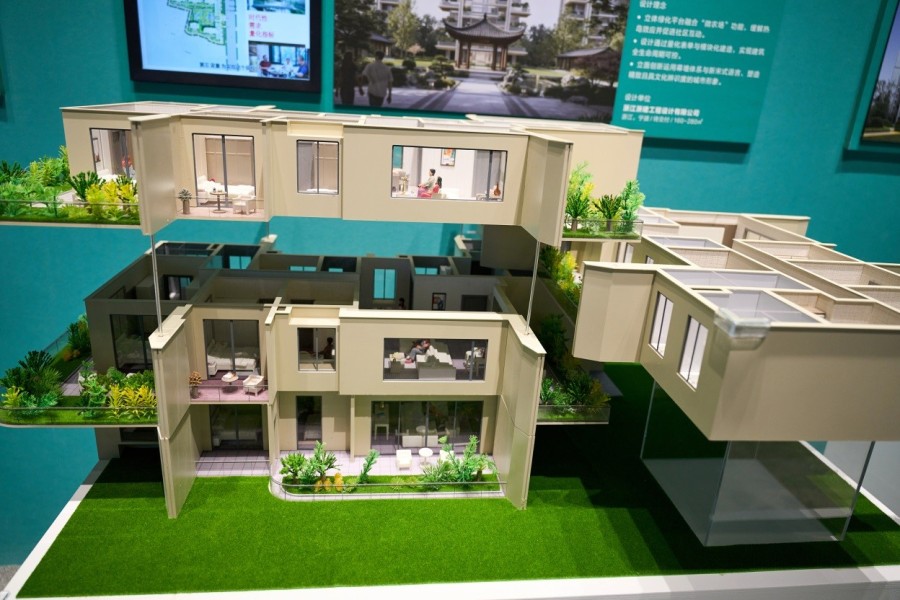 Caption: On October 18, 2025, Hangzhou exhibited innovations in smart, green, safe, and comfortable homes shaping high-quality living for all. [Photo: CFP]
Raising the ‘floor’
The new standard upgrades construction requirements. For example, minimum floor-to-ceiling height is set at 3 meters. Buildings with four floors or more must install elevators. Balcony safety standards are strengthened, and clearer rules apply to sound insulation, heating and air-conditioning systems.
Some projects have added flood-control measures such as raised concrete slopes and removable barriers at underground garages to prevent rainwater intrusion. Soundproofing has also improved. In certain developments, thinner gypsum board and light steel partition walls replace traditional brick walls. Though about half as thick, they can achieve 66 decibels of sound insulation, which is above the 50-decibel national standard, and add roughly 8 square meters of usable space in a 100-square-meter apartment. The floor for sustainability has also been elevated. On the technology side, efforts focus on advancing the development and large-scale adoption of higher-performance, low-carbon building materials and practical, people-oriented technologies, equipment, and products. In particular, digital homes are considered one of the key methods to enhance energy efficiency with many firms integrating smart technologies with household devices. In parallel, the industrial system is being reshaped to support this transition through coordinated clusters spanning building materials, home furnishings, appliances and more.
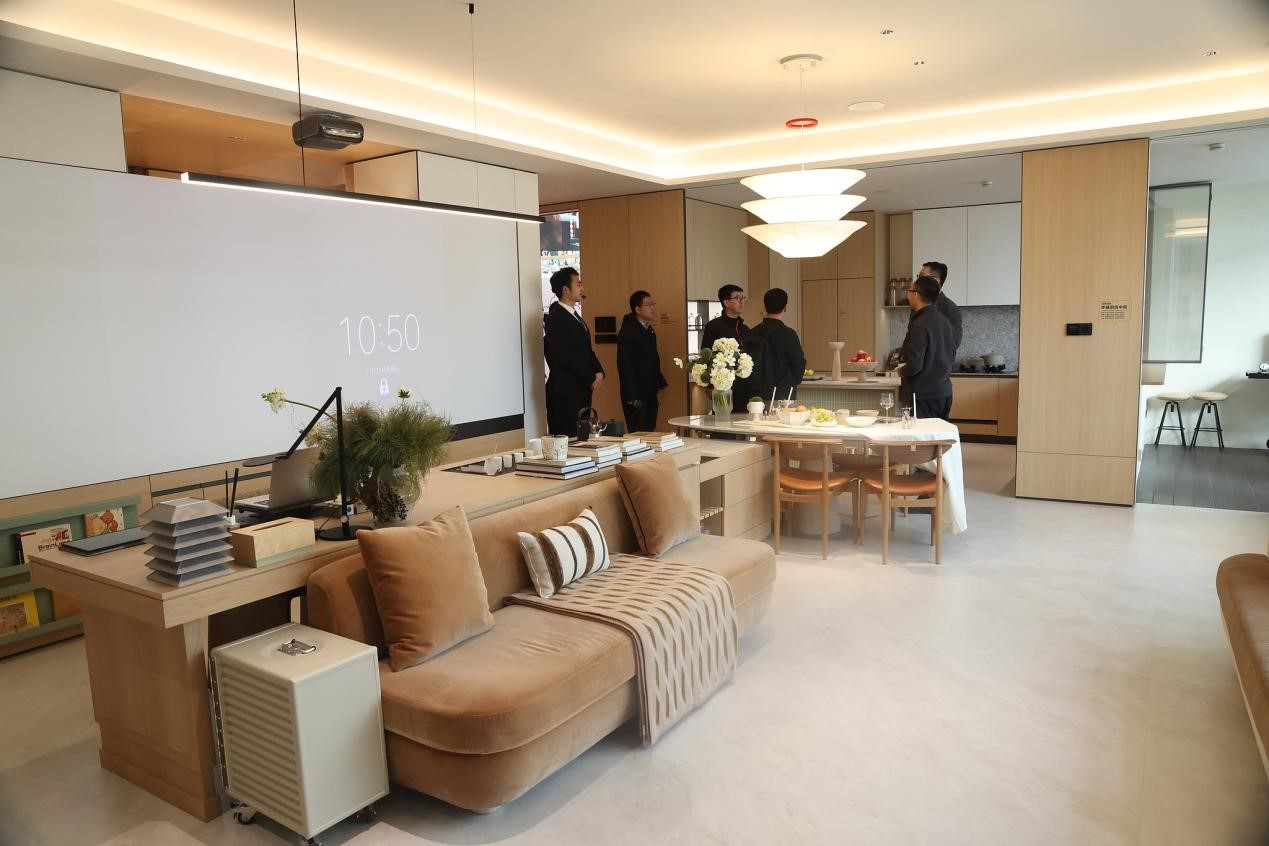 Caption: On November 12, 2025, visitors toured model homes at a good house tech expo in Beijing. [Photo: CFP]
Designing for all
Demographic change is also a major driver. China had 191 million people aged 65 and above in 2020, more than one-fifth of the global elderly population. New standards now include aging-friendly and barrier-free features such as wider doorways, space for grab bars and at least one accessible entrance per residential building. On January 28, 2026, the Ministry of Natural Resources, the Ministry of Civil Affairs and the National Health Commission required new urban areas and residential projects to include eldercare service facilities. These may include daycare centers, rehabilitation spaces, chronic disease management stations or shared dining halls. Facilities can share land or buildings with other community services, and existing spaces may be repurposed to reduce costs.
At the same time, single-person households are rising. By 2030, 150 to 200 million people are likely to live along, accounting for over 30 percent of the population. Supportive housing for these residents includes safe, easy-to-maintain homes, smart emergency systems, shared spaces, nearby healthcare and affordable rental options. Many of these needs overlap with those of elderly residents: safety, accessibility and stronger community ties.
From Policy to Practice
Implementation began accelerating in 2025. In Beijing, new guidelines allow ground-floor open spaces, community service centers and wind-and-rain corridors to be excluded from floor area limits under certain conditions, encouraging more people-oriented design.
Private developers nationwide are actively responding, translating evolving resident needs into measurable standards and piloting “good house” projects across multiple cities, expanding practical models for higher-quality living.
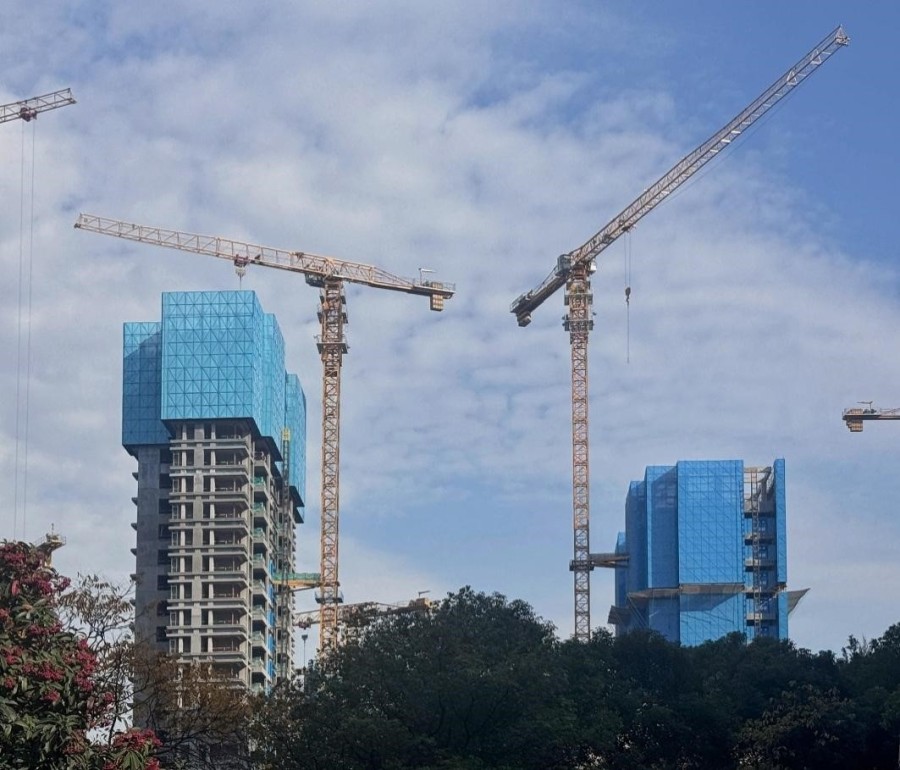 Caption: On December 19, 2025, construction of ‘good house’ projects is underway in Shanghai. [Photo: CFP]
If earlier decades were defined by cranes racing against time, today’s transition feels more deliberate. The question is no longer how fast a building can rise, but how well it will function decades from now - for a child learning to walk, for a commuter returning home late, or for an elderly resident navigating daily routines. The ambition is less about spectacle and more about durability, fairness and lived experience.
Balancing Quality and Reality
Challenges remain. Higher standards including improved soundproofing, greener materials and smarter systems increase upfront costs. Renovating older housing is more complex. In China, about 30 percent of existing housing was built between the 1980s and early 2000s and is now aging, with outdated layouts and facilities. Adding elevators, for example, may face fire safety limits, space constraints or even blocked sunlight. Upgrades often depend on residents’ willingness to cooperate.
The concept of “good housing” is not about perfection but direction. The ultimate benchmark is public satisfaction — whether families feel safe, comfortable and well-served in daily life. As China’s housing sector shifts from building more to building better, success is measured not by speed, but by how well people truly feel at home.
Toward Fairer, Higher-Quality Living
At its core, the “good house” initiative goes beyond architecture. It is part of a broader effort to promote social fairness and expand inclusive public welfare.
During the 15th Five-Year Plan period (2026–2030), housing and public services are expected to move toward higher-quality development, with emphasis on building safe, comfortable, green and smart homes.
Policies will focus particularly on cities experiencing net population inflows. Expanding affordable rental housing, renovating aging residential communities, and strengthening eldercare, childcare and healthcare services are key priorities.
As China’s housing sector moves from building more to building better, the meaning of “home” is being redefined. A good house is not simply about square meters or smart devices. It is about creating spaces that reflect changing demographics, support daily life, and contribute to a more equitable society - one neighborhood at a time.
Author: Wang Yangyang — reporter and editor of CGTN