We are guided by what unites people




News
Articles
Media
Announcement
 Chinese New Year
Technology
About Us
Contacts
Chinese New Year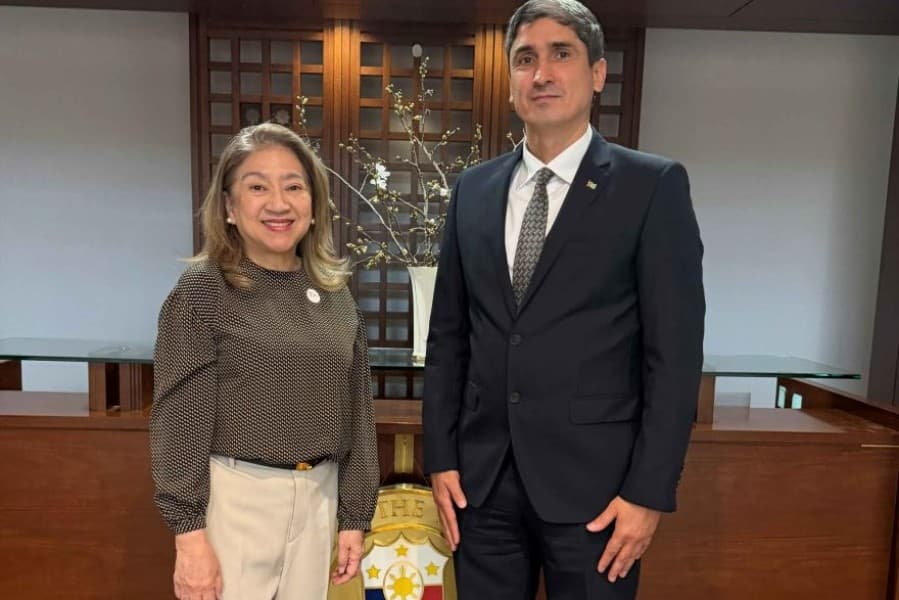
Turkmenistan is promoting a foreign policy initiative to bring together two dynamically developing regions – Central Asia and Southeast Asia (ASEAN). This topic was discussed during talks between Turkmenistan's Ambassador to the Philippines (based in Tokyo), Atadurdy Bayramov, and his Philippine counterpart, Milene Garcia-Albano.
The choice of the Philippines as a strategic partner is no coincidence: in 2026, Manila will assume the chairmanship of the Association of Southeast Asian Nations (ASEAN). This opens a window of opportunity for Ashgabat to launch the "Central Asia + ASEAN" dialogue format, an idea previously proposed by the leadership of Turkmenistan.
The parties have already begun preparing specific proposals for the institutionalization of this format, which aims to link the two macro-regions with a unified network of transport corridors and energy routes.
In addition to multilateral cooperation, the diplomats discussed a roadmap for bilateral relations through 2026. This includes political dialogue: organizing high-level visits and strengthening the legal framework; energy security: utilizing Turkmenistan's experience as a major resource supplier to diversify energy flows in the Asia-Pacific region; and economic and cultural development: intensifying direct business contacts and humanitarian exchanges.
The creation of the "CA + ASEAN" format is a logical continuation of Turkmenistan's policy of diversifying its external relations. Combining the potential of Central Asia (as a raw materials and transit hub) and ASEAN countries (as a global industrial center) has the potential to create a new center of power in the global economy. For Ashgabat, this means access to markets with a combined GDP of over $3.6 trillion and a population of almost 700 million people.