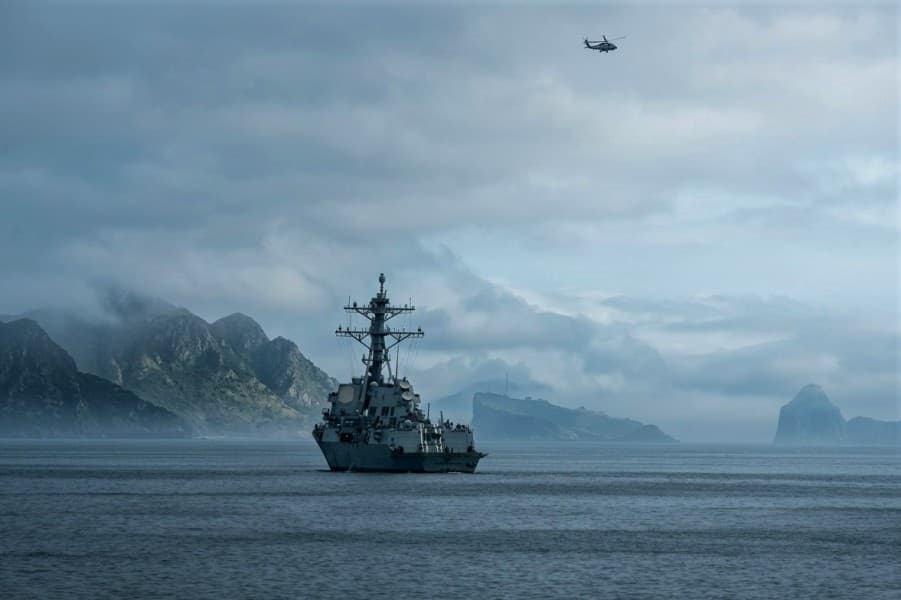



Washington's strategy after the "Hour X" of April 11th underwent a radical transformation, morphing from an attempt to forcefully open the Strait of Hormuz to a total naval blockade. Realizing that Tehran had no intention of surrendering the keys to the Gulf without a fight, Donald Trump switched to arrests and interrogations.
Now, every vessel that dares to transit the strait, through the system of "separate treaties," becomes a legitimate target for the US Navy on the open ocean. American destroyers intercept tankers to verify the legitimacy of transactions, turning the oil trade into a dangerous lottery.
The situation was exacerbated by a "stab in the back" from the insurance giants. Among them, British Lloyd's and other market leaders have raised insurance premiums for ships in the Indian Ocean to sky-high levels, effectively making the sea route economically pointless even without taking into account military risks.
The oil market reacted to this maritime trap with nervous anticipation, holding Brent prices in the $94-$96 range, but the real heat is being felt in the gas sector.
While oil is still trying to find a way through the ocean, liquefied natural gas has become a hostage to geography, leading LNG prices in Europe and Asia to consolidate above $1,100 per thousand cubic meters this Monday.
This situation clearly demonstrates the invaluable nature of onshore pipelines, which, unlike tankers, cannot be seized in international waters or blocked by an aircraft carrier. Onshore gas from Central Asia today is more than just a commodity; it is a guarantee of sovereignty and warmth, protected by the very thickness of the Eurasian continent.
Investment flows began to shift rapidly at the beginning of this week, shifting away from virtual assets and toward the "physical" armor of resources. Gold again touched $2,320 per ounce in New York trading on Monday evening, while Bitcoin sank to $66,000 by Tuesday morning amid disappointment with "crypto payments" for maritime transit.
Major players such as China and Japan no longer trust the security of Washington-controlled sea routes and are beginning to urgently redirect capital toward developing land-based infrastructure.
The yuan is becoming increasingly confident in these discussions, becoming the unit of account for new land-based projects that will directly connect producers and consumers, bypassing Trump's "traps."
The future of Eurasian transit is currently being forged in the triangle between Ashgabat, Islamabad, and Beijing, where the as-yet-unfulfilled idea of building an LNG plant on the Pakistani coast using the blue gold from the TAPI pipeline will one day gain the status of a survival project.
Early Tuesday morning, Asian stock exchanges opened amidst the shadow of new reports of tanker arrests, which only fueled interest in the Herat line, expected by the end of this year, and the pipeline's further expansion to the Indian Ocean.
The world is entering an era when the "road of life" runs not through the salty waters of the straits, but through the solid soil of the Central Asian region with its energy, rare earth, and transport and logistics potential.
For the average person in Central Asia, this means their home remains an "island of safety" while, in the global ocean, Trump and Tehran wage a brutal game of elimination, turning energy into an instrument of global punishment.
Here we take a brief pause in our narrative – the call of new roads takes us on a business trip. However, the journey continues – on April 18-19, when the dust from the current maneuvers settles, we will return with an even more panoramic view.
True analysis, like good wine, requires time to mature, to present not just news, but the very essence of the coming changes that are being achieved here – along the reliable land routes of Central Asia.
Bekdurdy AMANSARYEV